
REVIEW · CHILEAN FOOD TOURS
Learn to Prepare the Famous Chilean Pine Empanada
Skip the usual Santiago sightseeing for one afternoon. This three-hour cooking class gives you a hands-on way to understand Chile through its most famous pastry: the empanada de pino. You prepare the dough, cook the filling, shape the empanadas, make pebre, and sit down to eat what you made.
I like the small maximum of six people, which gives Valentina time to explain each step and help with the tricky folds. I also like the family connection behind the recipe, said to come from her grandmother. The main drawback is practical: this is not suitable for people with gluten intolerance, and alcohol is not included, though the class is BYOB.
In This Review
- Key Points to Know Before Booking
- Why Chilean Pine Empanadas Matter
- Arriving at Avenida General Bustamante 130
- Starting With the Pino Filling
- Learning the Dough, the Part That Makes or Breaks an Empanada
- Folding and Sealing the Four Shapes
- Baking Until Golden Brown
- Making Pebre for a Fresh Chilean Finish
- Sitting Down to Eat What You Made
- What the $39 Price Really Buys
- Who Will Enjoy This Class Most
- Cancellation and Planning Details
- Should You Book the Chilean Empanada Class?
- FAQ
- How long does the empanada cooking class last?
- Where does the class begin and end?
- What ingredients are used in the Chilean pine filling?
- Is pebre included?
- Are cooking utensils provided?
- Is alcohol included?
- Is the class suitable for someone with gluten intolerance?
- How many people can attend?
- Can dietary or special needs be accommodated?
Key Points to Know Before Booking
- A true hands-on class: You make the dough, filling, pebre, folds, and baked empanadas yourself.
- Traditional Chilean pino: The filling combines onion, meat, raisins, olives, and egg.
- Small-group setting: The class accepts no more than six people, so instruction stays personal.
- Hosted by Valentina: Her clear teaching, humor, patience, and stories about Chile are central to the experience.
- More than a meal: You learn techniques you can repeat at home, including several ways to seal the pastry.
- Central meeting point: The class begins and ends at Avenida General Bustamante 130 in Providencia.
Why Chilean Pine Empanadas Matter
A Chilean empanada de pino is not simply a meat pastry. It is a compact lesson in the country’s home cooking, with sweet, salty, savory, and fresh flavors packed into one meal.
The word pino refers to the seasoned filling. Here, that mixture includes onion and meat, along with raisins, olives, and hard-boiled egg. Each part brings a different note. The raisins add sweetness, the olives bring salt, and the egg gives the filling a familiar, hearty finish.
I like this recipe because it shows how Chilean food often balances simple ingredients rather than relying on elaborate presentation. You are not just copying a restaurant dish. You are learning the order of work, the feel of the dough, the amount of filling to use, and the small decisions that help an empanada hold together.
The class also includes pebre, a fresh Chilean sauce made with tomato, onion, and coriander. It cuts through the richness of the pastry and gives the meal a sharp, fresh side. Served together, the empanada and pebre make a much better introduction to Chilean food than a quick snack eaten between attractions.
More Food Tours in Santiago
- Cajon Del Maipo Including Wine with Picnic and Empanada
★ 5.0 · 612 reviews - Santiago Half-Day Walking Tour with Hotel Pick up & Food Sample
★ 4.5 · 467 reviews - New Concha y Toro Tour Marques with class, extra tasting y food
★ 4.0 · 329 reviews
Arriving at Avenida General Bustamante 130
The experience starts at Avenida General Bustamante 130 in Providencia, Santiago. It both begins and ends at this meeting point, so you do not need to arrange a separate return transfer after the meal.
The location is near public transportation, which is useful in Santiago. You should still allow enough time to reach the address, especially if you are unfamiliar with the city or have a timed booking. Since the class lasts about three hours, arriving promptly matters. A late start could cut into the time available for shaping and eating.
The group size is one of the strongest practical features. With a maximum of six people, you are not watching from the back of a crowded room. You can ask about dough texture, filling, oven temperature, or folding technique as you work.
This small format also suits mixed groups. Couples, solo visitors, families, and friends have all found the class easy to enjoy together. You do not need to arrive with a full group of six. A smaller booking can create a relaxed setting where conversation with the host and other participants comes naturally.
Starting With the Pino Filling
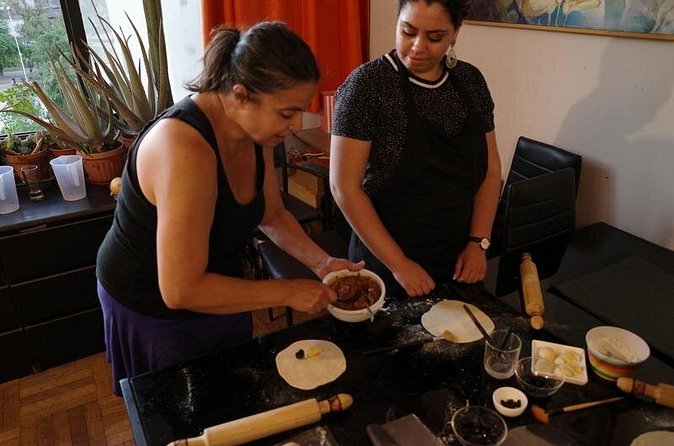
The class begins by explaining the main parts of the empanada: dough, filling, and pebre. You then help prepare the pino, the savory center that gives the dish its name.
The filling uses onion, meat, raisins, olives, and egg. The appeal is not in a long ingredient list. It is in getting the balance right. Too much onion can make the filling wet. Too little seasoning can leave the pastry dull. Raisins and olives need to be spread through the mixture so every bite has some contrast.
Valentina explains each stage clearly, including how the ingredients work together. That matters because the filling needs to be ready before you start assembling the empanadas. A warm or overly wet filling can make the dough harder to handle.
One useful feature is that this is not a watch-and-copy demonstration. You take part in the preparation. You can expect to handle the ingredients and follow the process with guidance at each stage.
A vegetarian option has also been offered using eggplant. If that matters to you, ask about it before booking so your needs can be discussed in advance. Special requests may be adaptable, but they should not be treated as guaranteed without checking.
Learning the Dough, the Part That Makes or Breaks an Empanada
For many home cooks, the dough is the most valuable part of the class. A good filling cannot rescue pastry that tears, stays raw, or fails to seal.
You work the dough, learn how it reacts, roll or prepare it for cutting, and organize the pieces for filling. Valentina also explains why the dough behaves as it does and how it might be used in other ways. That turns the class into a practical lesson rather than a one-time recipe session.
The dough requires a little patience. You may need to adjust pressure and handling as you work. That is part of the point. A written recipe can tell you quantities, but it cannot always show what the dough should feel like. Personal guidance helps you notice those details.
This is also where the small group becomes valuable. You can receive help before a small mistake becomes a torn wrapper or a leaking pastry. If you cook often at home, these are the techniques most likely to stay with you after the class.
The class is not recommended for anyone with gluten intolerance. The recipe centers on wheat-based dough, and the information provided does not promise a gluten-free alternative.
A completely different kind of day out:
- Valparaiso Port and Viña del Mar with Casablanca Wine Tasting
★ 5.0 · 6,110 reviews - Santiago: Cajon del Maipo/Embalse del Yeso Tour with Picnic
★ 4.3 · 3,789 reviews - Santiago: Vina Del Mar, Valparaiso, Casablanca & Reñaca Tour
★ 4.2 · 2,838 reviews - Cable Car, Funicular and Sightseeing Bus in Santiago one day
★ 5.0 · 2,325 reviews
Folding and Sealing the Four Shapes
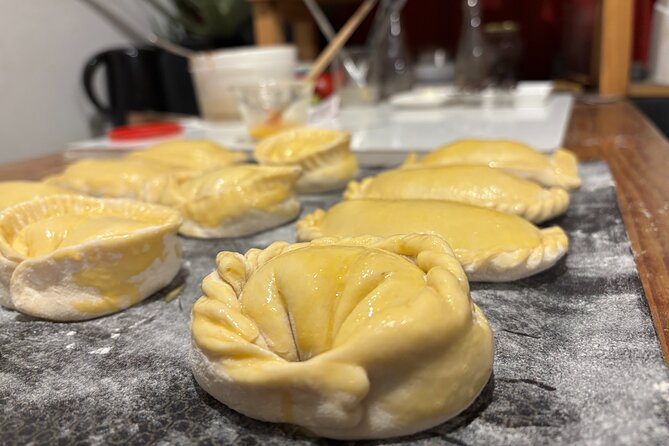
Once the filling and dough are ready, you cut the pastry, add the pino, and learn how to close each empanada. The class shows four different shapes, ranging from simple to more complex.
This is the playful part of the afternoon, but it also has a practical purpose. A fold must seal the edges firmly enough to keep the filling inside during baking. It should also leave enough room for the dough to expand without splitting.
You can expect your first attempts to look less polished than Valentina’s. That is normal. The class gives you time to practice, and the focus is on learning the method rather than producing perfect pastries immediately.
I especially like this feature for families and mixed-age groups. Children and adults can take turns shaping the dough, and the four folding styles give everyone a small challenge. It adds variety without turning the class into a contest.
The shapes also make the finished meal more personal. When the empanadas come out of the oven, you can recognize the ones you folded, including the imperfect ones. Those are often the pastries you remember best.
Baking Until Golden Brown
After the empanadas are assembled, the oven is heated to the proper temperature and the pastries are baked until golden brown. This part gives you a useful sense of timing and finish.
The aim is a pastry that has color on the outside while keeping the filling moist. The oven temperature matters, but so does the thickness of the dough and the amount of filling inside. That is why the earlier steps cannot be rushed.
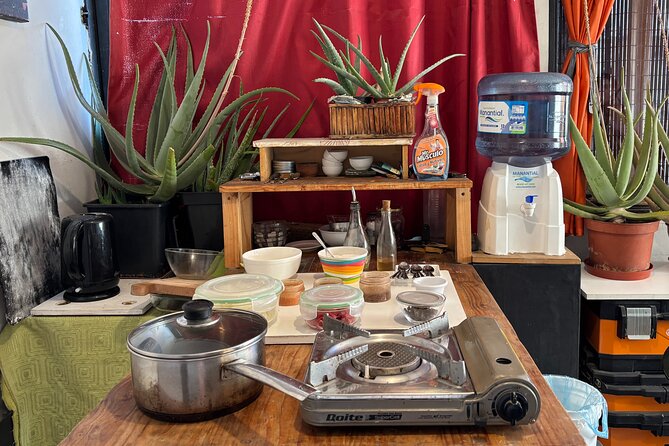
The class provides the necessary utensils, so you do not need to bring cooking equipment. Bottled water is included as well. Alcoholic drinks are not included, but one participant noted that the class is BYOB and that beer could be kept in the refrigerator. If you want to bring a drink, confirm the arrangement with the host first.
There is no promise of a separate sightseeing stop or city tour during these three hours. The value is in the kitchen, the instruction, and the meal you create.
Making Pebre for a Fresh Chilean Finish
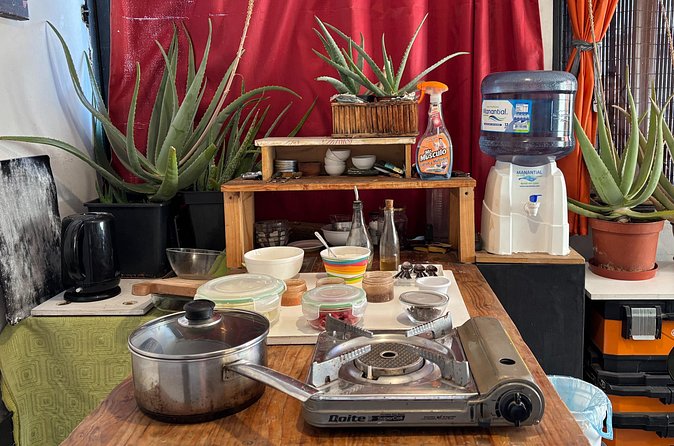
While the empanadas are being prepared or baked, you also make pebre. The recipe uses tomato, onion, and coriander.
Pebre is simple, but it changes the meal. The fresh ingredients add color and acidity beside the warm pastry. A spoonful on top or alongside the empanada keeps the dish from feeling too heavy.
This is a good example of why cooking classes can add context to a food experience. You learn not only what goes into a dish, but also what Chileans serve with it and why the combination works.
The pebre also gives you an easy recipe to recreate at home. Unlike the dough, it does not require special equipment or advanced technique. It can accompany grilled foods, bread, or other savory dishes long after your Santiago visit.
Sitting Down to Eat What You Made
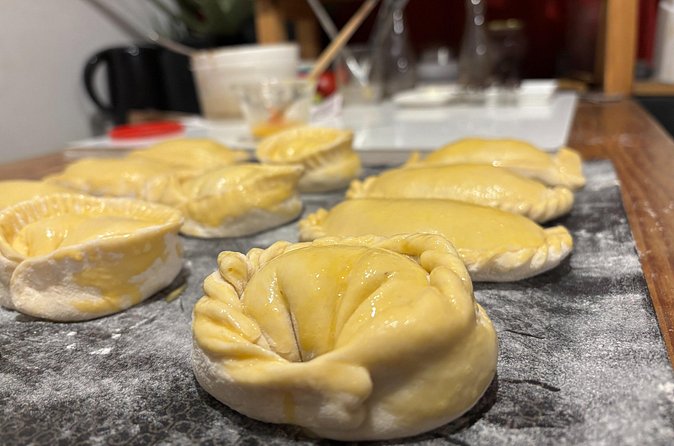
The final stage is a shared meal of the empanadas and pebre. You sit at the table with the group and taste the results while the preparation is still fresh in your mind.
This is where the class shifts from instruction to hospitality. Valentina is described as warm, funny, patient, and easy to talk with. She also shares information about Chile, Santiago, and local culture, adding conversation to the meal.
The format feels more like cooking with a welcoming local host than attending a formal culinary school. That will suit you if you prefer relaxed guidance and personal contact. If you want a highly technical professional kitchen or a restaurant-style tasting menu, this is not that kind of class.
Some participants have been able to take extra empanadas home. That has not been stated as a guaranteed inclusion, so think of it as a possible bonus rather than part of the promised meal. The confirmed food inclusions are the empanadas and pebre you make and eat during the experience.
What the $39 Price Really Buys
At $39 per person, the class is reasonably priced for a three-hour food activity in Santiago. You receive the meal, bottled water, all utensils needed for the class, and direct instruction in a traditional recipe.
The real value is the participation. You are not paying only for something to eat. You are paying for the time required to prepare the filling, work the dough, practice four folds, bake the pastries, and make pebre.
The small group improves that value. Personal help is more likely when only six people can attend, and the class has enough time to let you repeat techniques instead of watching them once.
Still, the price may feel less attractive if you only want a quick meal. A bakery or restaurant will be faster and may cost less. Choose this class when you want the process, the cultural context, and a recipe you can use after returning home.
The experience is commonly booked about 26 days ahead. That suggests you should plan early if your Santiago dates are fixed, especially because the class has a six-person limit.
Who Will Enjoy This Class Most
I would recommend this experience to several kinds of visitors:
- Food-focused visitors who want to learn a classic Chilean dish from a local host.
- Couples and friends looking for a relaxed shared activity.
- Families who enjoy practical tasks and eating together.
- Solo visitors who want a small group rather than a large organized tour.
- Home cooks who care about dough technique, sealing, and repeatable recipes.
It is less suitable if you have gluten intolerance, dislike hands-on cooking, or want a tour centered on Santiago’s monuments and neighborhoods. The class is also not an alcohol-included experience, though BYOB may be possible.
Special needs should be discussed with the host before arrival. The provider invites questions and may be able to adapt the class, but the available information does not guarantee every modification.
Cancellation and Planning Details
Free cancellation is available when you cancel at least 24 hours before the local start time. Cancellations or changes made less than 24 hours ahead are not refundable.
The activity requires a minimum number of participants. If that minimum is not met and the class is canceled, you will be offered another date or experience, or a full refund.
Confirmation normally arrives at booking. If you reserve within four hours of the start time, confirmation may take longer and remains subject to availability.
Since the meeting point is near public transportation and the class returns there, planning is fairly simple. Bring an appetite, arrive on time, and ask ahead about dietary needs or bringing your own drink.
Should You Book the Chilean Empanada Class?
Book it if you want a warm, practical taste of Chilean culture. The strongest reasons are the small group, the full hands-on process, the family recipe, and Valentina’s clear and friendly teaching style.
The class offers more than a plate of empanadas. You learn how pino comes together, how dough should feel, how to make four folds, and why pebre belongs at the table. At the end, you eat the food you helped prepare.
Skip it if wheat is a problem, if you prefer a quick restaurant meal, or if your priority is sightseeing rather than cooking. For everyone else, $39 buys three useful hours, a traditional meal, and techniques you can try again at home.
FAQ
How long does the empanada cooking class last?
The class lasts approximately three hours.
Where does the class begin and end?
It begins at Avenida General Bustamante 130, 7500000 Providencia, Región Metropolitana, Chile, and ends back at the same meeting point.
What ingredients are used in the Chilean pine filling?
The pino filling includes onion, meat, raisins, olives, and egg.
Is pebre included?
Yes. You make and eat Chilean pebre prepared with tomato, onion, and coriander.
Are cooking utensils provided?
Yes. All necessary utensils for the class are included, along with bottled water.
Is alcohol included?
No. Alcoholic beverages are not included. The class is described as BYOB, and a participant was able to refrigerate beer, but you should confirm arrangements with the host.
Is the class suitable for someone with gluten intolerance?
No. The activity is not recommended for people with gluten intolerance.
How many people can attend?
The class has a maximum of six participants.
Can dietary or special needs be accommodated?
You should ask the host about special needs before the class. Adaptations may be possible, and an eggplant option has been offered for vegetarian participants.
Just added in Santiago
- Walking City Tour with Funicular, Cable Car and Tasting★ 4.3 · 6 reviews
- VIÑA DEL MAR AND VALPARAISO TOUR★ 4.8 · 20 reviews
- Tour VIÑA CONCHA Y TORO + CASA MARQUES – Chile, from Santiago.★ 5.0 · 2 reviews
- Undurraga + Isla Negra + San Afonso del Mar —– Full day★ 4.1 · 8 reviews
- Undurraga Wine tour★ 4.2 · 15 reviews
- Southcoast – Private Full-Day tour★ 5.0 · 6 reviews
- Zapallar : nature, sea and local flavours★ 5.0 · 6 reviews
- Private Casa Blanca Valley Wine Experience from Santiago★ 4.5 · 8 reviews
Chilean Food Tours, compared.

Cajon Del Maipo Including Wine with Picnic and Empanada
Read our review →
Santiago Half-Day Walking Tour with Hotel Pick up & Food Sample
Read our review →
New Concha y Toro Tour Marques with class, extra tasting y food
Read our review →
Valparaiso & Casablanca : Wine, Gastronomy and Living Culture
Read our review →
4h Cooking Class in Santiago with 8 Recipes & Bottomless Drinks
Read our review →
Santiago city experience: Walking tour, Market visit, Lunch & Coffee included
Read our review →
Surfing, Sandboarding & wild Sea lions + Chilean drinks & food
Read our review →Browse the lists this tour appears in