
REVIEW · WALKING TOURS
Private Small Group Walking Tour Santiago
Santiago reveals itself on foot. This three-hour private walk links the city’s main historic sights with useful context about Chilean politics, art, daily life, and architecture. I like the route’s clear progression from Plaza de Armas to Barrio Lastarria, and I like that your group has a guide’s full attention rather than sharing the walk with a large crowd. The main concern is reliability: several bookings suffered from late changes or guide no-shows, so you should confirm the appointment directly before setting out.
The price is $60 per person, which is fair if you want a personal introduction to central Santiago and practical restaurant advice at the end. Just remember that this is mainly an exterior walking tour, and lunch, museum admissions, and any other personal spending are not included.
In This Review
- Key points before you book
- Starting at Plaza de Armas
- The Old Congress and pre-Columbian art
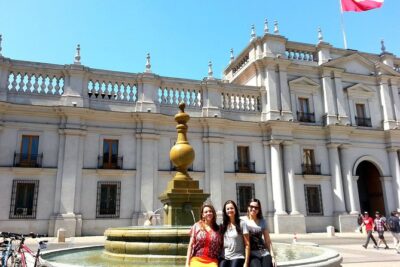
- La Moneda and Chile’s political story
- The Santiago Stock Exchange and the city’s money district
- Teatro Municipal and the Children’s Fountain
- A short climb at Cerro Santa Lucia
- Finishing in Barrio Lastarria
- What the guides add to the walk
- The private format and pace
- Is $60 per person good value?
- Communication, cancellations, and practical planning
- Who should book this Santiago walk?
- FAQ
- How long does the Santiago walking tour last?
- What language is the tour offered in?
- Is this a private tour?
- Where does the tour begin?
- Where does the tour end?
- Is lunch included?
- Are museum and attraction admission tickets included?
- Can I cancel for a full refund?
- Should you book it?
Key points before you book
- A private three-hour route covers seven central Santiago stops, from Plaza de Armas to Lastarria.
- Strong guide quality when the tour runs as planned, with Jesús, Malu, Claudio, Diego, and Leonardo praised for clear explanations, humor, local context, and restaurant suggestions.
- The route mixes major political sights with everyday city life, including La Moneda, the Stock Exchange, Santa Lucia Hill, and the artsy Lastarria district.
- Most stops are exterior visits, so do not book this expecting a long museum program or palace interior tour.
- The walk ends in a useful dining area, with restaurants around Barrio Lastarria and guide recommendations available.
- Communication needs care, since the operator sends meeting details through WhatsApp and some reservations have involved confusion over changes or cancellations.
Starting at Plaza de Armas
The tour begins at the Monument to Pedro de Valdivia in Plaza de Armas. The stated meeting address is Plaza de Armas 951, 987, Santiago, and the operator says more meeting information will be sent through WhatsApp.
That makes the square a sensible starting point. You begin in one of the city’s central public spaces, surrounded by landmark buildings and daily activity. Your guide can use the square to explain how Santiago developed and how the city’s civic, religious, and commercial life came together here.
Allow the full 30 minutes listed for this stop. It is not simply a quick photo pause. The value comes from having someone point out what you are seeing and place the buildings in Chile’s wider story.
Because the meeting instructions rely partly on messaging, I would check WhatsApp before leaving your hotel. Make sure you have the exact meeting point, the guide’s name, and confirmation that the tour is going ahead. That small step matters more here than it would on a self-guided walk.
More Walking Tours in Santiago
- The best walking tour in Santiago de Chile
★ 5.0 · 629 reviews - Santiago Half-Day Walking Tour with Hotel Pick up & Food Sample
★ 4.5 · 467 reviews - A Fabulous Walking tour by the Old Santiago of Chile –
★ 5.0 · 466 reviews
The Old Congress and pre-Columbian art
The next portion takes you toward the former National Congress, also connected in the route description with the Society of Jesus. The building is presented as an exterior architecture stop, with time for your guide to explain its role and design.
This is a useful place to pause and consider Santiago as more than a collection of pretty façades. Chile’s political institutions have shaped the city center, and the former Congress gives the tour a strong civic angle. If you enjoy architecture, this stop should be one of the more satisfying early moments.
The nearby Museum of Pre-Columbian Art is also identified in this part of the route. The museum focuses on the art of Native peoples of the Americas, but the tour information does not promise an interior visit. Admission is listed as free for the stop, so you should ask your guide what access is possible on your date.
The scheduled time is 15 minutes. That is enough for an introduction, not a museum visit in any serious sense. If pre-Columbian art is a main interest, plan separate time for the museum rather than assuming this walk will cover its galleries.
La Moneda and Chile’s political story
The Centro Cultural Palacio de La Moneda comes next, with 45 minutes assigned to the area. This is the longest stop and the political heart of the walk.
La Moneda is Chile’s presidential palace, and its history carries real weight in the country’s public memory. Your guide can explain why the building matters to Chileans and how national events have shaped its meaning. The description promises an exterior visit and information rather than a palace tour.
I like the amount of time given here. Forty-five minutes allows room for questions and for a guide to explain more than dates and names. The best accounts of this experience included context about Chilean daily life as well as national history, so this is where a good guide can turn a famous building into something more human.
The difference between guides may be especially clear at La Moneda. Malu was praised for explaining Santiago’s neighborhoods and connecting art, flowers, and history. Another guide, Claudio, was appreciated for his humor and clear explanation of Chilean history. Those details suggest that the personal style of the guide shapes the experience as much as the route itself.
The Santiago Stock Exchange and the city’s money district
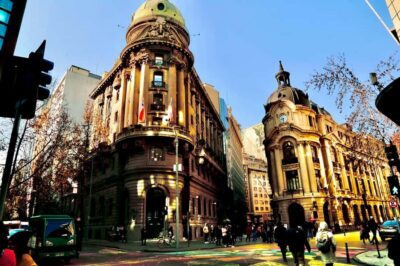
The Santiago Stock Exchange is scheduled for 30 minutes. The building represents what was once the country’s most important financial district, giving you a different view of central Santiago.
This stop balances the political focus of La Moneda. Instead of only seeing government buildings and monuments, you get a look at the commercial forces that helped shape the capital. The architecture is part of the appeal, but the explanation matters more than the façade alone.
Do not expect an inside look at financial operations. The stop is listed as an exterior visit with free admission, and the tour format is built around walking and commentary. Still, half an hour gives your guide time to explain the building’s place in the city.
For me, this is the sort of stop that makes a city walk worthwhile. A quick photograph tells you very little. A short explanation of why the district developed and what role it played gives the street a clearer meaning.
A completely different kind of day out:
- Valparaiso Port and Viña del Mar with Casablanca Wine Tasting
★ 5.0 · 6,110 reviews - Santiago: Cajon del Maipo/Embalse del Yeso Tour with Picnic
★ 4.3 · 3,789 reviews - Santiago: Vina Del Mar, Valparaiso, Casablanca & Reñaca Tour
★ 4.2 · 2,838 reviews - Cable Car, Funicular and Sightseeing Bus in Santiago one day
★ 5.0 · 2,325 reviews
Teatro Municipal and the Children’s Fountain
The route then reaches the Teatro Municipal de Santiago on Agustinas Street. The theater is presented as Santiago’s opera house, with time to admire its architecture from outside.
The scheduled 30 minutes also includes the Children’s Fountain. This fountain was one of the gifts Chile received while celebrating its centenary, making it a small but distinctive part of the route.
This pairing works well. The theater gives you grand civic architecture, while the fountain adds a more personal and decorative detail. You are not simply moving from one major monument to another. You are also noticing the objects that mark how Santiago has celebrated itself.
The limitation is clear: the theater visit is exterior. If you want a performance, interior tour, or detailed look at the auditorium, this experience does not promise one. The value here comes from seeing the building in its urban setting and hearing the guide explain its place in the city.
A short climb at Cerro Santa Lucia
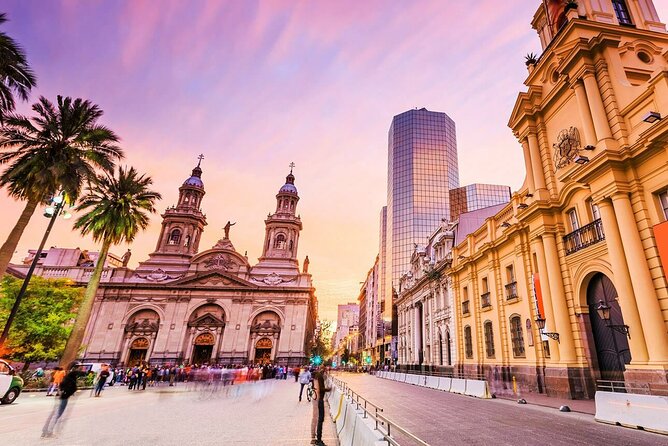
Cerro Santa Lucia receives 15 minutes, with an exterior visit listed. It is a small hill with important historical meaning for Santiago.
The short schedule suggests a brief orientation and viewpoint stop rather than a long exploration. You may have time for photographs and a compact explanation, but you should not expect a full hill walk within the overall three-hour limit.
Even so, this change in setting helps break up the city streets. After government buildings, financial offices, and theaters, Santa Lucia adds a historic hill to the route. The stop also gives the tour a different pace before its final neighborhood.
Wear shoes suited to three hours of walking. The tour description does not give a detailed difficulty rating, but it is still a walking experience, and the hill may involve uneven surfaces or steps. That is a practical point to consider if you prefer a gentle, flat route.
Finishing in Barrio Lastarria
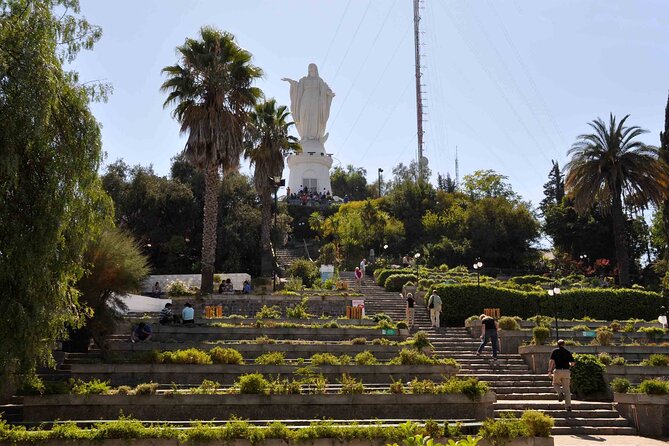
The final stop is Barrio Lastarria, a district described as full of art, culture, and diversity. The tour ends here, with the final address given as Pasaje Arquitecto Luciano Kulczewski 218, apartment 04, near Merced 353.
Lastarria is a smart place to finish. You end among restaurants and cultural attractions rather than at an isolated monument. One guide recommended lunch spots, and another ended the walk in an area with many restaurants, which makes the final stop useful for planning the rest of your day.
The scheduled time is only 15 minutes, so the tour gives you an introduction rather than a full neighborhood exploration. I would treat the ending as a handoff. Let the guide point out places worth returning to, then stay in Lastarria for lunch or continue exploring at your own pace.
This is also where the private format pays off. You can ask for restaurant suggestions that fit your budget or interests, rather than receiving a fixed group recommendation. Lunch itself is not included, so plan to pay separately.
What the guides add to the walk
The strongest part of this experience is the guide when communication and scheduling work properly. Jesús was praised for clear English, humor, useful information, and helping the group feel safe. Malu was credited with linking neighborhoods, art, flowers, and history in an engaging way.
Claudio was described as both funny and clear, and he adapted when museums were closed. Diego waited for a late-arriving group, while Leonardo offered practical restaurant advice alongside his explanations of Santiago and Chile.
These details point to a tour that depends heavily on the individual guide. The route is solid, but the human delivery is what can turn three hours of monuments into a helpful introduction to the country. You should ask questions about modern Chile, daily life, food, and neighborhoods, not just the dates of buildings.
English is the offered language. Several strong experiences specifically praised the guides’ ability to explain ideas clearly, which is important on a history-focused walk.
The private format and pace
This is a private activity, so only your group participates. That usually means a more flexible conversation and less waiting for strangers to take photographs or catch up.
The listed duration is about three hours, and the stop times add up to roughly three hours. The schedule is fairly brisk: 30 minutes at Plaza de Armas, 15 at the Congress and pre-Columbian art area, 45 at La Moneda, 30 at the Stock Exchange, 30 at the theater and fountain, 15 at Santa Lucia Hill, and 15 in Lastarria.
One useful warning comes from a short version of the experience. A group that had only an hour and a half felt it needed the full three hours to learn more. Do not treat this as a quick orientation you can squeeze between airport plans. If you have a limited window, tell the operator before booking and confirm which stops can be shortened.
The private setup suits couples, families, and small groups that prefer questions and conversation. It is less suitable if you want long interior visits, lots of free time, or a slow photography walk.
Is $60 per person good value?
At $60 per person, the price is reasonable for a private, English-language introduction lasting about three hours, especially if two or more people share the booking. You are paying for a guide’s time, a central route, and the chance to ask about Chile beyond the standard facts.
The value is strongest when your guide is punctual, clear, and willing to adapt. The positive experiences describe guides who added humor, explained everyday Chilean life, offered restaurant suggestions, and connected separate sights into one story.
The price is less attractive if you expect paid admissions or lunch to be covered. Lunch is excluded, and most of the route is outside. The Museum of Pre-Columbian Art and the other listed stops do not guarantee an interior visit, so budget separately for anything you choose to enter.
The overall rating is 3.6 from 17 ratings, which tells you to take both sides seriously. Many experiences were warmly praised, but several involved missed meetings, cancellations, or poor communication. That is not a minor detail when your day depends on a guide appearing at a precise time.
Communication, cancellations, and practical planning
Confirmation is supposed to arrive at booking, and the operator uses WhatsApp to send additional meeting information. I would not rely on a booking notification alone. Send a short message confirming the date, start time, meeting point, and guide before the tour.
There were cases involving a requested change from 10 a.m. to 3 p.m., unclear replies, and a guide who did not appear. In another case, the operator said a cancellation had been sent many hours in advance because guides were needed elsewhere on an election day. Refunds were issued in some cases, including an immediate full refund for one missed booking.
The safest approach is simple: confirm directly, save the operator’s messages, and keep enough flexibility in your day to handle a change. If the tour is critical to your plans, avoid scheduling it immediately before a flight or fixed reservation.
Free cancellation is available if you cancel at least 24 hours before the local start time. Changes or cancellations inside that 24-hour window are not accepted for a refund.
Who should book this Santiago walk?
I would recommend it to you if you want a first look at central Santiago with a private English-speaking guide. It suits people who enjoy walking, asking questions, learning political and cultural context, and finishing near restaurants.
It is especially useful early in a Santiago stay. The route can help you decide where to return, from the historic center and La Moneda to the museum area and Lastarria. The restaurant advice at the end is a practical bonus.
I would hesitate if you need dependable last-minute scheduling, guaranteed interior access, or a tour built around museums. I would also choose a different option if you dislike city walking or want transportation between sights.
FAQ
How long does the Santiago walking tour last?
The tour lasts approximately three hours.
What language is the tour offered in?
The tour is offered in English.
Is this a private tour?
Yes. Only your group participates in the activity.
Where does the tour begin?
It begins at the Monument to Pedro de Valdivia in Plaza de Armas, at the stated address Plaza de Armas 951, 987, Santiago.
Where does the tour end?
It ends in Barrio Lastarria, at the stated end address on Pasaje Arquitecto Luciano Kulczewski near Merced Street.
Is lunch included?
No. Lunch is not included in the price.
Are museum and attraction admission tickets included?
The listed stops show free admission, but the route mainly describes exterior visits. The tour does not promise extended interior access to the museums, palace, theater, or other buildings.
Can I cancel for a full refund?
Yes, if you cancel at least 24 hours before the experience start time. Cancellations or changes made less than 24 hours in advance are not accepted for a refund.
Should you book it?
Book this walk if you want a compact, private introduction to Santiago and value a guide who can explain the city in plain English. The route is well chosen, the end in Lastarria is convenient, and the best guide experiences add humor, local knowledge, and practical food advice.
Before paying, confirm the appointment through WhatsApp and check that the operator has your reservation. With that precaution, the tour offers good value for a first day in Santiago. Without it, the communication problems make this a riskier choice than the route itself deserves.
Just added in Santiago
- Walking City Tour with Funicular, Cable Car and Tasting★ 4.3 · 6 reviews
- VIÑA DEL MAR AND VALPARAISO TOUR★ 4.8 · 20 reviews
- Tour VIÑA CONCHA Y TORO + CASA MARQUES – Chile, from Santiago.★ 5.0 · 2 reviews
- Undurraga + Isla Negra + San Afonso del Mar —– Full day★ 4.1 · 8 reviews
- Undurraga Wine tour★ 4.2 · 15 reviews
- Southcoast – Private Full-Day tour★ 5.0 · 6 reviews
- Private Casa Blanca Valley Wine Experience from Santiago★ 4.5 · 8 reviews
- Santiago Private walking tour with Lunch★ 5.0 · 5 reviews
Walking Tours, compared.

Walk with Penguins on Magdalena & Marta Island
Read our review →
Santiago Half-Day Walking Tour with Hotel Pick up & Food Sample
Read our review →
A Fabulous Walking tour by the Old Santiago of Chile –
Read our review →
Santiago Half-Day Walking Tour with Hotel Pick up & Brunch
Read our review →
Santiago Skyline: Cable Car & San Cristobal Walking Tour
Read our review →Browse the lists this tour appears in