
REVIEW · WALKING TOURS
The best walking tour in Santiago de Chile
Santiago reveals itself on foot. This three-hour route links the city’s grandest square, political landmarks, old financial quarter, colonial church, and lively Lastarria neighborhood in one well-paced outing. I especially like the clear historical storyline, which moves from colonial Santiago through the republic and into modern Chile, and the chance to finish near restaurants and bars rather than in an isolated attraction. The main drawback is that the tour packs in a lot of information and walking, so it may feel more like a history class than a relaxed family stroll.
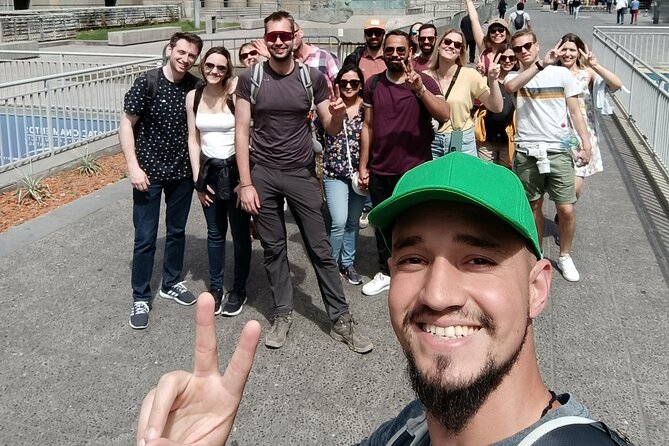
I also like the small group limit of 15 people and the range of guides, including Maria Jose, Claudio, Rodrigo, Allie, Katy, Fernando, and Marie. Guides are praised for clear English, strong storytelling, safety awareness, and useful advice on food, museums, and nightlife. Bring water, sunscreen, and comfortable shoes. You may walk close to 10,000 steps, and there are no planned meal, snack, or public transportation stops.
In This Review
- Key points to know before booking
- Starting beneath Santiago’s cathedral at Plaza de Armas
- Ex Congreso Nacional and the stories around Compañía de Jesús
- A quick look at the Museum of Pre-Columbian Art
- Viewing La Moneda from Plaza de la Constitución
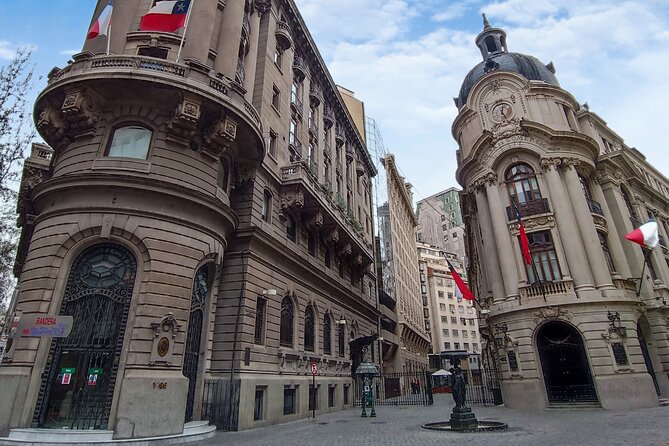
- Santiago’s old financial district and the Stock Exchange
- Paris Londres, where the architecture changes mood
- San Francisco Church and colonial Santiago
- Teatro Municipal and a civic fountain
- Cerro Santa Lucia and the best outlook on the route
- Lastarria, the right place to finish
- What $40 buys you
- The guide can make or break the experience
- Who should book this Santiago walk?
- Should you book the best walking tour in Santiago?
- FAQ
- How long does the Santiago walking tour last?
- Where does the tour begin?
- Where does the tour finish?
- How much does the tour cost?
- What is included in the price?
- Are meals or transportation included?
- How many people can join the tour?
Key points to know before booking
- A three-hour history lesson on foot: The route connects major sites in a logical order, making Chile’s complicated past easier to follow.
- Starts at Plaza de Armas: You begin in Santiago’s civic heart and finish in Lastarria, a useful place for lunch or an evening drink.
- Small groups of up to 15: The size should make it easier to hear the guide and ask questions.
- Strong guide feedback: Maria Jose, Claudio, Allie, Rodrigo, Katy, and others are praised for clear explanations and personal recommendations.
- About 10,000 steps: This is an active city walk, not a short orientation beside a bus.
- Good value at $40: The price covers a professional guide, but not meals, transport, or admission fees where required.
Starting beneath Santiago’s cathedral at Plaza de Armas
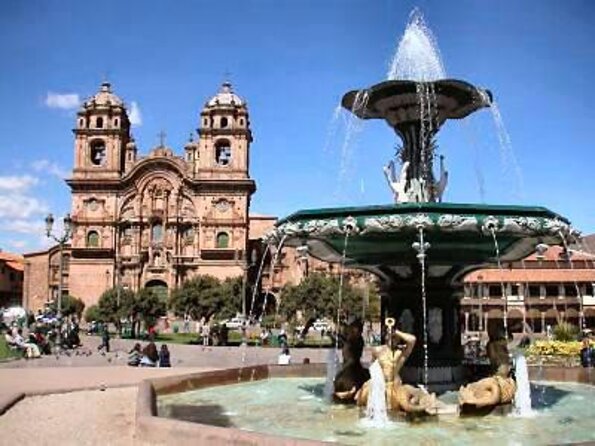
The tour begins at Pl. de Armas 1000, in the center of Santiago’s main square. This is a sensible starting point. Plaza de Armas brings together the city’s civic, religious, and architectural stories in one place, so your guide can give you the basic map of Santiago before the walking begins in earnest.
You spend about 15 minutes here. That is enough time for an introduction and an explanation of why the square matters, but not enough for a long architectural study. I see this as a strength. You get useful context without spending the first hour standing in one plaza.
The meeting point is near public transportation, which helps if you are staying outside the center. Check the exact time and place carefully before setting out. One issue with the booking process is that reminders may not arrive the day before unless you ask for one. I would save the meeting details on your phone and arrive early.
More Walking Tours in Santiago
- Santiago Half-Day Walking Tour with Hotel Pick up & Food Sample
★ 4.5 · 467 reviews - A Fabulous Walking tour by the Old Santiago of Chile –
★ 5.0 · 466 reviews - Santiago: Guided Walking Tour of the Historical Old Town
★ 4.8 · 459 reviews
Ex Congreso Nacional and the stories around Compañía de Jesús
The next stop is the former National Congress building, where Chile’s National Congress functioned during the 19th century. This is where the route begins to connect buildings with political change rather than simply asking you to admire facades.
The stop also includes the Compañía de Jesús Church. The supplied schedule allows about 15 minutes, so expect a compact explanation and an exterior look rather than a long church visit. The value here comes from the guide’s ability to explain how religious institutions and government shaped the city.
A strong guide makes a major difference at this point. Rodrigo is praised for teaching clearly and telling stories well, while Claudio is described as animated and easy to follow. Allie is especially praised for explaining the Allende and Pinochet period. If Chilean politics is unfamiliar to you, this route gives you a helpful starting framework.
A quick look at the Museum of Pre-Columbian Art
The Museo Chileno de Arte Precolombino receives about 10 minutes. It presents art from the Indigenous peoples of the Americas and occupies a building connected with several important civic uses, including customs, the national library, and the old court.
Ten minutes is brief. You should not expect a proper museum visit during this tour. Instead, think of this stop as an introduction that helps you decide if you want to return later with more time. The museum is one of the places where I would pay close attention to the guide’s explanation, since a short visit can still add meaning to the objects and the building.
The schedule lists admission as free for this stop, but the tour does not promise an extended museum entry. If seeing the collections is a priority, ask the guide how much access is possible on the day and plan a separate visit if needed.
Viewing La Moneda from Plaza de la Constitución
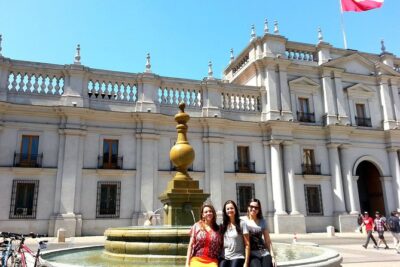
The route continues to the Centro Cultural Palacio de La Moneda and Plaza de la Constitución. You view the presidential palace from the square, along with statues of presidents and nearby buildings tied to Chile’s political story.
This is one of the most important stops for understanding modern Chile. The palace is not just a grand government building. It carries the weight of the country’s political conflicts, and guides use the surrounding streets to explain events that shaped Chile in the 20th century.
The scheduled time is 15 minutes, and admission is not included. That wording matters. You should expect to see the palace and surrounding civic spaces, not assume that an interior visit forms part of the tour. The guide’s interpretation is the main attraction here.
I like this section for first-time visitors because it gives you a way to place later museum visits and political conversations in context. Guides such as Allie and Maria Jose have been praised for making difficult periods understandable without losing sight of the people involved.
A completely different kind of day out:
- Valparaiso Port and Viña del Mar with Casablanca Wine Tasting
★ 5.0 · 6,110 reviews - Santiago: Cajon del Maipo/Embalse del Yeso Tour with Picnic
★ 4.3 · 3,789 reviews - Santiago: Vina Del Mar, Valparaiso, Casablanca & Reñaca Tour
★ 4.2 · 2,838 reviews - Cable Car, Funicular and Sightseeing Bus in Santiago one day
★ 5.0 · 2,325 reviews
Santiago’s old financial district and the Stock Exchange
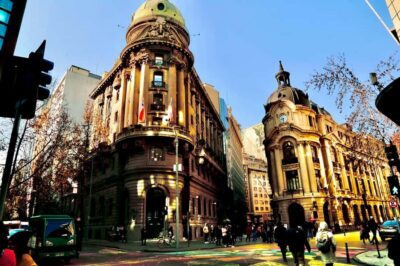
At the Santiago Stock Exchange, your guide introduces the former financial district of Chile. The stop lasts about 15 minutes and helps broaden the walk beyond churches and government buildings.
This is a useful reminder that Santiago’s identity is also commercial. The route shows how money, government, religion, and public life were concentrated within a fairly compact central area. You may find the stop less visually dramatic than Plaza de Armas or Cerro Santa Lucia, but it adds balance to the tour.
Admission is not included. The attraction here is the setting and the explanation rather than a scheduled interior tour. If you enjoy urban history, this part will likely hold your attention. If you mainly want photo stops, it may feel more functional.
Paris Londres, where the architecture changes mood
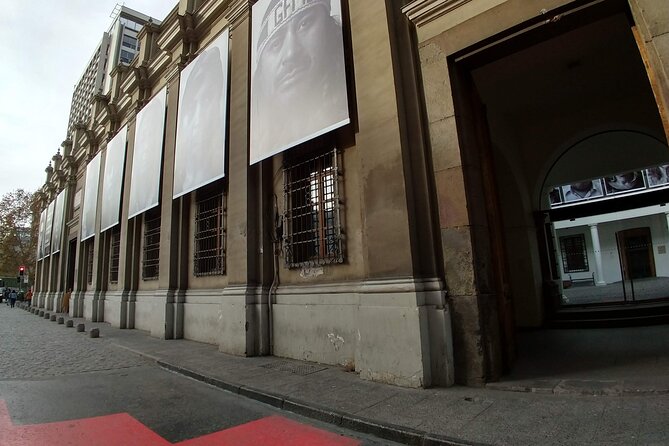
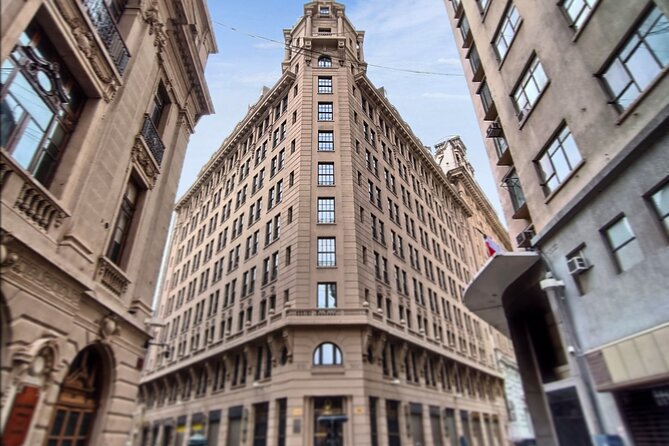
Barrio Paris Londres offers a welcome visual shift. Its streets and buildings recall Paris and London, making it one of the route’s best places for photographs. You have about 15 minutes here.
After the formal civic center, the neighborhood feels more intimate. The architecture gives you a sense of how Santiago borrowed and adapted European styles while developing its own urban character. It is also a good point to slow down and take in details that are easy to miss when you rush between major attractions.
This stop is free and does not require a separate ticket. The schedule is short, so have your camera ready before you arrive. It is not presented as a long neighborhood exploration, but it breaks up the political and historical material with a more visual section.
San Francisco Church and colonial Santiago
The Church of San Francisco is identified as the oldest church in Santiago and reaches back to the colonial period. The tour allows 15 minutes here.
That makes this one of the strongest stops for seeing the city’s earlier layers. It also helps explain why Santiago cannot be understood through its modern political buildings alone. The church connects the city to its Spanish colonial beginnings and to the religious institutions that shaped daily life.
Admission is listed as free. Still, the length of the stop means you should be ready for a focused visit rather than a leisurely examination of every interior detail. The guide’s explanation provides the bridge between the building you see and the broader story of Santiago.
Teatro Municipal and a civic fountain
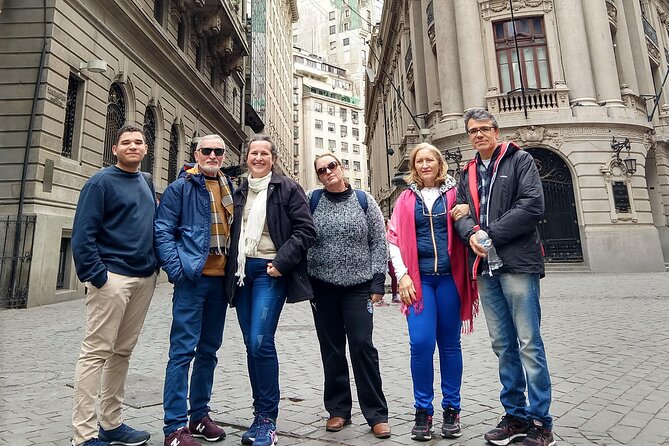
The Teatro Municipal de Santiago, the city’s opera house, gets around 10 minutes. It is another brief stop, but it adds arts and performance to a route otherwise centered on politics, religion, and architecture.
You then pass Fuente de los Niños, a fountain presented as a gift to Chile for its centenary. This is a five-minute stop, so consider it a small historical detail rather than a major attraction. Short stops like this work best when the guide explains why the object is there and what it says about the city’s public memory.
Admission is not included at the theater or fountain. The itinerary does not promise an interior theater visit, and you should not book this tour specifically to see an opera house from inside.
Cerro Santa Lucia and the best outlook on the route
Cerro Santa Lucia is the tour’s main change in elevation and one of its most rewarding stops. This hill has major importance in Santiago’s story and provides a view over the city.
The stop lasts about 15 minutes. That is enough to enjoy the setting and hear its historical background, though you may want to return later if you prefer a slower visit. The hill gives the walk a visual payoff after several dense urban stops.
This is also where practical preparation matters most. Wear shoes that are comfortable for a long walk, carry water, and use sunscreen. One guide, Maria Jose, was praised for directing the group toward shade, offering water and sunscreen, and paying close attention to comfort. That kind of care is especially welcome on a sunny day.
Lastarria, the right place to finish
The final stop is Barrio Lastarria, with about 20 minutes to explore its bars, restaurants, and cultural activity. The tour ends near Armstrong y Cia at Ricardo José Victorino Lastarria 305.
This is a smart ending. You finish in a neighborhood where you can continue the day with lunch, coffee, dinner, or a drink. Several guides, including Katy, Claudio, and Maria Jose, have offered restaurant and nightlife suggestions, which makes the final stop useful beyond the official three hours.
Lastarria also gives you a different view of Santiago. The central district introduces formal institutions and major events. Lastarria shows how the city spends its free time. I would ask your guide for a few specific recommendations before the group breaks up, especially if you are still deciding what to do that evening.
What $40 buys you
At $40 per person, the main purchase is not transportation or attraction entry. It is a professional guide who can connect 11 stops into one understandable story.
That is good value if you are visiting Santiago for the first time, care about history, or want help finding your bearings quickly. The route covers a wide range of subjects in three hours: colonial religion, political institutions, Indigenous art, finance, architecture, public memory, and contemporary neighborhood life.
The value is weaker if you expect a slow tour with long interior visits. Meals, snacks, private transportation, public transportation, and some admission fees are not included. You also need to bring your own water and allow for a fairly active morning or afternoon.
The group maximum of 15 is important. A smaller group usually makes it easier to hear explanations and ask questions, and guides have been praised for adapting the pace when the group is small. One tour even went ahead with only two people, although you should not assume every departure will work the same way because the experience requires a minimum number of participants.
The guide can make or break the experience
The strongest part of this tour is the guide. The names that come up repeatedly in the supplied feedback include Maria Jose, Claudio, Allie, Rodrigo, Katy, Fernando, Marie, Carlos, Nelia, and Cata.
The praise is specific. Rodrigo is described as a clear teacher with excellent English who kept the tour on time. Claudio is praised as an animated storyteller who also gave food recommendations. Allie received high marks for explaining Chile’s political history in a way that made sense to visitors unfamiliar with South American politics.
Maria Jose is noted for both historical skill and practical care. She directed the group toward shade, offered water and sunscreen, and helped one participant find eye drops. Those details matter because a city walk is not only about facts. It is also about feeling looked after in the heat and confusion of a new place.
The overall rating is 5 from 629 reviews, with 99 percent of participants recommending the experience. The positive pattern is clear: strong storytelling, clear English, historical depth, safety, and useful local advice.
Who should book this Santiago walk?
I would choose this tour early in a Santiago visit. It gives you a map of the center and helps you decide which places deserve a second, longer visit. It also works well if you want to understand the political background before visiting museums or exploring on your own.
History fans will get the most from it. So will couples, solo visitors, and anyone who likes asking questions. The tour can also suit people traveling alone because the small group and guide support create a useful social setting without requiring a full-day commitment.
I would think twice if you are traveling with young children who dislike long walks or extended explanations. One direct criticism was that the tour felt more like a lecture than a relaxed neighborhood outing, with no planned food breaks or group photo stops. A cable car tour may be better for a lighter, more visual experience.
The tour requires good weather. If poor weather cancels it, you are offered another date or a full refund. You can also cancel for a full refund up to 24 hours before the start time. Most people can participate, and the start is near public transportation, but the distance and step count still make comfortable shoes essential.
Should you book the best walking tour in Santiago?
Book it if you want Santiago explained, not merely photographed. For $40, you receive a focused route through the city center, a visit to Cerro Santa Lucia, and a useful finish in Lastarria, all led by a professional guide.
I would book it near the start of your stay, carry water and sunscreen, and leave room afterward for lunch or a museum visit. If you prefer a quiet stroll with plenty of free time, this may feel too dense. If you want a clear introduction to Chile’s city, politics, architecture, and culture, it is a strong choice.
FAQ
How long does the Santiago walking tour last?
The tour lasts approximately three hours.
Where does the tour begin?
It begins at Pl. de Armas 1000, 8320341 Santiago, Región Metropolitana, Chile.
Where does the tour finish?
The tour ends near Armstrong y Cia at Ricardo José Victorino Lastarria 305, 8320000 Santiago, Chile.
How much does the tour cost?
The listed price is $40 per person.
What is included in the price?
A professional guide is included.
Are meals or transportation included?
No. Lunch, meals, private transportation, and public transportation are not included.
How many people can join the tour?
The group can have a maximum of 15 participants. The experience also requires a minimum number of participants to operate.
Just added in Santiago
- Walking City Tour with Funicular, Cable Car and Tasting★ 4.3 · 6 reviews
- VIÑA DEL MAR AND VALPARAISO TOUR★ 4.8 · 20 reviews
- Tour VIÑA CONCHA Y TORO + CASA MARQUES – Chile, from Santiago.★ 5.0 · 2 reviews
- Undurraga + Isla Negra + San Afonso del Mar —– Full day★ 4.1 · 8 reviews
- Undurraga Wine tour★ 4.2 · 15 reviews
- Southcoast – Private Full-Day tour★ 5.0 · 6 reviews
- Santiago Private walking tour with Lunch★ 5.0 · 5 reviews
- Zapallar : nature, sea and local flavours★ 5.0 · 6 reviews
Walking Tours, compared.

Walk with Penguins on Magdalena & Marta Island
Read our review →
Santiago Half-Day Walking Tour with Hotel Pick up & Food Sample
Read our review →
A Fabulous Walking tour by the Old Santiago of Chile –
Read our review →
Santiago Half-Day Walking Tour with Hotel Pick up & Brunch
Read our review →
Santiago Skyline: Cable Car & San Cristobal Walking Tour
Read our review →
Walk alongside Penguins on Magdalene Island and navigate Marta Island
Read our review →Browse the lists this tour appears in