
REVIEW · NATIONAL PARKS
Arica: Full day to Lauca National Park and Chungara Lake, meals included
The high Andes begin surprisingly close to Arica. This full-day trip follows the road toward Bolivia through the Lluta Valley, past geoglyphs, cactus country, Inca-era ruins, Aymara villages, and the huge blue bowl of Chungara Lake. I like the mix of archaeology and nature, and I like that hotel pickup, transport, tea, and lunch are included. The main caution is altitude: Chungara sits at about 4,500 meters, so this is a demanding day for anyone who struggles with high elevations.
You will spend roughly ten hours on the road, with a small group capped at 14 people and an English-speaking guide. The itinerary is full, not leisurely, but it gives you a strong overview of northern Chile’s high plateau. Weather can change sharply, and one especially memorable rating described a day of thunder, lightning, rain, hail, and sun, so bring clothing for more than one season.
In This Review
- Key points to know before booking
- Why this Arica day trip is worth considering
- From Arica to the Lluta Valley
- Poconchile and the first look at Andean culture
- Copaquilla and Zapahuira, fortresses and Inca road life
- Views over Socoroma and Putre
- Entering Lauca National Park
- Chungara Lake at 4,500 meters
- Parinacota village and lunch in the high country
- Transport, group size, and the long return
- Who should book this trip?
- Should you book the Lauca and Chungara day trip?
- FAQ
- How long does the tour last?
- Where does pickup take place?
- Is lunch included?
- Is transportation included?
- Is admission to Lauca National Park included?
- How high is Chungara Lake?
- Can children join the tour?
- How many people can join the tour?
Key points to know before booking
- Chungara Lake reaches about 4,500 meters, making altitude the most important practical issue.
- The route combines Andean wildlife and pre-Inca and Inca sites, including Copaquilla and Zapahuira.
- Pickup begins around 7:00 a.m. at centrally located Arica hotels, with a return near 8:00 p.m.
- Lunch and hot drinks are included, but park fees, permissions, soft drinks, and alcohol are not.
- The group is limited to 14 people, which should make stops and questions easier than on a large coach tour.
- Children under nine cannot join, and everyone should have moderate fitness and comfortable walking shoes.
Why this Arica day trip is worth considering
Arica is famous for its dry coast, but the road inland quickly brings a different Chile into view. The Lluta Valley has cultivated fields, desert slopes, old villages, and traces of people who crossed and settled this difficult terrain long before modern roads appeared.
I like that the outing is not limited to a single viewpoint. You get a broad sense of the region, from wetlands near the coast to high volcanic country near the Bolivian border. The archaeological stops also give the scenery some human meaning. You are not simply looking at mountains. You are seeing roads, settlements, fields, defenses, churches, and burial towers shaped by Andean life.
The cost is $160 per person. That is a fair price for a 10-hour outing when you count hotel transport, a vehicle, a guide, lunch, and hot tea or coffee. Still, check the fine print before you pay. Entrance fees and permissions are not included, and drinks with lunch cost extra. Since the listed group limit is 14, the price may be more appealing to you if you value a smaller vehicle and a guide who can explain what you are seeing.
This is also a destination-to-destination style day trip, though the main purpose is sightseeing rather than simply reaching another town. You leave Arica early, spend the day moving through the valley and altiplano, then return to the city in the evening.
More national parks in Chile:
- Full Day Tour to Torres del Paine National Park
★ 5.0 · 513 reviews - Full-Day Tour Torres del Paine National Park from Puerto Natales
★ 4.5 · 251 reviews - King Penguin Nature Reserve – Tierra del Fuego Island
★ 4.0 · 73 reviews
From Arica to the Lluta Valley
Pickup is scheduled for about 7:00 a.m. from centrally located Arica hotels. The early start matters. You have a long route ahead, and the climb from the coastal city to the high plateau takes time.
The first major section follows the international road toward Bolivia and enters the Lluta Valley. The surroundings change as you gain altitude. The tour description points to varied plant and animal life, small villages, and archaeological sites along the way. You should expect regular stops rather than one long drive without interruption.
The first area is the Humedal del Rio Lluta, a wetland that offers a useful contrast with the dry country around Arica. The valley’s water supports plants and birdlife in a region where every green patch matters. The wetland portion also helps you see why the route is more than a scenic mountain drive. Water, farming, settlement, and transport have long been linked here.
You will also have a chance to see the Geoglyphs of Lluta. These large ground drawings are part of the area’s archaeological record. Their meaning is not something you can grasp from a quick photo alone, so listen to the guide’s explanation and give yourself time to look at the slopes and open ground.
Poconchile and the first look at Andean culture
The town of Poconchile brings a human scale to the journey. Its 17th-century church is one of the early cultural stops, and it helps explain the colonial layer of the Lluta Valley.
The route then continues through Quebrada de Cardones, known here for its tall Cactus Candelabra. These column-shaped cacti can reach about four meters. In the open desert, a plant of that size becomes an easy landmark and a reminder that the area is not empty, even when the ground looks harsh.
This part of the trip is best enjoyed with patience. You will be moving between several places during the first two hours, so each stop may be brief. If you want a slow archaeological visit with lots of time for photographs, this schedule may feel quick. If you want a broad introduction to the region, the variety works well.
Copaquilla and Zapahuira, fortresses and Inca road life
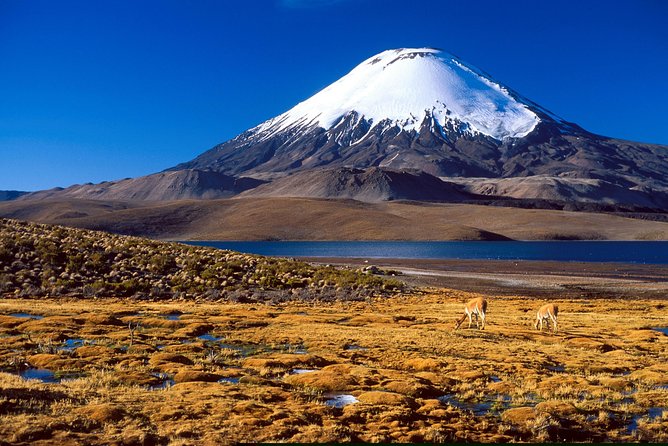
Pukara de Copaquilla is a pre-Hispanic fortress near Putre, about 3,000 meters above sea level. It sits on a cliff with steep drops around it and two parallel defensive walls. Inside are roughly 400 enclosures with circular stone walls and floors.
The site dates to the 12th century and was restored by the University of Tarapacá in 1979. It became a National Monument in 1983. You can picture it as both a settlement and a defensive position, with the terrain doing much of the protective work.
The site is valuable because it gives you a physical sense of Andean organization. This is not just an isolated ruin placed beside the road. Its location, walls, and enclosed spaces show how people used ridges and cliffs to control movement and protect a community.
Tambo de Zapahuira offers a different view of the past. It is an Inca-era complex made up of adjoining rectangular rooms connected by small doorways. About 150 meters away are two adobe chullpas, rectangular funerary towers. The complex has also been a National Monument since 1983.
The word tambo refers to a roadside facility connected with movement through the Inca world. Even without a long visit, the site helps you understand that this high country was part of an organized network. The mountains were not a barrier to all movement. They were crossed by people, goods, armies, and messengers.
The Copaquilla and Zapahuira stops are especially useful if you care about archaeology but do not have time for a separate heritage tour. You should wear good shoes, since the outing recommends comfortable walking footwear and requires a moderate level of fitness.
A completely different kind of day out:
- Valparaiso Port and Viña del Mar with Casablanca Wine Tasting
★ 5.0 · 6,110 reviews - Santiago: Cajon del Maipo/Embalse del Yeso Tour with Picnic
★ 4.3 · 3,789 reviews - Santiago: Vina Del Mar, Valparaiso, Casablanca & Reñaca Tour
★ 4.2 · 2,838 reviews - Cable Car, Funicular and Sightseeing Bus in Santiago one day
★ 5.0 · 2,325 reviews
Views over Socoroma and Putre
The road offers a panoramic view of Socoroma and Putre, the provincial capital of Parinacota. From above, you can see alfalfa fields laid into the dry terrain, with a snow-covered volcano in the distance when conditions allow.
This is one of the moments when the route’s slow climb pays off. The valley patterns, fields, and buildings look small from a viewpoint, but they show how agriculture survives in a high, dry setting. Putre also serves as an important reference point before the route reaches the national park.
Do not expect a long town visit here based on the supplied timing. The schedule includes a panoramic view and later a visit to Putre, but this is a packed day. The guide’s commentary will likely do much of the work in connecting the places you see.
Entering Lauca National Park
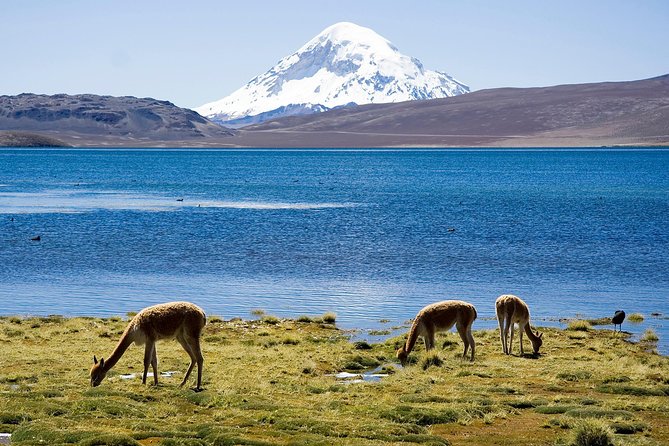
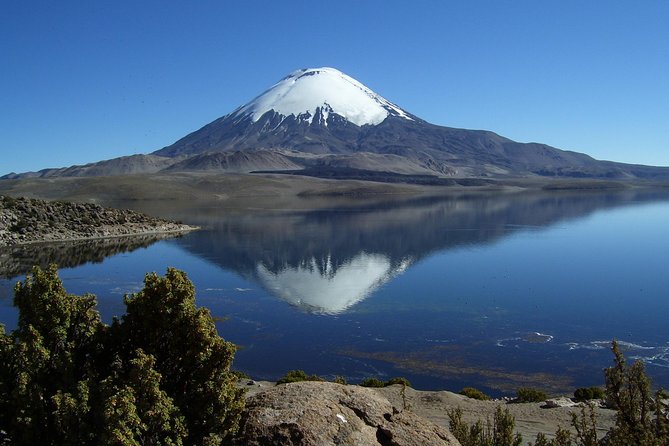
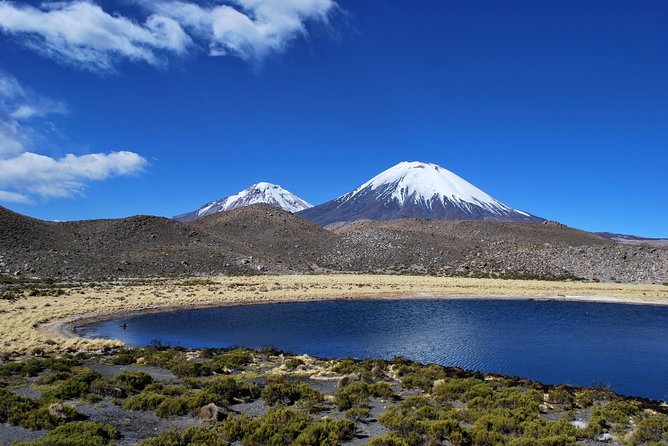
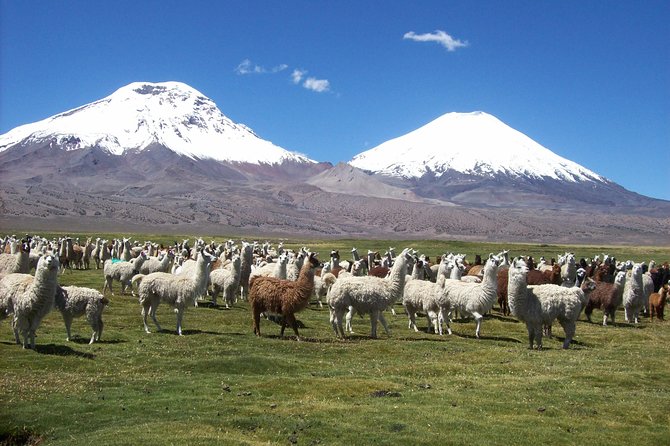
Lauca National Park is the natural centerpiece of the trip. It is surrounded by volcanoes and snow-capped peaks, including Parinacota, Pomerape, Quimsachatas, and Guallatire. Guallatire is noted for its permanent fumaroles, a reminder that this is volcanic country, not simply a high plain.
The park is also the best part of the route for spotting Andean animals. You might see guanacos, alpacas, vicuñas, llamas, and vizcachas. These animals are not guaranteed, so keep your eyes open and listen for the guide’s help. The open terrain can make wildlife look close when it is actually far away.
Plant life changes with altitude as well. The route includes bofedales, or high-altitude wetlands, along with llareta, tough bunchgrass called paja brava, and the green Cotacotani Lagoons. The plants may look simple at first glance, but they are adapted to cold, strong sun, and thin air.
The listed park visit lasts about two hours. That is enough for a strong first look, but not enough to cover every corner of Lauca. You should think of this as a scenic and wildlife introduction, not an extended hiking day.
Park admission is not included in the tour price. The information provided does not state the exact fee, so ask for the current amount when booking. The same caution applies to any required permissions.
Chungara Lake at 4,500 meters
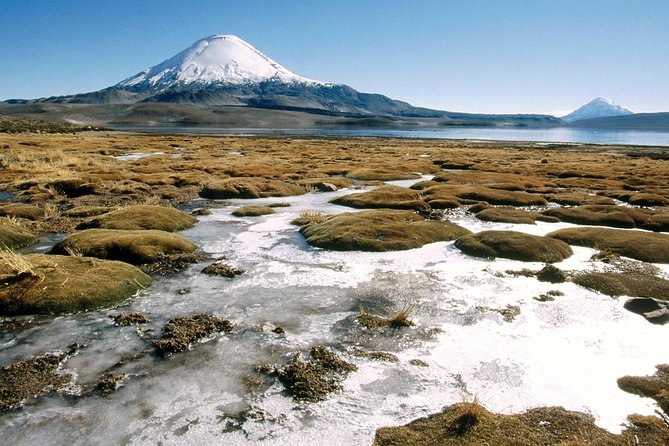
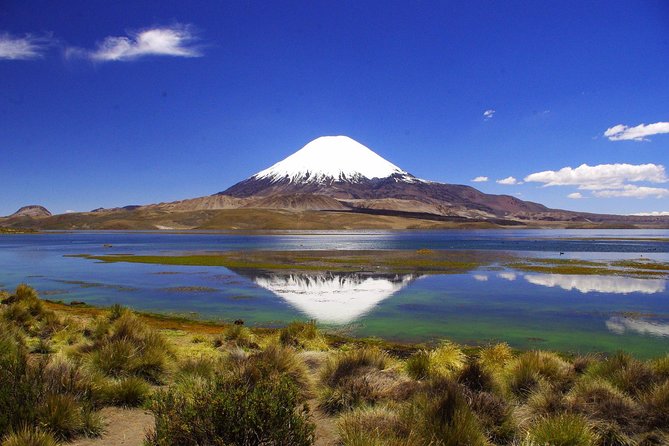
Lago Chungara is the point many people will remember most clearly. At roughly 4,500 meters, it is one of the highest major lakes in the region, framed by the stark peaks of the Chilean altiplano.
The scheduled stop is about 30 minutes. That is short, especially if you want photographs, wildlife viewing, and time to simply absorb the setting. On the other hand, a short stop may be sensible at this altitude. You should move slowly, avoid unnecessary exertion, and tell the guide if you feel unwell.
Birdlife around the lake can include giant coots, ducks, and pink flamingos. The water and nearby wetlands add color to an otherwise severe setting. Conditions, season, and animal behavior will affect what you see, so treat the wildlife list as a possibility rather than a promise.
The elevation is the real story here. At 4,500 meters, headaches, breathlessness, fatigue, and other altitude symptoms are possible. The tour requires moderate physical fitness, and you should take that requirement seriously. If you already know that high altitude affects you strongly, this may not be the right day trip.
Parinacota village and lunch in the high country
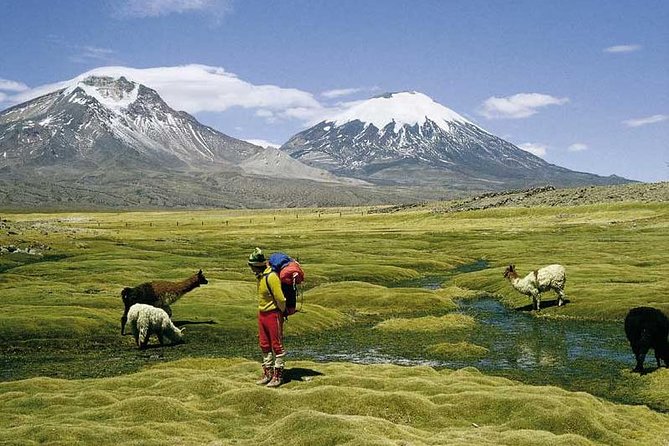
The route includes Parinacota village, with Andean colonial architecture, mud houses, and brave straw roofs. Its 17th-century church is the main cultural focus, and the village remains connected with Aymara beliefs and traditions.
This stop gives the day a welcome change of pace. After volcanoes, open plateau, and wildlife, you get a closer look at how people built and lived in the high country. The materials are practical rather than decorative, shaped by local conditions and available resources.
A visit to Putre is also included, along with lunch. Lunch is part of the package, which improves the value of the $160 cost and saves you from arranging food during a remote day. Tea, coffee, or coca tea are included as well.
Drinks with lunch are not included, and alcoholic drinks are excluded. Bring enough personal water for the day unless the operator gives you different instructions. The supplied information specifically recommends advising the operator about dietary requirements when you book.
Transport, group size, and the long return
Transport is by car or minibus, with hotel pickup and drop-off included. A maximum of 14 people keeps this from being a giant bus outing, though the actual vehicle and group size can vary.
The guide is described as informative, friendly, and professional. That matters on a route with many names, dates, archaeological terms, and altitude changes. A good explanation can turn a pile of ruins into a readable story, especially at Copaquilla and Zapahuira.
The return to Arica is expected around 8:00 p.m. This is a very long day, with an early pickup and a late arrival. You should not schedule a flight, formal dinner, or other time-sensitive plan that evening.
The tour operates in all weather conditions, but the weather policy also says the outing requires good weather. If poor conditions force a cancellation, you are offered another date or a full refund. Bring layers, sun protection, and rain protection. The high plateau can be cold, wet, windy, or bright within a short time.
Free cancellation is available if you cancel at least 24 hours before the start time. Changes or cancellations inside that window are not refunded. Confirmation is sent within 48 hours, subject to availability, and at least three people are required for a booking.
Who should book this trip?
I would choose this outing if you have one full day in Arica and want the widest possible look at the region. It suits you if you enjoy archaeological sites, mountain scenery, wildlife, village visits, and long road journeys in one package.
It is also a good fit if hotel pickup matters, you prefer an English-speaking guide, and you want lunch arranged in advance. The group limit of 14 is a useful middle ground between a private tour and a large coach.
I would hesitate if you want a relaxed schedule, extended time at each stop, or a serious hiking outing. I would also think carefully about the altitude if you have limited fitness or previous trouble at high elevations. Children under nine cannot join, and children who do meet the age requirement must be accompanied by an adult.
Should you book the Lauca and Chungara day trip?
Book it if your priority is seeing the high Andes from Arica in a single, well-organized day. The combination of Lauca National Park, Chungara Lake, Aymara villages, and pre-Hispanic sites gives you far more range than a simple viewpoint excursion.
The strongest reasons to go are the dramatic altitude change, the chance to see vicuñas and flamingos, and the clear cultural stops at Copaquilla, Zapahuira, Parinacota, and Putre. The most important reasons to pause are the 10-hour schedule, the short Chungara visit, extra park fees, and the serious altitude at the top.
That unusual storm experience, with thunder, lightning, rain, hail, and sunshine in one day, captures the character of the route. You may get a clear blue morning or a wet, dramatic altiplano. Either way, pack well, take the elevation seriously, and this can be one of the most rewarding day trips from Arica.
FAQ
How long does the tour last?
The outing lasts approximately 10 hours. Pickup begins around 7:00 a.m., and the return to Arica is expected at about 8:00 p.m.
Where does pickup take place?
Pickup is offered at centrally located hotels in Arica.
Is lunch included?
Yes. Lunch is included, along with Ceylon tea, coffee, or coca tea. Drinks with lunch and alcoholic drinks are not included.
Is transportation included?
Yes. Hotel pickup and drop-off are included, with transport provided by car or minibus.
Is admission to Lauca National Park included?
No. Tickets and permissions are not included in the tour price.
How high is Chungara Lake?
Chungara Lake is located at approximately 4,500 meters above sea level.
Can children join the tour?
Children under nine years old cannot join. Children who are allowed to participate must be accompanied by an adult.
How many people can join the tour?
The tour has a maximum of 14 participants, and a minimum of three people per booking is required.
Just added in Chile
- Walking City Tour with Funicular, Cable Car and Tasting★ 4.3 · 6 reviews
- Ascent to Villarrica volcano 2,847masl, from Pucón★ 4.8 · 36 reviews
- Volcanic Refuges: Excursion to Underground Civilization★ 4.7 · 8 reviews
- Viña del Mar and Reñaca 4-Hour Pacific Coast Tour★ 4.7 · 14 reviews
- Viña del Mar and Valparaiso: guided day tour★ 4.2 · 8 reviews
- Private: Viña del Mar and Valparaiso Day Tour★ 5.0 · 5 reviews
- VIÑA DEL MAR AND VALPARAISO TOUR★ 4.8 · 20 reviews
- Viña del Mar y Valparaíso – Full Day★ 5.0 · 1 review
National Parks, compared.
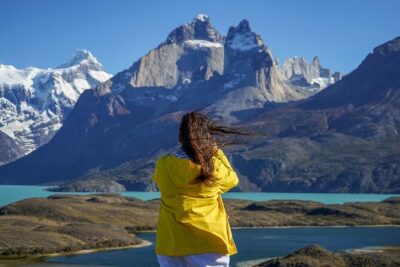
Full Day Tour to Torres del Paine National Park
Read our review →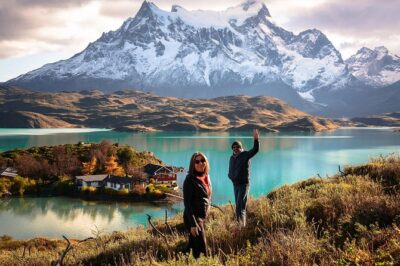
Full-Day Tour Torres del Paine National Park from Puerto Natales
Read our review →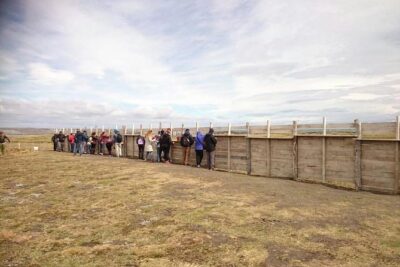
King Penguin Nature Reserve – Tierra del Fuego Island
Read our review →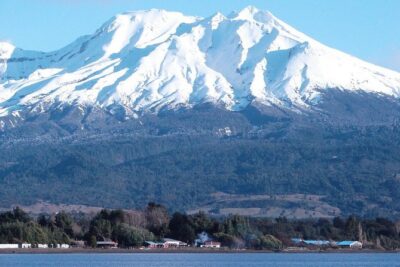
Private Tour: Puerto Montt, Puerto Varas and Vicente Peres Rosales National Park
Read our review →
Full-Day Tour of Torres del Paine National Park from Puerto Natales
Read our review →
Osorno Volcano and National Park Shore Tour for Cruisers
Read our review →
Full-day excursion to Torres del Paine National Park
Read our review →
Full-Day Hiking Tour to the Base of Paine Towers at Torres del Paine National Park
Read our review →Browse the lists this tour appears in