
REVIEW · WALKING TOURS
A City Tour Walking through the Unforgettable Santiago
Santiago reveals itself one block at a time. This 3.5-hour walking tour links the city’s oldest church, government center, grand civic buildings, historic squares, European-style lanes, a hilltop viewpoint, and colorful street art. I especially like the strong mix of colonial, neoclassical, and modern Santiago and the fact that the route ends in Lastarria, one of the city center’s useful areas for continuing your day.
At $26 per person, the tour offers fair value if you want a guide to explain Chilean history while you get your bearings on foot. I also like the early 8:30 a.m. start, which leaves plenty of time afterward for museums, lunch, or another excursion. The main drawback is the pace: with many stops packed into three and a half hours, several sites receive only 10 or 15 minutes, and transportation, food, and interior admissions are not included.
In This Review
- Five things to know before you book
- Starting at San Francisco Church at 8:30 a.m.
- La Moneda and Chile’s political center
- The Courts and the Metropolitan Cathedral
- Plaza de Armas and Chilean identity
- Paris-Londres, a small European-style neighborhood
- Cerro Santa Lucía brings views and green space
- Bandera Street and Santiago’s modern side
- Ending in Lastarria, with your afternoon still free
- What $26 buys you
- Guides, organization, and what the feedback tells you
- Who should take this Santiago walk?
- Should you book this tour?
- FAQ
- How long does the Santiago walking tour last?
- What time does the tour begin?
- Where does the tour start?
- Where does the tour end?
- Is transportation included?
- Is food included?
- What happens if the weather is poor?
Five things to know before you book
- The route covers Santiago’s essential center: You visit San Francisco Church, La Moneda Palace, Plaza de Armas, the Metropolitan Cathedral, Cerro Santa Lucía, Paris-Londres, and Bandera Street.
- It is a walking tour, not a hop-on hop-off outing: No transportation is provided, so comfortable shoes matter.
- The best historical context comes early: The route moves through colonial Santiago, Chile’s government center, the courts, and the country’s main central square.
- Cerro Santa Lucía adds a welcome change of pace: Gardens, fountains, historic features, and city views break up the sequence of buildings and plazas.
- The group can reach 30 people: That is manageable, but a larger group may make questions and street crossings less personal.
- The tour ends in Lastarria: You finish near cafés, restaurants, and cultural attractions, making it easy to continue exploring on your own.
Starting at San Francisco Church at 8:30 a.m.
The meeting point is Iglesia San Francisco at Avenida Libertador Bernardo O’Higgins 834. This is a practical place to begin because the church sits in central Santiago and immediately introduces you to the city’s colonial past.
San Francisco is the oldest church in Santiago. Its age matters because much of the capital has been altered, rebuilt, or damaged by earthquakes over the centuries. The church has survived repeated seismic shocks, giving the building more than visual appeal. It represents the persistence of Santiago’s earliest urban and religious foundations.
You spend about 10 minutes here, with free admission. That is enough for an introduction and a look at the colonial architecture, but not enough for a long, quiet examination of every religious artwork. If San Francisco interests you as an art or architecture lover, you may want to return later with more time.
The short stop also sets the tone for the morning. This is not a tour devoted to one museum or one monument. Instead, you move through several layers of Santiago, seeing how the city’s religious, political, legal, and artistic life fits together.
More City Tours in Santiago
- Private Santiago City Half Day Tour
★ 4.0 · 414 reviews - Santiago: Full day tour to Valparaiso and Viña del Mar city
★ 4.0 · 188 reviews - City tour by Santiago of Chile -A beautiful experience – Half day
★ 4.5 · 176 reviews
La Moneda and Chile’s political center
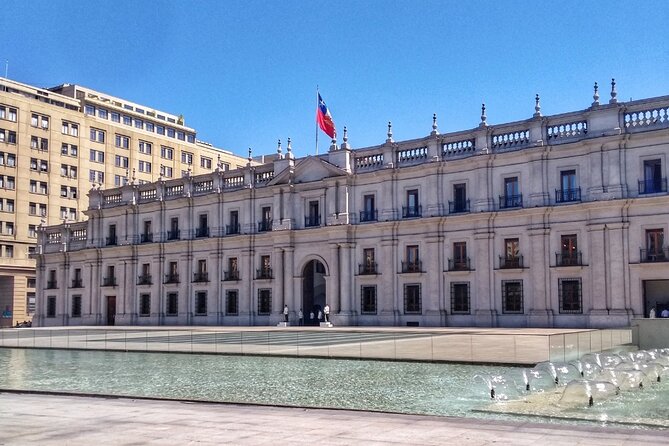
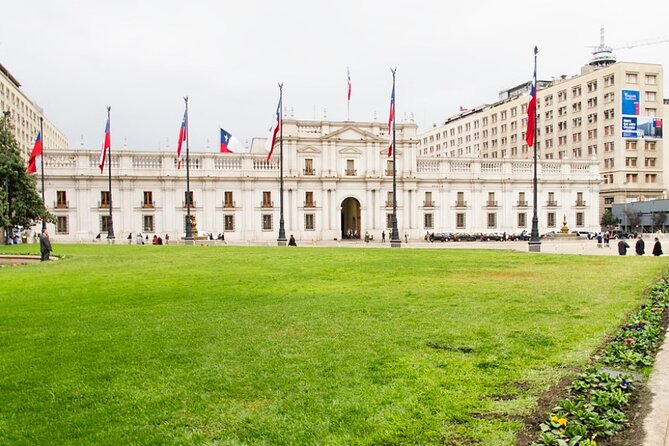
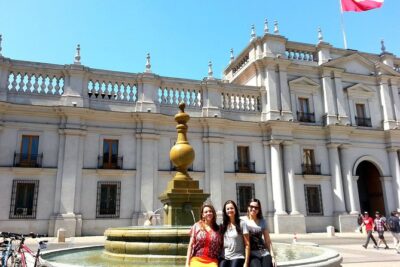
From San Francisco, the route continues to La Moneda Palace, the neoclassical seat of the Chilean government. You have about 20 minutes here, again with no admission charge included because the visit is primarily an exterior stop.
La Moneda is one of those places where the guide’s explanation adds real value. The building is not simply a grand government façade. It is tied to Chile’s political and cultural history, and the surrounding area helps explain how the capital presents national power in the middle of the city.
The changing of the guard is a well-known attraction at La Moneda, but the schedule is not provided for this tour. Do not assume that your morning visit will coincide with the ceremony. If seeing it is important to you, check the current timing separately before booking.
The 20-minute stop gives you time to take in the building and hear the main context, but the tour does not promise an interior guided visit. Guided access inside La Moneda can involve its own arrangements, so think of this portion as a useful introduction rather than a complete palace tour.
The Courts and the Metropolitan Cathedral
The Palacio de Tribunales de Justicia comes next, with roughly 15 minutes devoted to its imposing architecture and role in Chile’s judicial system. This is a good reminder that a city tour should include more than churches and viewpoints. Government buildings tell you how the country is organized, and the courts are part of Santiago’s civic identity.
The building is near Plaza de Armas, so the route remains compact through this section. You avoid the need for a vehicle and can watch the character of central Santiago change as you walk between major institutions.
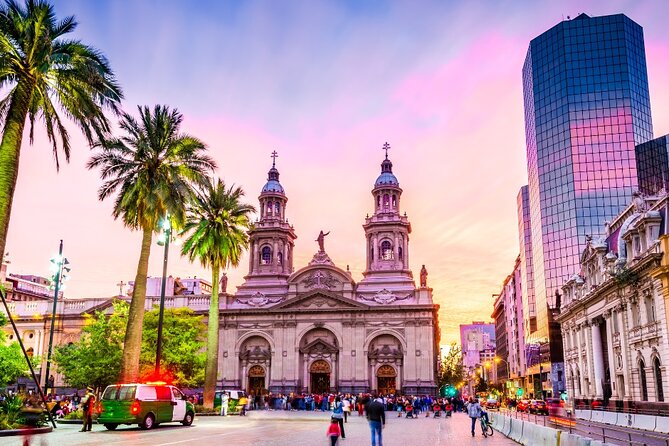
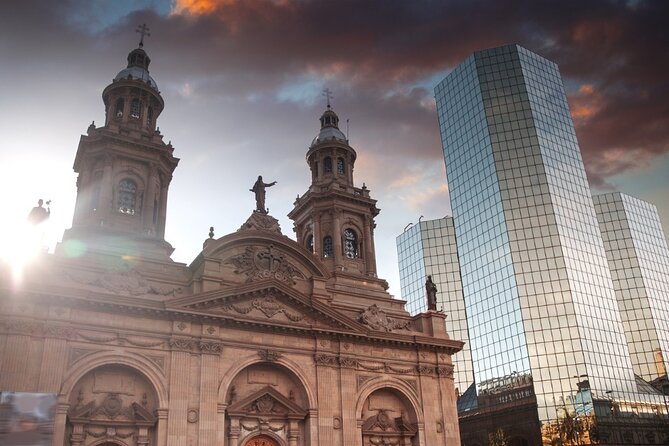
The Metropolitan Cathedral receives about 10 minutes. Located on Plaza de Armas, it is one of Chile’s most important religious landmarks, with notable architectural details and sacred art. The cathedral also offers a quieter pause in the middle of a busy central district.
Ten minutes is brief, particularly if the cathedral is open and you want to look closely at the interior. Still, the stop works well as part of a guided introduction. You get the setting, the religious importance, and a chance to see one of Santiago’s major buildings without giving up too much time elsewhere.
Plaza de Armas and Chilean identity
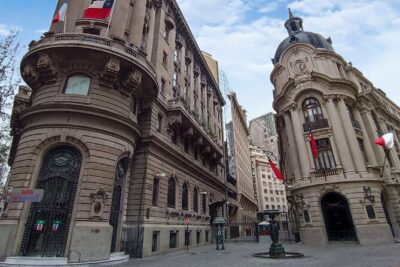
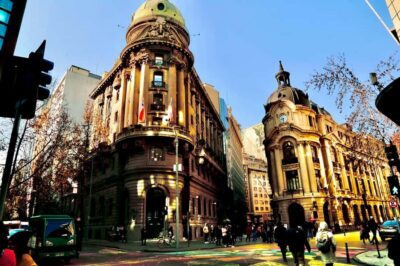
Plaza de Armas is the historic heart of the city center. The Metropolitan Cathedral, the National Historical Museum, and other important buildings surround the square, making it one of the clearest places to understand how Santiago developed as a civic center.
The tour allows about 10 minutes in the plaza. That is enough to orient yourself, take photographs, and connect the cathedral and museum to the wider urban setting. It is not enough to sit, watch daily life, and explore every corner. I would treat this as your first introduction, then return later if you enjoy people-watching or want a slower look.
The National Historical Museum is also located on Plaza de Armas. Its displays cover the formation of Chilean identity and the events that shaped the country. The information provided for the tour does not specify a separate admission visit or a set amount of time inside, so you should not count on a full museum experience during the walk.
That distinction matters. If your main goal is Chilean history, reserve a separate visit to the museum. The walking tour gives you a helpful framework, then you can use the museum to fill in the details at your own pace.
More Walking Tours in Santiago
- The best walking tour in Santiago de Chile
★ 5.0 · 629 reviews - Santiago Half-Day Walking Tour with Hotel Pick up & Food Sample
★ 4.5 · 467 reviews - A Fabulous Walking tour by the Old Santiago of Chile –
★ 5.0 · 466 reviews - Santiago: Guided Walking Tour of the Historical Old Town
★ 4.8 · 459 reviews
Paris-Londres, a small European-style neighborhood
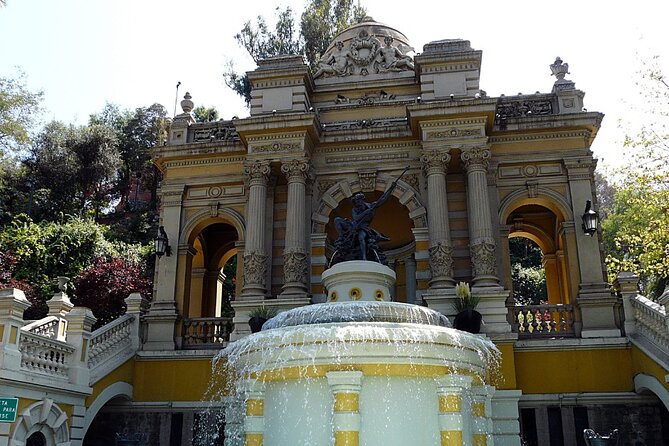
Paris-Londres is one of the most photogenic sections of the route. Its narrow streets, sidewalks, European-style architecture, cafés, restaurants, and boutique hotels create a setting that feels different from the broad civic spaces around La Moneda and Plaza de Armas.
You spend about 15 minutes here. That is enough for a short walk and photographs, though you may wish the tour allowed longer. The neighborhood is near San Francisco Church, yet it feels like a distinct pocket of the center, making it a useful example of how Santiago contains several architectural moods within a small area.
I like this stop because it breaks up the formal history lesson. You are not only looking at monuments tied to national institutions. You are also seeing a neighborhood designed for everyday city life, with places to eat, stay, and wander.
If you return after the tour, this is a good area for a slower stroll. The route itself moves on quickly, so keep an eye on the guide and do not let the narrow streets and camera-friendly corners make you late.
Cerro Santa Lucía brings views and green space
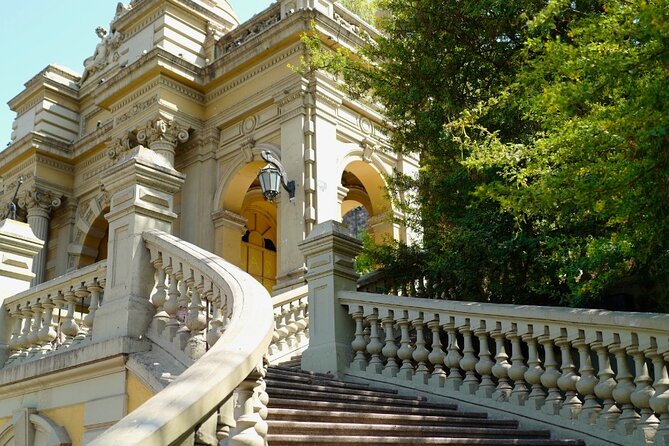
Cerro Santa Lucía is the route’s most welcome change in scenery. This hill rises in the center of Santiago and includes gardens, fountains, historic architecture, and views toward the city and surrounding mountains.
The stop lasts about 15 minutes. That gives you a taste of the hill, but it may not allow a leisurely climb or extended time at every viewpoint. If you want to explore the gardens fully or take many photographs, plan to return independently.
The hill is valuable for more than its views. After several historic buildings and busy streets, the gardens provide room to pause. You can see Santiago from above and better understand the relationship between the dense center and the mountains around it.
Weather will affect this stop. The tour requires good weather, and poor conditions can lead to a new date or a full refund. Even in suitable weather, visibility can affect how much you see from the hill, so keep expectations practical. The viewpoint is an important part of the route, but clear mountain views are never guaranteed by a city walk.
Bandera Street and Santiago’s modern side
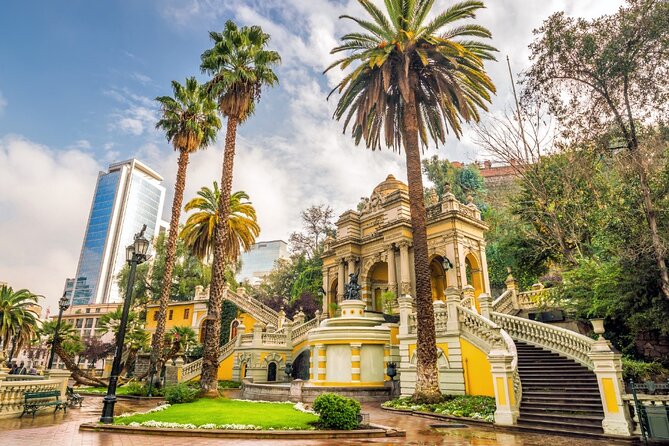
Bandera Street gives the tour a contemporary finish before you reach Lastarria. The street was revitalized for pedestrians and is known for colorful urban art and painted walls. It is close to La Moneda and provides a sharp contrast with the colonial church and formal government buildings seen earlier.
You spend about 10 minutes here. That is sufficient for a quick look and photographs, but anyone interested in street art will likely want to return and explore at a slower pace. Urban artwork can change, and a short guided pass cannot cover every wall or detail.
This stop is important because it keeps the tour from presenting Santiago as a museum of old buildings. The city also has a current artistic life, and Bandera shows that side in a direct, public way. It is a good final visual note before the tour ends in Lastarria.
Ending in Lastarria, with your afternoon still free
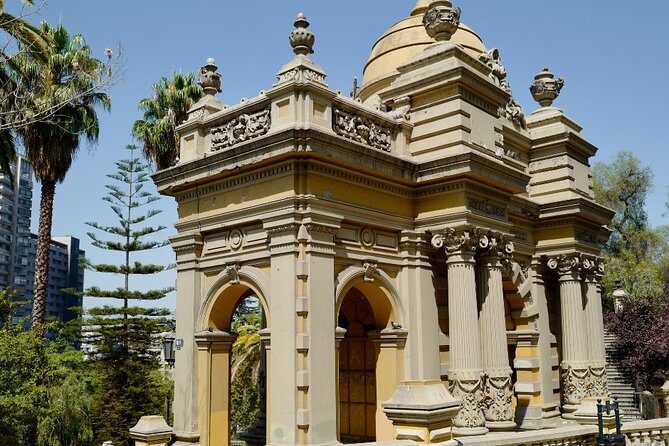
The tour ends in Lastarria, a useful location for continuing your day. Since the walk begins at 8:30 a.m. and lasts approximately three hours and 30 minutes, you should finish around noon, depending on the pace and time spent moving between stops.
The end point gives you flexibility. You can look for food, continue through central Santiago, or make your own plans without having spent the entire day on a guided activity. Food is not included, so plan to pay for lunch separately.
No transportation is included either. That is not a major issue for a central walking route, but it does mean you need to reach the meeting point on your own and arrange your way onward after the walk. The start and finish are different, so do not assume you will return to San Francisco Church.
What $26 buys you
At $26 per person, the price is reasonable for a guided overview of central Santiago. You are paying for a guide, route planning, historical explanation, and the convenience of linking major sights without working out the order yourself.
The value is strongest if this is your first morning in Santiago. One participant specifically advised beginning a Chile trip with the city tour because it helps you understand the country and the region. That is sound advice: the route gives you a basic map of the center, points out places worth revisiting, and helps you decide what deserves more of your limited time.
The price is less compelling if you want long interior visits. Most stops last only 10 to 20 minutes, and the included service is the guide rather than museum entry, meals, or transportation. Think of this as a guided orientation, not a series of full monument tours.
The maximum group size is 30 people. That keeps the cost accessible, though a group that size can feel less personal than a private walk. Ask questions when you can, stay close to the guide, and expect the experience to work best as a shared overview.
Guides, organization, and what the feedback tells you
The strongest praise focuses on the guides’ manners, organization, punctuality, and ability to make history enjoyable. Esteban received special praise for leading the city walk, while Lorena and driver Juan were appreciated on a separate Portillo outing. Andreia was also described as attentive and organized while arranging several excursions.
Those comments do not guarantee which guide you will receive. They do suggest that the provider places weight on clear organization and friendly service. One account also praised restaurant suggestions, a useful bonus when you are deciding where to eat after the walk.
The city tour itself has a perfect rating from four supplied ratings, but that is a small sample. I would take it as encouraging rather than conclusive. The most consistent practical message is to use this experience early in your trip, when the historical context and neighborhood orientation can help shape the rest of your visit.
Who should take this Santiago walk?
I would choose this tour if you want a clear first look at Santiago and prefer learning while moving through the city. It suits first-time visitors, history and architecture fans, and anyone who wants a guide to connect buildings that might otherwise seem unrelated.
It also works for people with only a short stay. In one morning, you see the city’s oldest church, government palace, courts, cathedral, main square, museum setting, hilltop viewpoint, historic neighborhood, and public art street.
You may want a different plan if you dislike group walks, need extensive time inside museums, or prefer to explore at a very slow pace. The route covers a lot, and the short stops favor breadth over detail.
Most people can participate, and service animals are allowed. The meeting point is near public transportation. Since no special physical restrictions are stated, you should still be prepared for several hours on foot and time spent walking through central streets and Cerro Santa Lucía.
Should you book this tour?
Book it if you want an affordable, well-organized introduction to Santiago, especially on your first morning. The combination of major landmarks, short historical explanations, Cerro Santa Lucía views, and modern street art gives you a balanced first picture of the city.
Skip it if your priority is deep time inside the National Historical Museum, La Moneda, or the cathedral. In that case, you will get more from independent visits with a slower schedule.
You can cancel free of charge up to 24 hours before the start time for a full refund. Changes made inside that window are not accepted, and poor weather or failure to meet the minimum group size can lead to a new date or a full refund. For a $26 overview that ends in Lastarria before the afternoon, this is a sensible way to get your Santiago bearings without committing your whole day.
FAQ
How long does the Santiago walking tour last?
The tour lasts approximately three hours and 30 minutes.
What time does the tour begin?
The start time is 8:30 a.m.
Where does the tour start?
The meeting point is Iglesia San Francisco at Avenida Libertador Bernardo O’Higgins 834, Santiago.
Where does the tour end?
The tour ends in Lastarria, Santiago.
Is transportation included?
No. Transportation is not included, and the experience is conducted as a walking tour.
Is food included?
No. Food is not included in the tour price.
What happens if the weather is poor?
Because the experience requires good weather, a cancellation caused by poor weather results in an offer of a different date or a full refund.
Just added in Santiago
- Walking City Tour with Funicular, Cable Car and Tasting★ 4.3 · 6 reviews
- VIÑA DEL MAR AND VALPARAISO TOUR★ 4.8 · 20 reviews
- Tour VIÑA CONCHA Y TORO + CASA MARQUES – Chile, from Santiago.★ 5.0 · 2 reviews
- Undurraga + Isla Negra + San Afonso del Mar —– Full day★ 4.1 · 8 reviews
- Undurraga Wine tour★ 4.2 · 15 reviews
- Southcoast – Private Full-Day tour★ 5.0 · 6 reviews
- Santiago Private walking tour with Lunch★ 5.0 · 5 reviews
- Zapallar : nature, sea and local flavours★ 5.0 · 6 reviews
Walking Tours, compared.

Walk with Penguins on Magdalena & Marta Island
Read our review →
Santiago Half-Day Walking Tour with Hotel Pick up & Food Sample
Read our review →
A Fabulous Walking tour by the Old Santiago of Chile –
Read our review →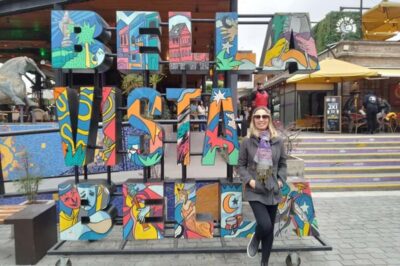
Santiago Half-Day Walking Tour with Hotel Pick up & Brunch
Read our review →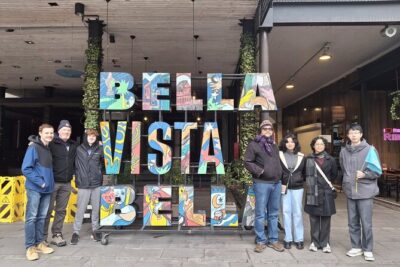
Santiago Skyline: Cable Car & San Cristobal Walking Tour
Read our review →Browse the lists this tour appears in