
REVIEW · SAN PEDRO DE ATACAMA TOURS
Shared Archaeological Tour in San Pedro de Atacama
The desert keeps old secrets. This four-hour excursion links Tulor Village and Pukara de Quitor, two important archaeological sites near San Pedro de Atacama, and gives you a clear introduction to the origins of the Atacameña culture. I like the strong historical focus and the chance to visit two very different sites in one morning. I also like the small shared group, capped at 12 people, which should make transport and site visits easier to manage.
The main trade-off is that entrance tickets are not included in the $38 price. You also need a moderate level of physical fitness, especially for the two-hour visit at Pukara de Quitor. The tour begins at 8:00 a.m., so it suits an early start better than a lazy morning.
In This Review
- Key points to know before booking
- Why these two sites belong together
- Tulor Village and the settlements beneath the sand
- Pukara de Quitor and the story of conflict
- What the $38 price really covers
- A practical look at the four-hour schedule
- Who will get the most from this outing
- What to confirm before you go
- Is this archaeological tour worth booking?
- FAQ
- Where does this archaeological tour take place?
- What time does the tour start?
- How long does the experience last?
- Is pickup available?
- What sites are included?
- Are entrance tickets included?
- What is included in the tour price?
- How many people can join the tour?
- Can I cancel for a full refund?
Key points to know before booking
- Two contrasting archaeological sites: Tulor Village introduces early settlement in the Salar de Atacama basin, while Pukara de Quitor focuses on defense, conflict, and changing regional power.
- A four-hour morning outing: The scheduled visits total about three and a half hours, leaving the rest for transport between sites and pickup arrangements.
- Shared transport for up to 12 people: You get an air-conditioned vehicle without paying for a private tour.
- A snack is included: The box snack is a small but useful touch during an active morning.
- Entry fees are extra: Add both site tickets to your budget before you reserve.
- Free cancellation up to 24 hours ahead: Poor weather or an unmet minimum group size can also lead to a new date or a full refund.
Why these two sites belong together
San Pedro de Atacama has no shortage of dramatic scenery, but this outing asks you to look beyond the desert views. Its purpose is to connect the places you visit with the people who lived in the Atacama region long before modern tourism, and before the arrival of the Spanish.
That makes the pairing useful. Tulor offers a look at early settlement and long-term survival in a dry basin. Pukara de Quitor shifts the story toward fortified communities, political change, and conflict. You are not simply stopping at two ruins that happen to be nearby. You are following a broad timeline.
The tour description frames this approach as starting with the grandparents of the region. That is a good way to understand the experience. It places local culture first, rather than treating archaeology as a quick break between scenic viewpoints.
One piece of feedback praised the amount of information about early local settlers and the desert views, which were more impressive than expected. That combination is important. You get a history-focused visit, but the sites are not enclosed in a museum. The surrounding Atacama setting is part of what gives them meaning.
More things to do in San Pedro de Atacama:
- San Pedro de Atacama: El Tatio Geysers Tour
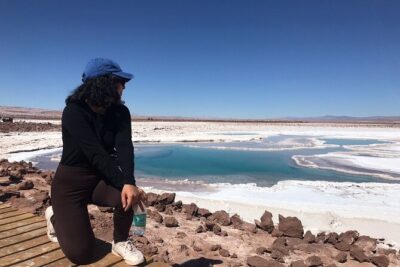
★ 4.7 · 943 reviews - Tour to the Hidden Lagoons of Baltinache
★ 5.0 · 694 reviews - San Pedro de Atacama: Etno-Stargazing Tour with Transfer
★ 4.8 · 629 reviews
Tulor Village and the settlements beneath the sand
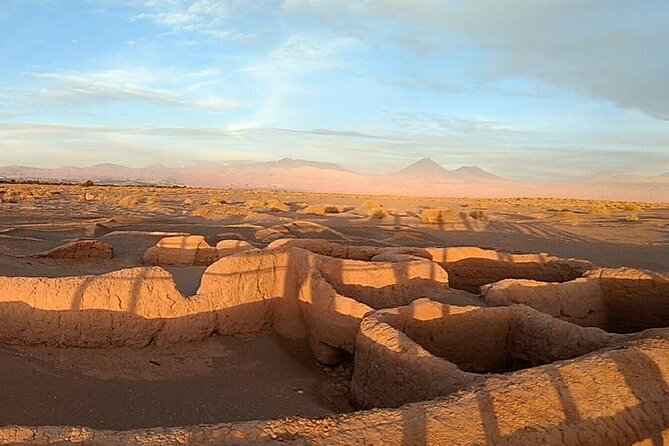
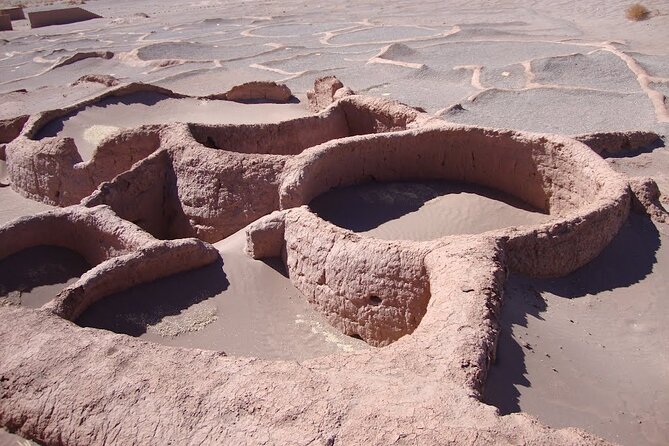
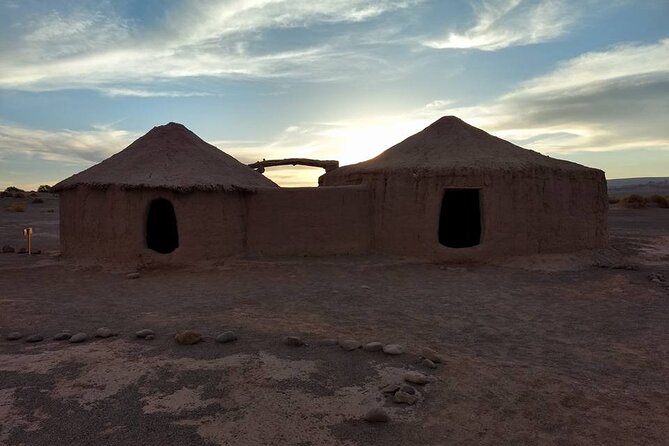
The first stop is Aldea de Tulor, also called Tulor Village. You spend about one hour and 30 minutes here, making it the shorter of the two main visits.
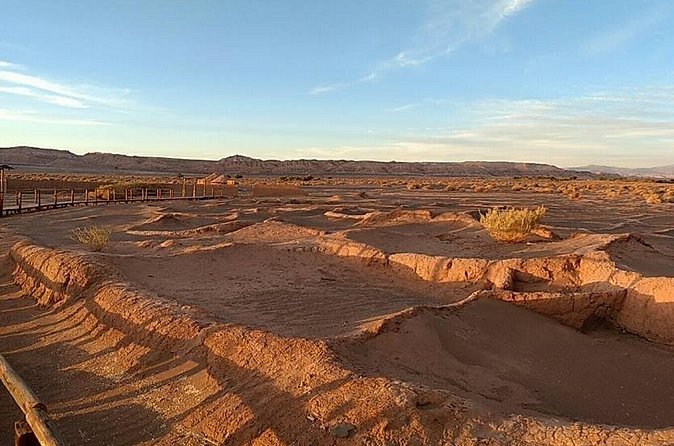
Tulor is described as one of the oldest sites in the settlement chronology of the Salar de Atacama basin that can be visited. Older sites exist, but they are not accessible to the public. Tulor has been preserved for centuries beneath sand, which gives the stop a special character and helps explain why it remains available for study and viewing.
That detail changes how you look at the remains. You are not seeing a large, restored monument built to impress modern visitors. You are seeing a settlement whose survival is tied to the desert itself. Sand can cover and damage archaeological remains, but in this case it also helped protect the site over time.
I like Tulor as an opening stop because it begins with daily settlement rather than military drama. The emphasis is on the first communities in the basin and the origins of Atacameña culture. If you want a tour that places local archaeology at the center, this is the part that sets the tone.
The one-hour-30-minute schedule should give you enough time to listen, examine the site, and take in the setting without turning the morning into an all-day archaeological expedition. Still, entry is not included, so you need to account for that extra cost. The amount is not specified here, and you should confirm it before booking if your budget is tight.
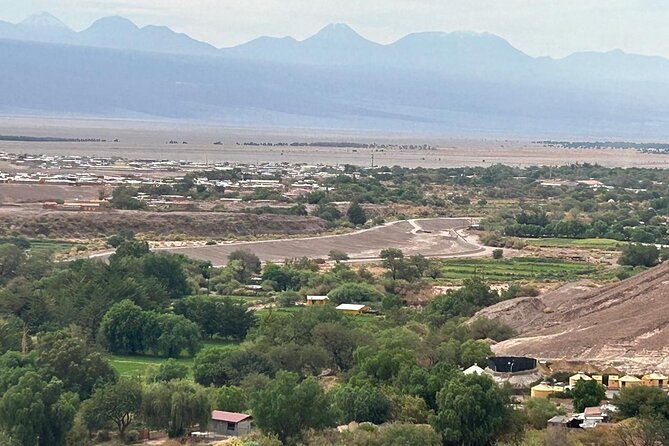
The desert views also matter at Tulor. The strongest praise for this outing focused on scenery that exceeded expectations. You may find that the open setting helps you understand the settlement more clearly than a crowded indoor display would. At the same time, the information provided does not promise a particular viewpoint, exhibit, or reconstruction, so you should come for the archaeological context rather than a staged attraction.
Pukara de Quitor and the story of conflict
The second stop is Pukara de Quitor, with about two hours set aside for the visit. This is the longer stop and likely the more physically demanding part of the morning.
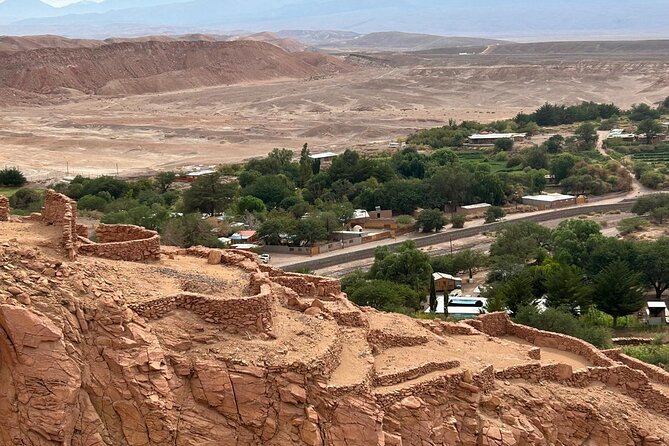
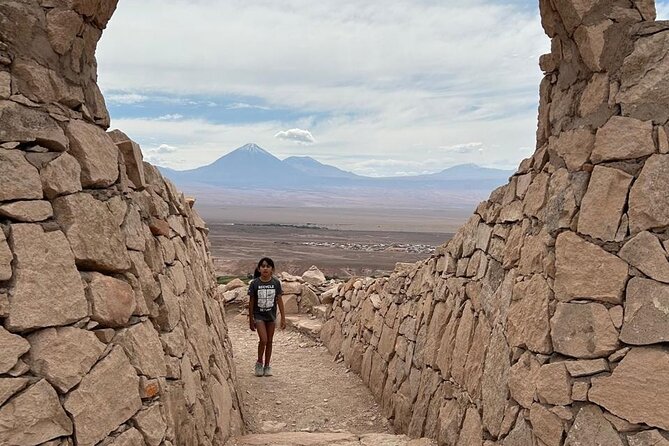
Pukara de Quitor is an Indigenous fortress. One explanation links its construction to internal conflicts between communities following the decline of the Tiawanaku culture. Later, the site became connected with some of the first clashes between Spanish forces and Indigenous communities.
The wording matters here. The internal-conflict explanation is presented as one theory, not as an absolute answer. Archaeological sites often carry several layers of interpretation, and you should expect the guide to explain a developing story rather than offer a single neat conclusion.
Pukara gives the tour a different rhythm from Tulor. At Tulor, the focus is early settlement and preservation under sand. At Pukara, you are thinking about defense, community tensions, regional change, and the arrival of the Spanish. The two stops work best as a pair because they cover different pressures that shaped life in the region.
Allow two hours for Pukara, and take the moderate fitness requirement seriously. The tour does not provide a detailed description of trails, slopes, or surfaces, so I would not assume the visit is a flat walk. Comfortable shoes and a sensible pace are practical choices, although specific footwear guidance is not included in the supplied details.
The longer time here may appeal to you if you enjoy history that connects buildings with political events. If you prefer a quick photo stop, two hours may feel long. The attraction of Pukara is not just its physical remains. It is the chance to consider how local communities responded to internal change and later confrontation with Spanish forces.
Entrance is also extra at this stop. Since tickets for both Tulor and Pukara are excluded from the tour value, check the combined cost before you commit. The $38 charge covers the operating part of the experience, not every expense connected with entry.
What the $38 price really covers
At $38 per person, this is priced as an affordable shared excursion rather than a private archaeological guide service. You receive an air-conditioned vehicle, a box snack, and transport for a morning that includes two substantial site visits.
The shared format keeps the price reasonable. The maximum group size is 12, which is small enough to feel more manageable than a large coach outing, though it is not the same as having a private guide. If the group reaches its limit, you should expect to share the guide’s attention and follow a common schedule.
Air conditioning is especially useful for a desert outing. The vehicle gives you a cooler space between stops, and the snack helps during a morning with several hours of activity. These are simple inclusions, but they matter more on an active excursion than decorative extras would.
The value depends heavily on the ticket prices. Since site admission is not covered, you should think of $38 as the base tour price. Even so, the combination of transport, a four-hour schedule, two archaeological sites, and a small maximum group can make it a sensible choice for someone who wants structure without paying for a private vehicle.
Pickup is offered, but the exact pickup area and timing are not provided. The fixed start time is 8:00 a.m. Confirm the pickup details before the morning of the tour, especially if your accommodation is outside the normal service area.
A completely different kind of day out:
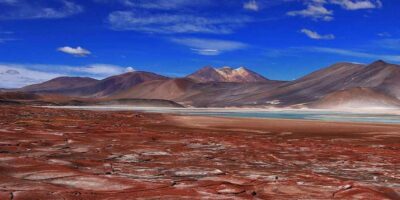
- Piedras Rojas, Altiplanics Lagoons & Salar Full-Day Tour
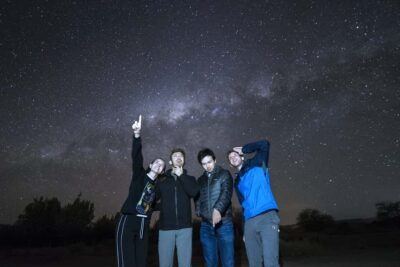
★ 4.7 · 592 reviews - The Roofless Experience San Pedro de Atacama Stargazing Tour
★ 5.0 · 522 reviews - Half Day Tour to Geysers del Tatio
★ 5.0 · 499 reviews - San Pedro de Atacama: Stargazing Experience
★ 4.7 · 489 reviews
A practical look at the four-hour schedule
The stated duration is about four hours. Tulor receives one hour and 30 minutes, and Pukara receives two hours, for roughly three and a half hours at the sites. The remaining time covers driving, pickup, and the transition between locations.
That schedule is fairly focused. You are not signing up for a full-day circuit with several unrelated stops. You are getting a morning built around two archaeological visits. I see that as an advantage if you want to reserve the afternoon for another activity or simply rest after a warm desert outing.
The 8:00 a.m. start also helps keep the experience contained within the morning. If you dislike early departures, this will require a little discipline. If you prefer to make good use of the day, the early start leaves more time later.
The itinerary does not list an exact return time, so treat the four-hour figure as approximate. Shared tours can run slightly longer because of pickup arrangements and group movement. Avoid booking another activity immediately afterward unless you have enough flexibility.
A box snack is included, but no full meal is promised. Think of it as support for the morning, not breakfast and lunch in one. If you need a substantial meal early in the day, plan that separately.
Who will get the most from this outing
I would recommend this tour to you if you want historical context for the San Pedro area and prefer visiting sites with a clear connection to local culture. It is especially suitable for people who want more than scenery and who enjoy hearing how settlement, political change, and Spanish arrival affected the region.
It also fits a traveler watching costs. The shared vehicle and group limit offer a middle ground between an expensive private tour and a much larger bus excursion. The price is attractive, but only after you add the two admission fees.
You should be comfortable with a morning that includes walking and a two-hour visit at Pukara. The moderate fitness requirement is the clearest warning in the practical information. If mobility or endurance is a concern, ask the provider for current details about the terrain before booking.
Families with older children may find the historical theme rewarding, but the supplied information does not give a minimum age or family-specific arrangement. I would not assume it is designed for very young children.
This is less suitable if your main goal is stargazing, salt flats, or a long scenic drive. Those experiences are not part of the stated program. The focus here is archaeology, with desert scenery as an important setting rather than the main subject.
What to confirm before you go
A few simple checks can prevent surprises:
- Confirm where pickup is available and how close to 8:00 a.m. you need to be ready.
- Ask for the current admission prices for Tulor and Pukara.
- Check the expected walking conditions at Pukara if you have any fitness or mobility concerns.
- Keep the schedule flexible after the tour because the four-hour duration is approximate.
- Remember that the group requires a minimum number of participants to operate.
The provider is Whipala Expedition. Booking confirmation is issued at the time of reservation, and the tour uses a mobile ticket. That is convenient, but keep the ticket accessible on your phone and make sure your battery is charged.
Free cancellation is available if you cancel at least 24 hours before the 8:00 a.m. start time. A cancellation inside that window is not refunded, and changes are not accepted. Bad weather or an unmet minimum group can also cancel the outing, in which case you are offered another date, another experience, or a full refund.
Is this archaeological tour worth booking?
I think this is a good-value morning for you if archaeology and Atacameña culture matter more than a long list of attractions. Tulor provides an unusual look at an early settlement preserved beneath sand, while Pukara de Quitor brings in fortification, internal conflict, Tiawanaku decline, and early Spanish-Indigenous clashes.
The strongest reasons to book are the focused pairing, air-conditioned shared transport, small maximum group, and unexpectedly strong desert views. The main reasons to hesitate are the extra admission fees, the early start, and the moderate physical requirement.
Book it if you want a concise, history-led introduction to the area and are happy to pay site fees separately. Skip it if you want a relaxed sightseeing ride with little walking or if archaeology is not high on your list. For the right visitor, this is a thoughtful way to meet the region’s past before moving on to its more famous natural attractions.
FAQ
Where does this archaeological tour take place?
The tour operates from San Pedro de Atacama in Chile and visits Tulor Village and Pukara de Quitor.
What time does the tour start?
The scheduled start time is 8:00 a.m.
How long does the experience last?
The tour lasts approximately four hours.
Is pickup available?
Yes, pickup is offered. The provided details do not specify the exact pickup locations.
What sites are included?
The tour visits Aldea de Tulor, or Tulor Village, and Pukara de Quitor.
Are entrance tickets included?
No. Admission tickets for the sites are not included in the tour price.
What is included in the tour price?
The price includes an air-conditioned shared vehicle and a box snack.
How many people can join the tour?
The maximum group size is 12 people.
Can I cancel for a full refund?
Yes, if you cancel at least 24 hours before the experience start time. Cancellations made less than 24 hours ahead are not refunded.
Just added in San Pedro de Atacama
- Vallecito★ 4.7 · 13 reviews
- Atacama Desert and Magic Bus Visit★ 4.8 · 15 reviews
- San Pedro de Atacama: Valle de la luna★ 3.0 · 3 reviews
- Valle de la Luna: A Moon-Like Escape in Atacama★ 5.0 · 3 reviews
- Triple Tour: Piedras Rojas + Altiplanic Lagoons + Chaxa Lagoon★ 5.0 · 1 review
- Red Stones + Altiplánica Lagoons★ 5.0 · 1 review
- Atacama Stargazing Tour Under One of the World’s Clearest Skies★ 4.0 · 3 reviews
- Tour to Laguna Cejar and Tibenquinche★ 4.5 · 7 reviews
San Pedro de Atacama Tours, compared.


Piedras Rojas, Altiplanics Lagoons & Salar Full-Day Tour
Read our review →
The Roofless Experience San Pedro de Atacama Stargazing Tour
Read our review →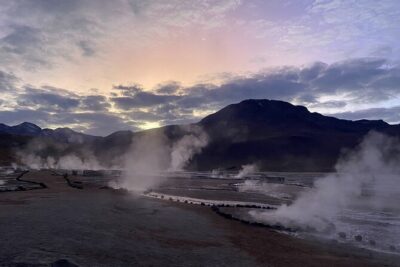
Full Day Tour to Piedras Rojas, Altiplanic Lagoons and Chaxa
Read our review →Browse the lists this tour appears in