
REVIEW · CYCLING TOURS
Santiago: Highlights, Parks and Politics Bike Tour
Santiago tells its story on two wheels. I like the easy-going route through Forestal and Bustamante Parks, and I like how the ride connects green spaces with La Moneda and the Gabriela Mistral Cultural Center. The guides, including Juan Pablo, Isabella, Valentina, and Camille, are praised for clear history, local advice, and careful pacing. The main consideration is that this is as much a politics and culture tour as a cycling trip, so it may feel less satisfying if you want a long, athletic ride.
This is a good way to get your bearings in central Santiago without spending three hours marching from one sight to the next. The route is described as flat, the cruiser bikes are comfortable, and the group is limited to 10 people. You should still be comfortable riding in city streets, and wheelchair users cannot join this particular outing.
In This Review
- Key points at a glance
- Why this three-hour ride works so well
- Starting near Baquedano and Plaza Mori
- Forestal Park brings trees into the city
- Bustamante Park and Santiago’s cycling network
- Gabriela Mistral Cultural Center adds cultural weight
- La Moneda puts Chilean history at the center
- Local slang, gelato, and useful human touches
- What the guides do best
- Is $45 a fair price?
- Who should book this ride?
- Final verdict: a smart first ride in Santiago
- FAQ
- How long does the Santiago bike tour last?
- What is the price per person?
- Where does the tour meet?
- Which languages are available?
- How large is the group?
- What kind of bicycle is provided?
- Is a helmet included?
- What food or drink is included?
- Does the tour include hotel pickup and drop-off?
- Can I cancel for a full refund?
- Is the tour suitable for wheelchair users?
- Do I need to be an experienced cyclist?
Key points at a glance

- Santiago’s politics shape the route: La Moneda and the Gabriela Mistral Cultural Center give the tour a serious purpose beyond sightseeing.
- Two major parks break up the city ride: Forestal and Bustamante Parks bring shade, trees, and a slower rhythm to the afternoon.
- The route uses real bike lanes: You get a practical look at Santiago’s growing cycling network rather than viewing the city only from a tour bus.
- The group stays small: With no more than 10 participants, it is easier to hear the guide and ask questions.
- A local treat is included: Handcrafted ice cream is offered, with coffee or espresso available instead if you prefer.
- You learn Chilean slang: The language tips add a light, useful touch to the political and historical talk.
Why this three-hour ride works so well
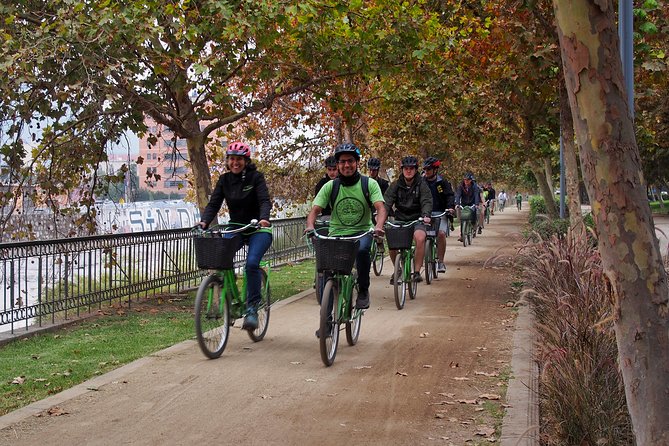
Santiago can feel spread out when you first arrive. The central districts combine broad avenues, apartment towers, old civic buildings, leafy parks, cultural centers, and monuments. On foot, you can cover some of this ground, but you may spend a lot of time crossing between sights.
A bicycle gives you a better middle ground. You move far enough to see several parts of downtown, yet slowly enough to notice the streets and public spaces along the way. You are not sealed inside a vehicle, and you do not need the fitness level required for a serious cycling excursion.
The route is built for people who want context. The ride links Santiago’s parks and landmarks with Chile’s political story, including the way public events have shaped society. That focus earned strong praise from people who wanted history and politics rather than a purely recreational bike outing.
I would think of this as a moving city lesson with pleasant cycling between chapters. The bike is the means of connection, not the main event.
More bike rides in Santiago:
- Santiago Markets Small Group Bike Tour
★ 5.0 · 368 reviews - Santiago Highlights, Parks and Politics Bike Tour
★ 5.0 · 264 reviews - Santiago: Markets Bike Tour
★ 4.8 · 107 reviews
Starting near Baquedano and Plaza Mori
The meeting point is at Constitución 153, next to Plaza Mori and near Baquedano Metro Station. That location matters because it places you close to an important central part of Santiago, with the parks and downtown sights within reach.
You receive a beach cruiser city bike, a helmet, bottled water, and sunscreen. Helmets are mandatory under Chilean law, so this is not an optional extra. The cruiser style should suit riders who want a relaxed upright position rather than a fast, sporty bicycle.
The small group limit of 10 is one of the tour’s practical strengths. City cycling is easier when the group is not strung out over several blocks, and a small number of people gives you a better chance to hear the guide at each stop. It also makes it simpler to ask about a monument, neighborhood, or local custom without holding up a large crowd.
The tour runs for three hours, with starting times depending on availability. Since the experience is described as an afternoon outing, you should consider Santiago’s sun and bring suitable clothing. Sunscreen and water are supplied, but a camera is worth carrying for the parks, architecture, and monuments.
Forestal Park brings trees into the city
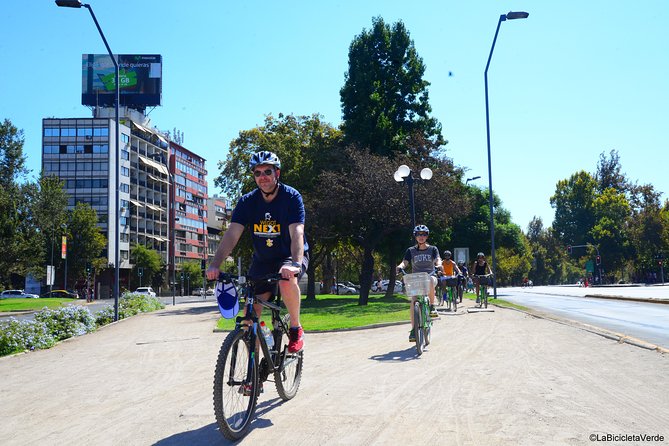
The first part of the ride takes you through Santiago’s green spaces, including Forestal Park. This is a welcome change from the traffic and tall buildings of central Santiago. Big trees provide shade, and the pace gives you time to see how residents use the city’s public spaces.
A park ride also helps you understand Santiago as a lived-in city rather than a string of postcard sights. You see the relationship between open space, busy streets, and the central districts. The route is not only about stopping at famous buildings. It shows how the city makes room for daily life.
Forestal Park is especially useful early in the tour because it gives you time to settle onto the bike. You can learn the group’s pace, get used to the cruiser, and listen to the guide before reaching the more serious political stops.
The ride is described as inclusive and suitable for people who are not sports enthusiasts. That does not mean you should expect a completely traffic-free path. You are still cycling through an urban center, so basic comfort on a bicycle is important.
Bustamante Park and Santiago’s cycling network
Bustamante Park adds another stretch of greenery and helps explain the practical side of cycling in Santiago. The route uses some of the city’s growing network of bike lanes, letting you see how cycling fits into the urban system.
This is valuable if you are thinking about renting a bicycle later in your trip. You can observe the rhythm of riding in the city with a guide who helps manage the route and keeps the group together. Several comments praise the guides for paying close attention to safety, making sure no one gets lost, and maintaining a comfortable pace.
The parks also keep the outing from becoming a nonstop run of concrete and traffic. You get short pauses in a calmer setting before returning to the streets. That balance is one reason the three-hour length feels useful rather than exhausting.
I would not book this expecting mountain views or a countryside excursion. The appeal is urban Santiago: parks, city streets, public buildings, and political landmarks close to the center.
More things to do in Santiago:
- Valparaiso Port and Viña del Mar with Casablanca Wine Tasting
★ 5.0 · 6,110 reviews - Santiago: Cajon del Maipo/Embalse del Yeso Tour with Picnic
★ 4.3 · 3,789 reviews - Santiago: Vina Del Mar, Valparaiso, Casablanca & Reñaca Tour
★ 4.2 · 2,838 reviews - Cable Car, Funicular and Sightseeing Bus in Santiago one day
★ 5.0 · 2,325 reviews
Gabriela Mistral Cultural Center adds cultural weight
The route continues to the Gabriela Mistral Cultural Center, commonly known as GAM. This is one of the key places on the ride because it connects architecture and culture with Chile’s political past.
The guide talks you through the background of the building and the monuments or figures you encounter. That makes the stop more than a quick photo break. You get a chance to ask how Chile’s past continues to influence public life and social attitudes today.
GAM is also a good counterpoint to La Moneda. One represents a major cultural gathering place, while the Presidential Palace represents the formal center of national government. Seeing both in one route gives the tour a clear theme: Chilean identity is shaped by political institutions, public debate, culture, and the way people use shared city spaces.
The amount of detail can vary with the guide and the questions from your group. Guides such as Isabella and Valentina are praised for explaining political history in an interesting way, while Juan Pablo is singled out for giving the right amount of historical detail without pushing a personal political view. That balance is important on a subject that can be sensitive.
La Moneda puts Chilean history at the center
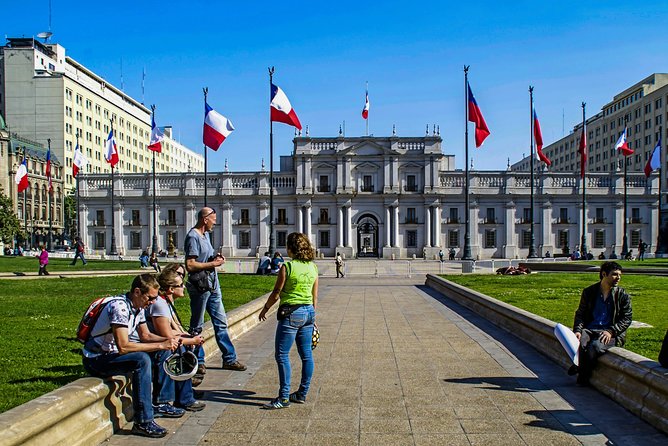
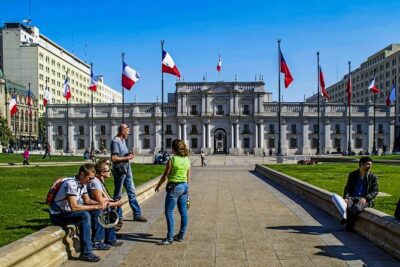
The stop at Palacio de La Moneda, the Presidential Palace, is the most direct encounter with Chile’s political life. Here the guide explains the building, the surrounding monuments, and the events that give this part of Santiago its meaning.
You should expect the political discussion to include recent Chilean history, not just dates and architectural facts. One recurring point is the importance of October 2019 for Chileans. The tour uses that period to explain social change and the way politics affects everyday life.
This is where the experience differs most from a standard city bike tour. You are not simply being told where to take a photograph. You are given a framework for understanding why certain places matter and how Chilean society has been shaped by conflict, debate, and public action.
The political emphasis will suit you if you enjoy asking questions and comparing different viewpoints. It may be less appealing if you prefer a light sightseeing ride with little discussion. The tour is described as balanced, and the strongest guide praise focuses on clear explanations without bias, but the subject itself is serious.
Allow yourself to listen rather than rush. The bike ride gives you access to the places, but the guide’s explanation is the reason to stop.
Local slang, gelato, and useful human touches
The tour includes a few lighter details that keep the history from becoming too heavy. You learn useful Chilean slang words, giving you a small connection to local speech. These tips will not make you fluent, but they can help you recognize the informal language you hear during the rest of your stay.
Handcrafted ice cream is included, with several flavors available. If you do not want ice cream, you can choose coffee or espresso instead. This is a modest detail, but it gives the group a pleasant pause and adds a distinctly local break to the afternoon.
Bottled water and sunscreen are included as well. You should still dress for the weather and carry local currency if you want to buy something at a market or another stop. The provided water is useful, but three hours on a bike can make extra hydration sensible, particularly on a sunny day.
The guides also offer food and wine suggestions, according to the feedback from the experience. That can be one of the best benefits of a small group: you can ask for advice that fits the rest of your Santiago plans.
What the guides do best
The most praised part of this experience is the guiding. Several guides receive strong personal compliments, including Juan Pablo, Isabella, Camille, Valentina, and Ales. The consistent themes are clear English, friendly service, strong knowledge of Chilean history, and attention to safety.
Juan Pablo is noted for his excellent English and his experience living overseas, along with his perspective as someone born and based in Santiago. Isabella is praised for making the history of Chilean politics interesting, while Valentina is credited with combining history, culture, politics, and practical recommendations for the city.
That range matters because the tour depends heavily on the person leading it. A good guide can make a familiar government building meaningful. The best feedback suggests that the guides adjust the amount of detail to the group rather than delivering a long speech at every stop.
The bilingual format is English and Spanish. If you speak either language, you should be able to follow the tour. If your group includes people with different language needs, the guide may divide attention between both languages, but the small group size should help.
Is $45 a fair price?
At $45 per person, this is not the cheapest way to see central Santiago, but the price covers more than bicycle hire. You receive the cruiser bike, helmet, water, sunscreen, a bilingual guide, and the ice cream or coffee stop.
The better question is what you would otherwise pay for separately. A rental bicycle alone would not give you the route, the historical explanation, help with city riding, or political context. Walking between the parks, GAM, and La Moneda could also take much of your afternoon.
The value is strongest if you want a guided introduction to Santiago. You get a broad look at the center, local language tips, and recommendations for food and wine. It is less strong value if you already know the city well or want a high-speed cycling workout.
The rating is 4.6 from 75 reviews, with especially strong marks for the guides, the flat route, the comfortable bicycles, and the mix of parks with political history. A single four-star assessment praises the tour while noting its emphasis on recent politics, which is a useful warning rather than a flaw.
Who should book this ride?
I would recommend it to first-time visitors who want to understand central Santiago quickly. It is also a good choice for people who prefer active sightseeing but do not want a demanding ride.
History-minded visitors will get the most from it, especially if Chilean politics and social change are subjects you want to understand before exploring the rest of the country. The route also suits couples, solo visitors, and small groups who enjoy meeting other international participants.
You do not need to be a serious cyclist. The route is flat and designed for an inclusive pace. Still, you should be able to ride a bicycle independently and manage an urban route.
I would choose something else if you want a market-focused tour, a long-distance ride, or a tour built mainly around food. One older booking refers to a different market and city route, so make sure you select the current Highlights, Parks and Politics Bike Tour when booking.
Cancellation is flexible up to 24 hours before departure for a full refund, and you can reserve now and pay later. The experience is not suitable for wheelchair users, and hotel pickup and drop-off are not included.
Final verdict: a smart first ride in Santiago
This tour gives you a useful first picture of Santiago. You move through Forestal and Bustamante Parks, follow bike lanes, reach GAM, and finish with the political weight of La Moneda. The ride is gentle enough for many casual cyclists, while the subject matter gives it more substance than a basic city orientation.
I especially like the mix of shade, architecture, public monuments, and local conversation. The ice cream, slang lessons, and restaurant advice keep the afternoon friendly, while the discussions of Chilean politics give you something to think about after the bikes are returned.
Book it if you want to see central Santiago actively and understand why its public places matter. Skip it if you want an athletic challenge or prefer to avoid political history. For $45, it is a well-rounded introduction, provided you are happy to pedal at a relaxed pace and listen closely.
FAQ
How long does the Santiago bike tour last?
The tour lasts three hours.
What is the price per person?
The listed price is $45 per person.
Where does the tour meet?
The meeting point is Constitución 153, next to Plaza Mori and near Baquedano Metro Station.
Which languages are available?
The live tour guide speaks English and Spanish.
How large is the group?
The tour is limited to 10 participants.
What kind of bicycle is provided?
You receive a beach cruiser city bike.
Is a helmet included?
Yes. A helmet is included, and helmets are mandatory under Chilean law.
What food or drink is included?
The tour includes bottled water and handcrafted ice cream in various flavors. You may choose coffee or espresso instead of ice cream.
Does the tour include hotel pickup and drop-off?
No. Hotel pickup and drop-off are not included.
Can I cancel for a full refund?
Yes. You can cancel up to 24 hours in advance for a full refund. You can also reserve now and pay later.
Is the tour suitable for wheelchair users?
No. The experience is not suitable for wheelchair users.
Do I need to be an experienced cyclist?
No. The tour is described as inclusive and suitable for people who are not sports-focused. You should still be able to ride a bicycle on an urban route.
Just added in Santiago
- Walking City Tour with Funicular, Cable Car and Tasting★ 4.3 · 6 reviews
- VIÑA DEL MAR AND VALPARAISO TOUR★ 4.8 · 20 reviews
- Tour VIÑA CONCHA Y TORO + CASA MARQUES – Chile, from Santiago.★ 5.0 · 2 reviews
- Undurraga + Isla Negra + San Afonso del Mar —– Full day★ 4.1 · 8 reviews
- Undurraga Wine tour★ 4.2 · 15 reviews
- Southcoast – Private Full-Day tour★ 5.0 · 6 reviews
- Santiago Private walking tour with Lunch★ 5.0 · 5 reviews
- Zapallar : nature, sea and local flavours★ 5.0 · 6 reviews
Cycling Tours, compared.
Santiago Highlights, Parks and Politics Bike Tour
Read our review →

Bike Tour in San Pedro de Atacama – Devil’s Throat
Read our review →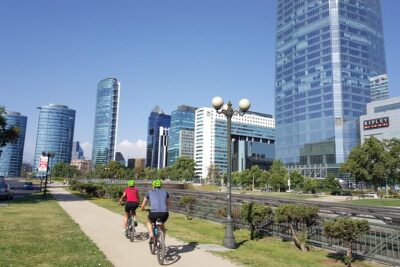

Private Full-Day Bike Tour of Santiago Cultural 5-6 hrs
Read our review →Browse the lists this tour appears in