REVIEW · SAFARI
Safari Park
Big cats change the meaning of a zoo. From Santiago, this seven-hour trip takes you to Safari Park in Rancagua, where you enter a specially adapted vehicle for close views of lions and tigers, then feed giraffes, zebras, deer, ostriches, and other herbivores. I like the hands-on animal encounters, and I like that the visit also explains why rescued wildlife needs long-term care. The main drawback is that animal behavior cannot be scheduled. Lions may stroll over, or they may sun themselves and ignore the truck completely.
The private transportation makes the long outing simple, with an 8:30 am start and a group capped at 30 people. Guide Barbara earns special praise for switching between English and Spanish and helping with translation, while driver Robinson adds to the smooth ride. The $94 price is fair if you value door-to-door transport and several guided activities, but meals are not included, so plan for that gap.
In This Review
- Key points to know before you book
- From Santiago to Safari Park in Rancagua
- Entering the lion and tiger areas
- A closer look at rescued animals
- Feeding giraffes, deer, llamas, and more
- Barbara and Robinson make the difference
- Is $94 a fair price?
- Who will enjoy this safari park outing?
- Timing, weather, and cancellation rules
- Practical tips for a better visit
- Should you book Safari Park?
- FAQ
- Where is Safari Park located?
- What time does the tour start?
- How long does the experience last?
- Is transportation included?
- Are meals included?
- Is the tour offered in English?
- How many people can join the tour?
Key points to know before you book
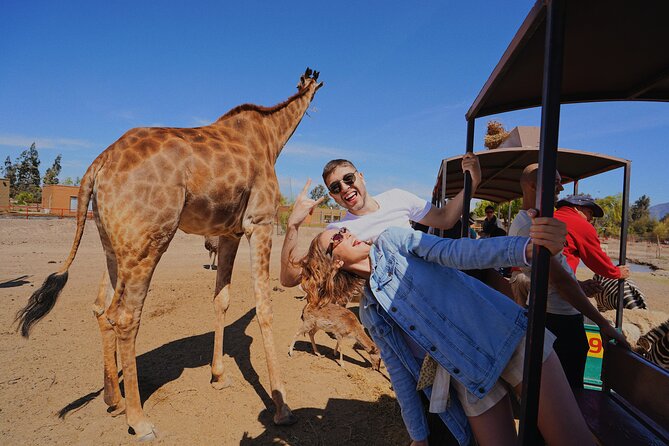
- Rancagua is the setting: You leave Santiago for Safari Park in Rancagua, with roughly seven hours set aside for the full experience.
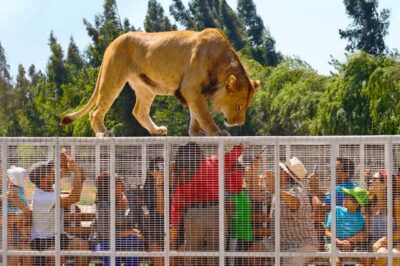
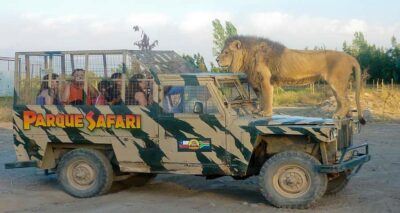
- The big-cat drive comes first: A cage-style vehicle enters the lion and tiger areas, offering a safer way to see the animals at close range.
- Animal behavior is unpredictable: You may see vocalizing lions, resting cats, or a tiger more interested in something beyond the vehicle.
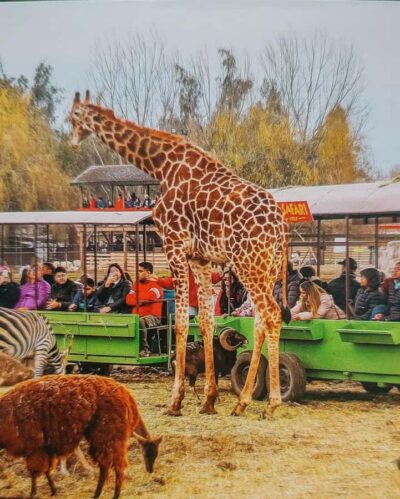
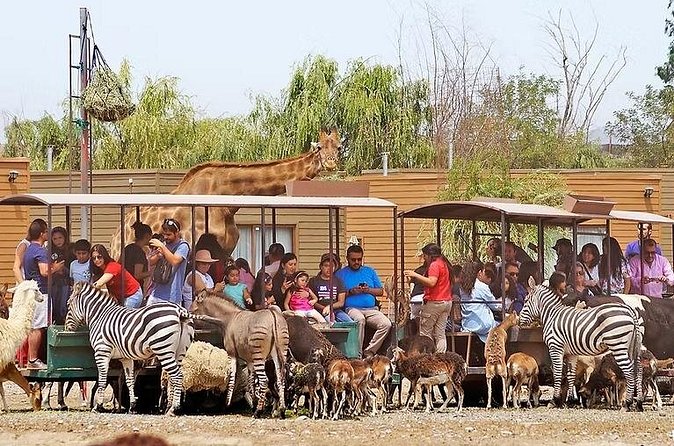
- Herbivore feeding is highly interactive: A small feeding car carries a trough in front of your seat, allowing goats, deer, llamas, and other animals to approach.
- Barbara is a strong guide: Her English and Spanish interpretation is especially useful for mixed-language groups.
- Bring a meal plan: Transportation is included, but food is not.
From Santiago to Safari Park in Rancagua

This is not a quick city-side attraction. You meet at 8:30 am and set aside about seven hours for the round trip and park visit. That makes it a full morning and afternoon outing, not a short add-on between Santiago sights.
The trip begins with private transportation, which is a real advantage. You do not need to work out a separate route to Rancagua or arrange your own return. For a family, a couple, or a small group, that convenience can make the $94 cost easier to justify.
The drive also gives Barbara room to add some city history on the way out. That extra commentary helps turn the transfer into part of the outing instead of dead time. Since the experience is offered in English, you can follow the main explanations without needing to rely on a translation app.
The group limit is 30 people. That is not an intimate private safari, but it is small enough to keep the organized activities manageable. If you prefer a completely personal animal encounter with no other people around, this will feel too structured. If you want transport, a guide, and a clear schedule, the format works well.
More 4x4 trips in Santiago:
- Safari Park, Wild Experience
★ 5.0 · 407 reviews - From Santiago: Safari Park, a wild experience
★ 4.5 · 20 reviews - SAFARI PARK-TOUR RANCAGUA : CHILE
★ 4.5 · 4 reviews
Entering the lion and tiger areas
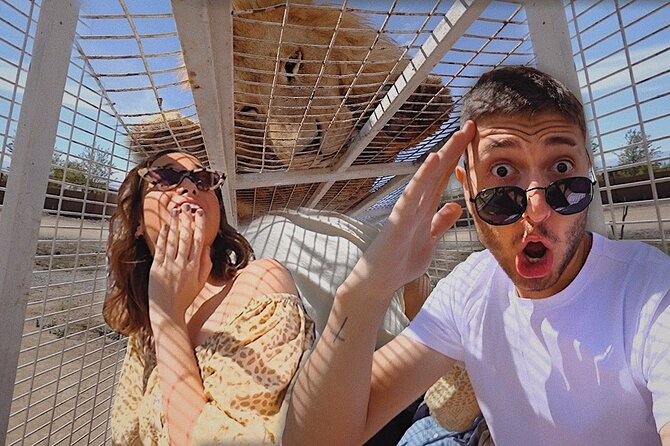
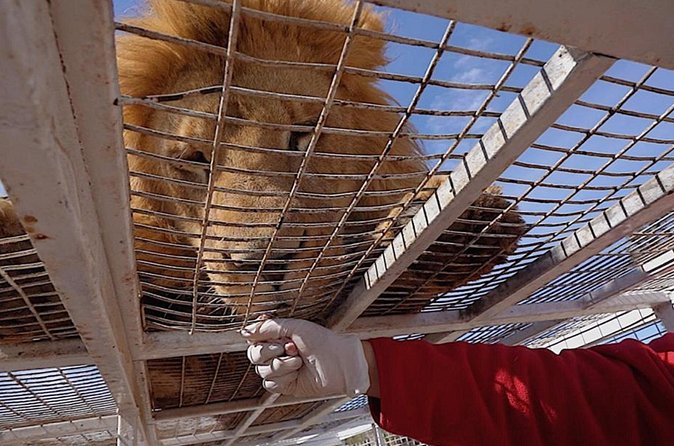
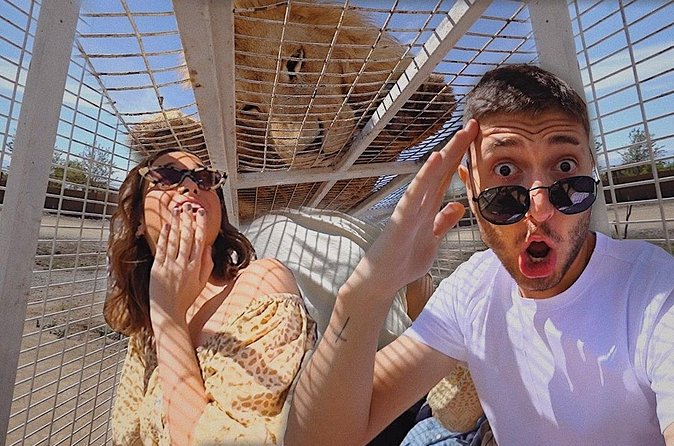
Your first main activity takes place in a vehicle specially adapted for entering the big-cat enclosures. The cage-style truck lets you see lions and tigers from a protected position while the animals move around their own space.
This is the part that gives the park its name and its strongest sense of adventure. Seeing a lion through a standard fence is one thing. Riding into its enclosure changes the viewpoint. You are no longer simply walking past an exhibit, but you are still separated from the animals by a purpose-built vehicle.
Keep your expectations realistic. Cats do what cats want, and no guide can order a lion to come to the truck. One morning, the lions stayed away from the vehicle while rolling in the sun and vocalizing. That is not a failed visit. It is a useful reminder that wildlife encounters are never a stage show.
The tigers can be equally unpredictable. One may still be asleep, while another pays attention to something on the bungalow or hotel side of the park. You might see a white tiger, but you should not expect a perfect photo opportunity on demand.
That uncertainty is part of the value, but it is also the clearest limitation. If your goal is a guaranteed close-up picture of a lion looking straight at you, this tour cannot promise it. If you enjoy watching animal behavior as it actually happens, the quiet moments can be just as interesting as a dramatic approach.
A closer look at rescued animals
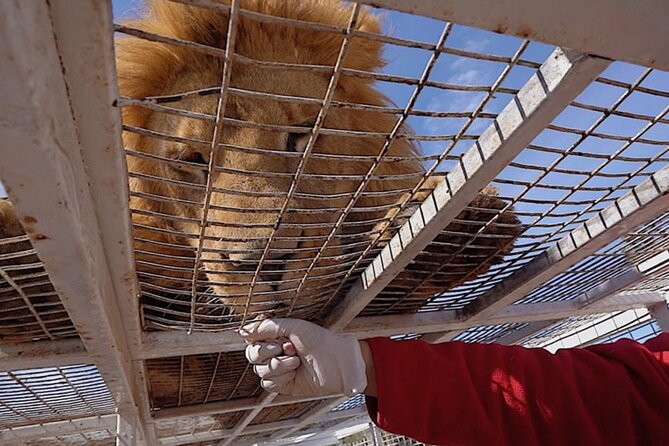
After the big-cat drive, you have free time to walk around the property and see more of the animals. The collection includes rescued lions, tigers, pumas, and other species beyond the main safari vehicles.
This pause matters. The tour is not only about a quick thrill inside a truck. You get time to slow down, look at the animals, and think about the care needed by wildlife that cannot simply be returned to the wild.
The park presents animal care as a central part of the visit. That gives the experience an educational purpose, especially for families. Children can enjoy the excitement of seeing large cats while also learning that rescue work involves daily care, protected spaces, and attention to animal welfare.
The free period also breaks up the schedule. You are not confined to one vehicle for the entire visit, and you can use the time to see species that do not appear in the big-cat activity. Because the exact free-time arrangements are not detailed, you should follow the guide’s instructions about where to walk and when to regroup.
Feeding giraffes, deer, llamas, and more
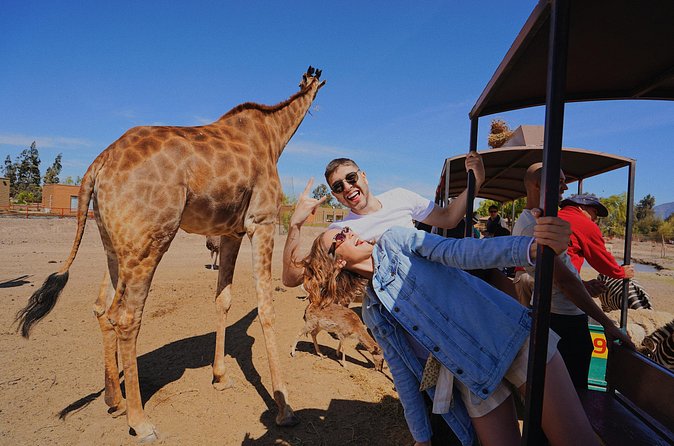
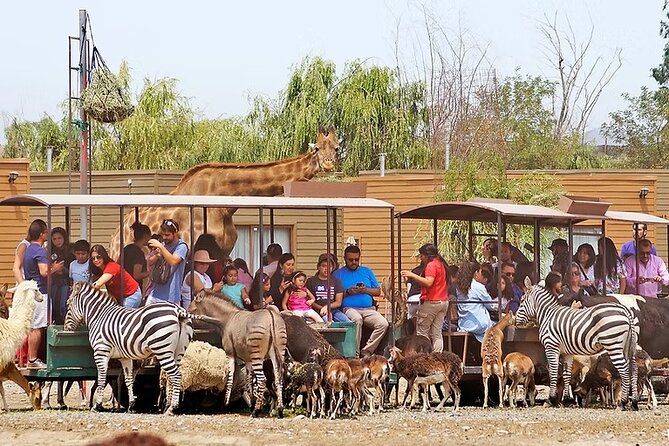
The second guided activity uses a smaller vehicle with a feeding trough positioned in front of your seat. The car enters the herbivore area, and the animals come to you.
This is a very different experience from the lion and tiger drive. The big cats create suspense because they may approach or ignore you. The herbivore encounter is more active and social. Goats, deer, llamas, and other animals can gather around the trough and eat while you watch from close range.
You may also have the chance to feed giraffes, zebras, ostriches, and deer. The exact animals that come close will depend on the moment, but the range of species gives this part broad appeal. A child who finds a resting tiger disappointing may be much happier when several friendly animals crowd around the feeding car.
One giraffe was described as feeding alone, while goats, deer, and llamas quickly consumed the hay in the trough. That difference is worth keeping in mind. The activity is not a polished photo line where every animal takes its turn. Some animals may be bold, and others may keep their distance.
I like this section because it gives you a direct way to observe animal habits. You see which species are eager to eat and which are more reserved. You also get a sense of the animals’ size and movement that is hard to capture from a distant viewing platform.
The feeding activity is likely the most reliable crowd-pleaser on the day, but it still has limits. You should listen carefully to the guide about feeding and handling. The supplied details confirm the chance to feed animals, but they do not specify a full meal schedule or every species available at each visit.
More things to do in Santiago:
- Valparaiso Port and Viña del Mar with Casablanca Wine Tasting
★ 5.0 · 6,110 reviews - Santiago: Cajon del Maipo/Embalse del Yeso Tour with Picnic
★ 4.3 · 3,789 reviews - Santiago: Vina Del Mar, Valparaiso, Casablanca & Reñaca Tour
★ 4.2 · 2,838 reviews - Cable Car, Funicular and Sightseeing Bus in Santiago one day
★ 5.0 · 2,325 reviews
Barbara and Robinson make the difference
The quality of a day like this depends heavily on the people running it. Barbara is the guide identified with this experience, and her ability to move between English and Spanish is a valuable practical skill. She also helped with translation throughout the outing, which is particularly useful when a group includes different language needs.
Her city-history commentary adds context before you reach the park. At the animal areas, a specialized guide leads the visit and explains what you are seeing. That combination gives you both a broader introduction and focused wildlife information.
Robinson, the driver, is also praised for his service. Private transportation only has value if the journey is handled well, and a capable driver helps keep the day calm and organized. You can enjoy the park without worrying about navigating back to Santiago after a long visit.
Because the tour is offered in English, English-speaking visitors have a clear reason to consider it. The bilingual support is an added benefit rather than a vague promise of basic interpretation.
Is $94 a fair price?
At $94 per person, this is not the cheapest way to spend a day outside Santiago. The price makes more sense when you count what it combines: private transport, a guided park visit, the big-cat vehicle, time to see rescued animals, and the herbivore feeding car.
The admission ticket for the park activities is included, while meals are not. That means the price covers the main experience but leaves food as your responsibility. Since the tour starts in the morning and lasts about seven hours, you should plan for hunger even though the supplied details do not specify a meal stop.
For a family, the animal access and transport may make the price worthwhile. You are paying for more than a basic zoo entrance. You are also paying to reach Rancagua, have the day organized, and take part in activities that would be difficult to arrange independently.
For a solo visitor focused only on seeing lions, the value is less certain. Big cats may stay away, and animal behavior cannot be guaranteed. The price is strongest when you want the full mix of wildlife, transport, interpretation, and feeding.
Group discounts are available, which may improve the value for larger parties. Ask about the current group rate when booking, since no discount amount is provided here.
Who will enjoy this safari park outing?
This experience suits families especially well. The day shifts between big cats, free walking time, and hands-on feeding, so younger visitors have several kinds of activity to keep them interested. The educational focus on wildlife care also gives parents more substance than a simple animal photo stop.
It works for adults who like rescued-animal parks and do not need every encounter to be dramatic. The white tiger, vocalizing lions, pumas, and mixed herbivore collection offer plenty to watch, even when an animal chooses not to approach.
English-speaking visitors should find the format comfortable, particularly with Barbara’s bilingual help. Mixed-language groups may also benefit from her ability to translate during the day.
I would be more cautious if you have limited time in Santiago. The seven-hour schedule uses much of a day, and the park is in Rancagua rather than in the city itself. It is also not the right choice if you want a fully independent visit or guaranteed animal interactions.
The experience is capped at 30 people, and most people can participate. That makes it broadly suitable, though the provided details do not give specific accessibility information. If you have mobility or other access concerns, confirm the arrangements before paying.
Timing, weather, and cancellation rules
The fixed start time is 8:30 am. You should be ready at the stated meeting point and allow the full seven-hour window, since the outing includes transport in both directions and several activities at the park.
Good weather is required. If poor weather cancels the experience, you can choose another date or receive a full refund. The same choice applies if the minimum number of participants is not met.
You can cancel for a full refund up to 24 hours before the start time. Cancellations or changes made less than 24 hours before the experience are not accepted for a refund, and the cut-off follows local time.
These rules are reasonable for an outdoor animal visit, but the weather condition matters. Do not schedule a tight evening commitment after the tour. The exact return time may vary, and you will want some breathing room after a full day outside Santiago.
Practical tips for a better visit
Plan food before you leave. Meals are not included, and the outing lasts about seven hours. The supplied details do not say whether food is sold at the park or whether a stop is planned, so ask the provider or carry an appropriate meal plan.
Keep your camera ready, but do not let it control the visit. Lions may remain in the sun, tigers may sleep, and a giraffe may feed away from the main group. The most memorable moment could be a noisy lion, a white tiger, or a crowd of llamas competing for hay.
Listen closely during the feeding activity. The animals gather around the trough, and the guide’s instructions help keep the encounter safe and orderly. You should also stay with the group during free time and return when asked.
Expect a full day rather than a quick excursion. The reward is variety: a protected drive among big cats, time with rescued animals, and close feeding encounters with herbivores.
Should you book Safari Park?
I would book this tour if you want a well-organized animal outing from Santiago, especially if you are traveling with children or prefer private transport. The mix of rescued big cats, herbivore feeding, English guidance, and bilingual help from Barbara gives the day more range than a standard zoo visit.
I would skip it if you need guaranteed close contact with lions or tigers, have only a few hours in Santiago, or dislike structured group activities. The $94 price is sensible for the transport and several guided encounters, but it is not a bargain if the big-cat drive is your only goal.
For the right visitor, the best part is not simply seeing a large animal. It is watching animals behave on their own terms, then taking part in a carefully managed feeding experience. Add a capable guide and a practical ride from Santiago, and this becomes a worthwhile full-day choice for animal lovers.
FAQ
Where is Safari Park located?
Safari Park is in Rancagua, Chile. The experience begins from Santiago and includes private transportation.
What time does the tour start?
The tour starts at 8:30 am.
How long does the experience last?
The full experience lasts approximately seven hours.
Is transportation included?
Yes. Private transportation is included.
Are meals included?
No. Meals are not included in the tour price.
Is the tour offered in English?
Yes. The tour is offered in English. Barbara also provides English and Spanish interpretation.
How many people can join the tour?
The experience has a maximum group size of 30 people.
Just added in Santiago
- Walking City Tour with Funicular, Cable Car and Tasting★ 4.3 · 6 reviews
- VIÑA DEL MAR AND VALPARAISO TOUR★ 4.8 · 20 reviews
- Tour VIÑA CONCHA Y TORO + CASA MARQUES – Chile, from Santiago.★ 5.0 · 2 reviews
- Undurraga + Isla Negra + San Afonso del Mar —– Full day★ 4.1 · 8 reviews
- Undurraga Wine tour★ 4.2 · 15 reviews
- Southcoast – Private Full-Day tour★ 5.0 · 6 reviews
- Santiago Private walking tour with Lunch★ 5.0 · 5 reviews
- Zapallar : nature, sea and local flavours★ 5.0 · 6 reviews