
REVIEW · CHILE
Crossing the Salt Route on a Rowing Surfboard
Salt, birds, and a quiet paddle await. This 3.5-hour outing near Pichilemu takes you up an estuary on a stand-up paddle board, moving with the current through the abandoned salt flats of Cahuil. I like the peaceful birdwatching and the gentle pace, and I also like the local touch of meeting a salt worker who explains how salt shaped the area. The main consideration is weather: poor conditions can cancel the trip, so you will want a backup plan.
This is a private activity for your group, priced at $50 per person. That is fair value if you want a calm half-day with a guide, a snack, local history, and transport help. It may feel less compelling if you are seeking fast paddling, surf action, or a packed list of sights.
In This Review
- What makes this outing special
- Paddling into the Cahuil salt flats
- Salinas de Cahuil and the old salt trade
- A birdwatching trip with room to breathe
- Pablo’s local welcome
- What the $50 price really buys
- Timing, meeting point, and the return
- Weather is the one real condition
- Who should book the Salt Route?
- Should you book this private paddle?
- FAQ
- Where does the Salt Route experience take place?
- How long does the activity last?
- What type of activity is included?
- Is the activity suitable for beginners?
- Is this a private tour?
- Where does the activity start and end?
- What happens at the salt flats?
- Does the activity include birdwatching?
- Is transportation available from a hostel?
- What happens if the weather is poor?
- Can I cancel for a refund?
What makes this outing special
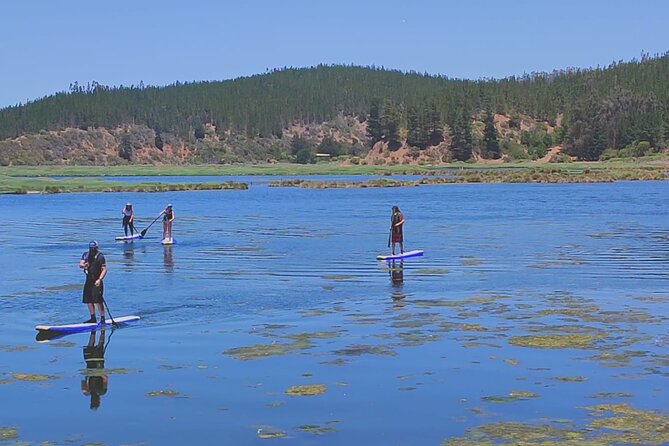
- A current-assisted paddle: You move up the estuary with the current, keeping the outing gentle and suitable for the whole family.
- The abandoned salt flats of Cahuil: The setting combines quiet water, old salt-working areas, and a close look at a traditional local trade.
- Birdwatching without a rushed schedule: The crossing is contemplative, giving you time to watch the water and birdlife.
- A local salt worker’s story: At the end point, a salt worker explains the area’s connection to salt production.
- A personal guide named Pablo: Pablo is described as kind, enthusiastic, and willing to point out trees, places, and local acquaintances along the drive.
- A private group experience: Only your party participates, which makes the pace more personal and easier for families or friends to manage.
Paddling into the Cahuil salt flats
The trip begins at the meeting point in Pichilemu, Chile, at the location listed as 47Q9GX7Q+C86GX7Q+C86. The activity then heads toward Salinas de Cahuil, the salt flats that give the route its character.
The central activity is a stand-up paddle board crossing up the estuary. You travel with the current, rather than fighting against it, which matters if you are new to paddleboarding or simply want a quiet outing. The description presents the route as suitable for the whole family and for different ages, and one detailed account calls it beginner-friendly.
I would think of this as a slow-water nature outing, not a workout. You are there to notice birds, water, salt flats, and the changing feel of the estuary. If you enjoy trips that leave room for silence and observation, the calm pace is a real strength. If you want technical instruction, strong exercise, or a thrilling ride, this may be too mild.
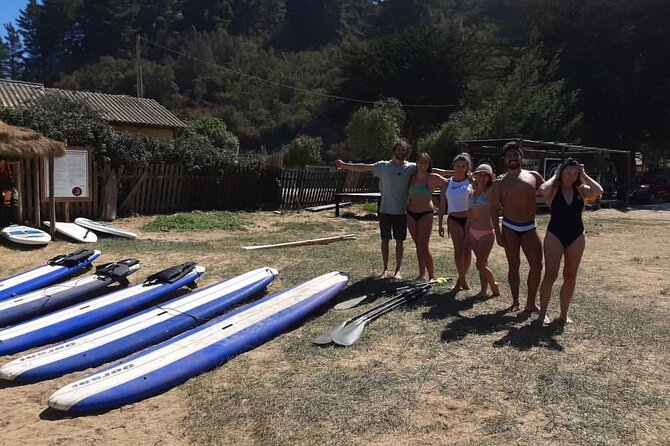
The phrase rowing surfboard appears in the experience title, but the practical description focuses on stand-up paddleboarding. If the exact board style or paddling method matters to you, ask the provider for clarification before booking. The available information does not give details about board equipment, instruction time, or safety equipment.
Other trips worth a look in Chile:
- Valparaiso Port and Viña del Mar with Casablanca Wine Tasting
★ 5.0 · 6,110 reviews - Santiago: Cajon del Maipo/Embalse del Yeso Tour with Picnic
★ 4.3 · 3,789 reviews - Santiago: Vina Del Mar, Valparaiso, Casablanca & Reñaca Tour
★ 4.2 · 2,838 reviews
Salinas de Cahuil and the old salt trade
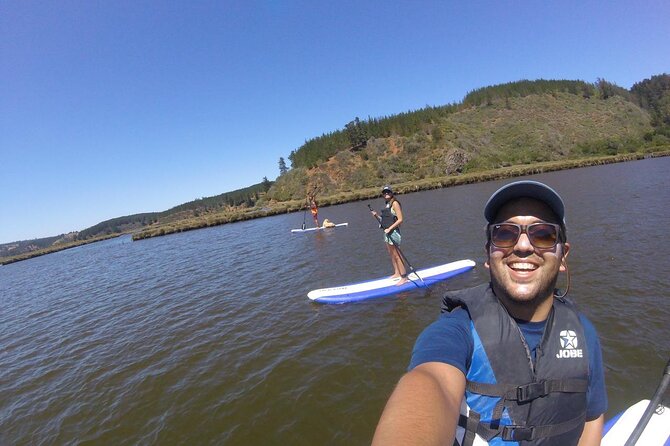
Salinas de Cahuil is the only named stop, but it is not a quick photo stop. It is the setting for the entire crossing and the place where the salt story comes into focus.
The salt flats are described as abandoned, giving the route a sense of time passing. You are not simply paddling through pretty water. You are moving through a place connected to work, local identity, and the production of salt in the region. That makes the outing more meaningful than a standard paddle with no local context.
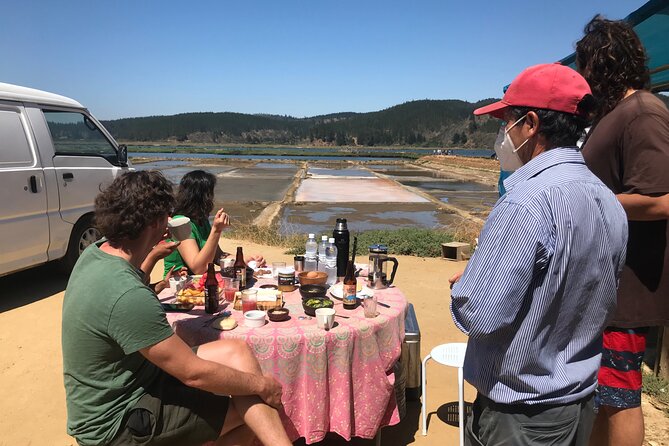
At the far point, the team waits with a snack in front of the salt flats. A salt worker then explains the history of salt in the area. This is one of the strongest parts of the experience because it connects what you see with how people used the place.
The information does not specify the snack’s ingredients, so I would not plan on it as a full meal. Treat it as a pleasant break after the paddle, and bring any additional food or drink you may need only if the provider allows it and you have dietary concerns. The important point is the pause itself: you get time to rest, look back across the flats, and hear from someone tied to the local trade.
A birdwatching trip with room to breathe
The route is described as contemplative, and that word tells you how to approach it. The goal is not to race from one attraction to another. You paddle, watch, listen, and let the estuary set the pace.
Birdwatching is a major reason to choose this outing. No particular bird species are promised, and the exact sightings will depend on conditions and timing. Still, the slow crossing gives you a better chance to notice birds than a fast boat ride would.
I like that the activity does not pretend to offer a long list of guaranteed sights. You get a natural setting and time to observe it. That also means the experience can feel different from one departure to the next. A person who wants a fixed program may find the quiet, open-ended quality less satisfying.
The tour’s family-friendly description also makes sense here. A current-assisted route and an unhurried rhythm can be easier for mixed-age groups than a demanding paddle. Even so, you should judge your own group’s comfort with standing on a paddle board and being on the water. The supplied details say most people can participate, but they do not describe the specific physical requirements or board instruction.
Pablo’s local welcome
Pablo is the guide named in the available information, and his role appears to go beyond leading the paddle. One account describes him as kind and excited from the beginning, with transportation from a hostel proving helpful.
The drive to the Salt Route can add to the experience. Pablo reportedly points out locations along the way, identifies different trees, and introduces people he knows. Those small moments give you a view of the area beyond the main activity. You are not only being taken to a launch point. You are getting some orientation to the place and its community.
That personal approach fits the private format. Your group is the only group participating, so the experience is less about keeping up with strangers and more about following a pace that suits your party. A private tour can be especially useful if one person wants to pause for birds or if your group includes people with different levels of confidence.
There is also a dog named Rasti associated with the outing. Rasti is described as a great companion on the Salt Route. You should not assume the dog will be present every time, but this detail adds to the informal, local feel of the activity.
The provider is Yagan ecoturismo chile. The same guide is also described as a surf instructor, which may reassure you if you are considering other water activities in the Pichilemu area. The information supplied here does not specify how much formal paddle instruction is included, so ask if you want a lesson rather than simple guidance.
A completely different kind of day out:
- Cable Car, Funicular and Sightseeing Bus in Santiago one day
★ 5.0 · 2,325 reviews - Small-Group Cajón del Maipo Full-Day Tour and Picnic
★ 4.5 · 2,277 reviews - Tour to Valparaíso, Viña del Mar, Pablo Neruda Museum and Vineyard
★ 5.0 · 2,273 reviews - Maipo Valley Wine Tour with 4 vineyards from Santiago.
★ 5.0 · 1,983 reviews
What the $50 price really buys
At $50 per person, this is not the cheapest way to spend three and a half hours, but the price is reasonable for a private, guided outdoor activity. You are paying for more than time on a board. The experience combines the paddle, access to the salt-flat route, birdwatching, a local explanation of salt production, and a snack at the destination.
The private format is the key value point. If you are traveling with family or friends, the cost buys a more personal outing without another group setting the pace. For a solo participant, the same price may feel higher because the activity is priced per person and the private format does not spread the cost across a large shared group.
Transport may add value, too. A detailed account describes transportation from a hostel as helpful, but the supplied details do not clearly state that hostel pickup is included for every booking. Confirm the pickup arrangement, meeting point, and any transport cost before you pay.
I would choose this for a half-day of local scenery and conversation, not for maximum activity per dollar. The value comes from the combination of water, place, and local explanation. If your ideal tour means several major attractions, this will seem narrow. If you prefer one setting explored at a slower pace, it makes better sense.
Timing, meeting point, and the return
The activity lasts about three hours and 30 minutes. It starts at the Pichilemu meeting point and ends back at the same meeting point, which keeps the day simple. You do not need to arrange a separate return from the salt flats.
Operating hours are listed as Monday through Saturday, from 8:30 a.m. to 7:30 p.m., for the period from September 29, 2022, through November 26, 2026. Those hours describe the operating window, not necessarily a guaranteed departure at any time within it. Confirm your exact start time when booking.
The return to the meeting point is useful if you are arranging the rest of a Pichilemu day. Allow the full three and a half hours rather than planning another activity too tightly afterward. Paddle speed, weather, and the time spent at the salt flats can affect the rhythm, even though the published duration is approximate.
A good practical habit is to arrive ready for an outdoor water activity and to ask what the provider supplies. The available details do not list clothing, footwear, dry storage, drinking water, or board specifications. I would clarify those points, especially if you are bringing children or valuables.
Weather is the one real condition
This experience requires good weather. If conditions are poor, the operator will offer another date or a full refund. That is fair, but it means you should avoid building an inflexible schedule around this one outing.
The weather policy is especially relevant for a water activity. Calm conditions help preserve the easy, contemplative character of the route, while poor conditions can affect safety and comfort. You do not need to worry about losing the entire booking if weather stops the trip, but you do need to keep a little flexibility in your plans.
You can cancel for a full refund if you do so at least 24 hours before the start time. Cancellations or changes made less than 24 hours ahead are not refunded or accepted. The cutoff follows local time.
Who should book the Salt Route?
I would recommend this outing to:
- Families looking for a gentle outdoor activity
- First-time paddleboarders who prefer a current-assisted route
- Birdwatchers who enjoy patience more than a checklist
- Couples or friends who want a private half-day
- Visitors interested in local work and traditional salt production
- Anyone staying near Pichilemu who appreciates helpful transport and local orientation
I would be more cautious if you want a physically demanding paddle, surf instruction, or a guaranteed list of wildlife sightings. The route is built around calm observation. Its strength is also its limit.
The activity is likely most rewarding when you arrive with modest expectations and an open schedule. You are not buying a full-day tour of the Chilean coast. You are buying a focused crossing through Cahuil’s salt flats, with time to watch birds, hear a local story, and enjoy a quieter side of the Pichilemu area.
Should you book this private paddle?
Yes, if you want a peaceful, family-friendly water outing with a strong local connection. The beginner-friendly current-assisted route, the private format, Pablo’s personal guiding style, and the salt worker’s explanation give the trip more substance than a basic paddle rental.
Book it with two checks in mind: confirm the transport details and make sure your schedule can handle a weather-related change. If you want speed, exercise, or a busy sightseeing program, spend your $50 elsewhere. If you want three and a half hours of water, birds, salt flats, and local stories, this is a thoughtful choice near Pichilemu.
FAQ
Where does the Salt Route experience take place?
It takes place in Chile near Pichilemu, with the paddle route passing through the Salinas de Cahuil salt flats.
How long does the activity last?
The experience lasts approximately three hours and 30 minutes.
What type of activity is included?
You paddle up an estuary on a stand-up paddle board, moving with the current.
Is the activity suitable for beginners?
The experience is described as suitable for the whole family and most people, and it is specifically described as beginner-friendly.
Is this a private tour?
Yes. Only your group participates in the activity.
Where does the activity start and end?
It starts at the listed meeting point in Pichilemu and ends back at that same meeting point.
What happens at the salt flats?
A team member waits with a snack, and a salt worker explains the history of salt in the region.
Does the activity include birdwatching?
Yes. The crossing is described as a contemplative route with birdwatching.
Is transportation available from a hostel?
Transportation from a hostel was described as helpful during the outing, but the supplied details do not confirm that pickup is included with every booking. Confirm this with Yagan ecoturismo chile.
What happens if the weather is poor?
If the activity is canceled because of poor weather, you will be offered another date or a full refund.
Can I cancel for a refund?
You can receive a full refund if you cancel at least 24 hours before the experience starts. Cancellations or changes made less than 24 hours before the start time are not accepted for a refund.
Just added in Chile
- Ascent to Villarrica volcano 2,847masl, from Pucón★ 4.8 · 36 reviews
- Volcanic Refuges: Excursion to Underground Civilization★ 4.7 · 8 reviews
- Walking City Tour with Funicular, Cable Car and Tasting★ 4.3 · 6 reviews
- Viña del Mar and Reñaca 4-Hour Pacific Coast Tour★ 4.7 · 14 reviews
- Viña del Mar and Valparaiso: guided day tour★ 4.2 · 8 reviews
- Private: Viña del Mar and Valparaiso Day Tour★ 5.0 · 5 reviews
- VIÑA DEL MAR AND VALPARAISO TOUR★ 4.8 · 20 reviews
- Viña del Mar y Valparaíso – Full Day★ 5.0 · 1 review