
REVIEW · SAN PEDRO DE ATACAMA TOURS
Astronomic Tour Experience from San Pedro de Atacama
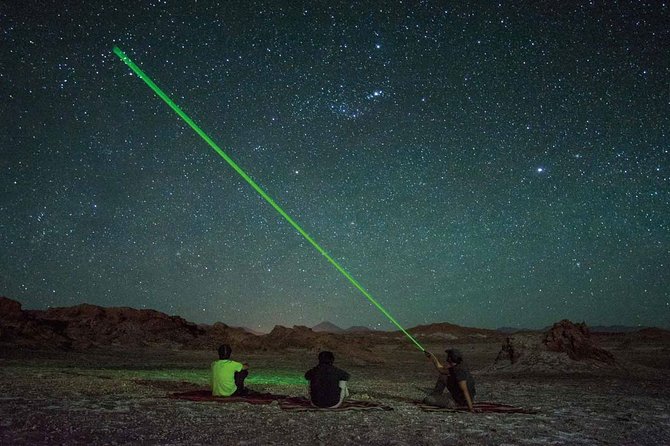
The desert turns the lights off. This three-hour night tour takes you from San Pedro de Atacama to Ayllú de Coyo for telescope viewing, constellation lessons, and southern-sky stories. I like the small maximum group of 15, which should make it easier to see the equipment and ask questions. I also like the two-part format, combining close-up views through professional equipment with the simple pleasure of looking up unaided. The main drawback is that a full moon can wash out fainter stars, and one serious booking problem involved a changed meeting point and poor communication.
At $104.07 per person, I see this as a reasonable splurge if astronomy is important to your Atacama visit. The English presentation has earned strong praise for its clear instruction, but the tour is less attractive if you only want a quick look at the Milky Way or dislike late-night outings. You meet at 9 p.m. and return to the same point, with an air-conditioned transfer included.
In This Review
- Key points to know before you book
- Why San Pedro is a fine place to study the stars
- Leaving San Pedro at 9 p.m. for Ayllú de Coyo
- The first 50-minute session: professional equipment and useful numbers
- The 20-minute break for coffee and a snack
- The second 50-minute session: constellations without equipment
- What the guides do well, and where the format has limits
- Is $104.07 a fair price?
- Who will enjoy this Atacama night most?
- Booking, cancellation, and practical planning
- Should you book the astronomy tour?
- FAQ
- Where does the astronomy tour begin?
- What time does the tour start?
- Where does the main stargazing take place?
- How long does the experience last?
- Is the tour offered in English?
- What is included in the price?
- Can I cancel for a full refund?
Key points to know before you book
- The best viewing takes place outside San Pedro: You ride to the Ayllú de Coyo sector, away from the town meeting point and its practical distractions.
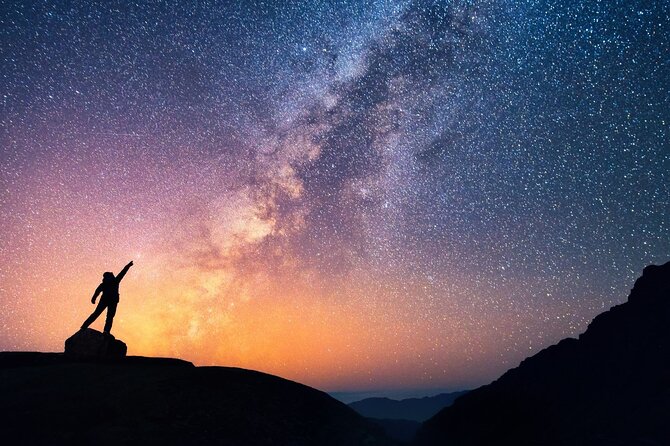
- Two separate 50-minute talks shape the evening: One uses professional equipment, and the other focuses on unaided viewing, Greek ideas, and Andean cosmology.
- A full moon matters: Bright moonlight can make faint stars harder to see, though the guide can still explain the sky and show brighter objects.
- The group is capped at 15 people: That is a useful size for sharing viewing equipment without the feel of a large coach excursion.
- Coffee and a snack fit between the talks: The schedule includes a roughly 20-minute break, but meals and drinks are not formally included as tour extras.
- Confirm the meeting point carefully: The stated start is Caracoles 195, and the operator provides an emergency contact with booking information.
Why San Pedro is a fine place to study the stars
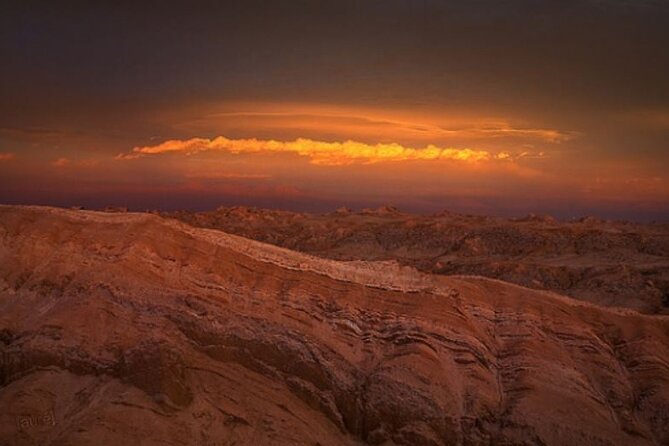
San Pedro de Atacama is a natural base for night-sky viewing. The tour uses the desert outside town, in Ayllú de Coyo, rather than trying to conduct the whole activity from a busy street or hotel area. That transfer matters. You are not simply standing outside your accommodation and hoping the sky cooperates. You are being taken to a special viewing sector for the main program.
The Atacama Desert also gives the evening a strong sense of place. During the day, the region is known for open spaces and striking terrain. At night, the focus shifts upward. There are fewer visual distractions, and the sky becomes the subject rather than a backdrop.
I like that the experience treats astronomy as both science and culture. You hear about distances, sizes, and temperatures, then move into Greek and Andean ways of understanding the constellations and life after death. That gives the program more substance than a basic star-spotting session.
Still, your expectations should be realistic. The tour cannot control cloud cover, moonlight, or the exact objects visible on a particular night. A clear sky is helpful, but the viewing conditions change with the lunar cycle. If your dates are close to a full moon, you may see fewer faint stars even if the evening itself is well run.
More things to do in San Pedro de Atacama:
- San Pedro de Atacama: El Tatio Geysers Tour
★ 4.7 · 943 reviews - Tour to the Hidden Lagoons of Baltinache
★ 5.0 · 694 reviews - San Pedro de Atacama: Etno-Stargazing Tour with Transfer
★ 4.8 · 629 reviews
Leaving San Pedro at 9 p.m. for Ayllú de Coyo
The evening begins at Caracoles 195 in San Pedro de Atacama. The scheduled start time is 9 p.m., so plan to arrive early enough to locate the meeting point without rushing. The activity ends back at this same point.
An air-conditioned vehicle takes you to Ayllú de Coyo. This is a practical inclusion, especially for a late return. You do not need to arrange a separate transfer to the viewing site, and the ride keeps the evening simple.
The meeting point deserves extra attention. One person reported being told about a meeting-point change about 90 minutes before departure, then being unable to reach the operator. The operator disputed that the location had changed and said the original details were confirmed by WhatsApp and included an emergency number. The sensible approach is to check your confirmation, watch for messages, and save the emergency contact before leaving your accommodation.
This is also worth considering if you are traveling alone. The report raised a safety concern after the pickup confusion. There is no reason to assume that problem will repeat, but clear communication matters when you are walking around an unfamiliar town late at night.
The first 50-minute session: professional equipment and useful numbers
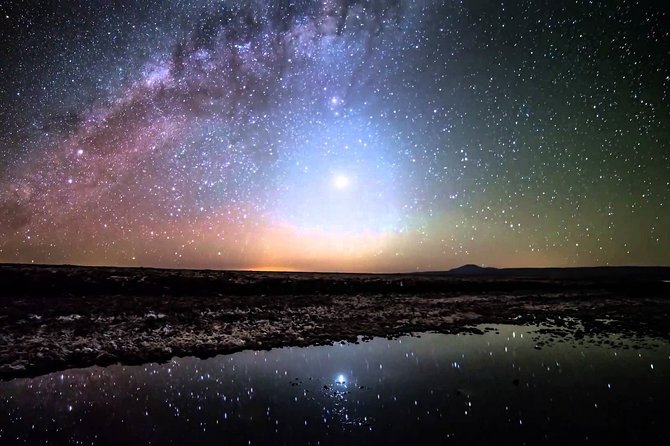
At Coyo, the group is divided into two sections for the evening’s talks. The first session uses professional observation equipment. Your guide explains what you are seeing and adds the numbers that make the sky easier to understand, including the distance of stars from Earth, their dimensions, and their temperatures.
That information helps turn a bright point into something real. You are not only told the name of a star or planet. You get a sense of its scale and its distance, which gives the viewing a stronger scientific base.
The small group limit should help here. With no more than 15 people, you have a better chance of getting time at the equipment and hearing the explanation clearly. A much larger group can turn telescope viewing into a slow line with a quick glance at the eyepiece. This format is designed to avoid some of that frustration, though the exact pace will depend on the guide and the number of objects visible.
The program is offered in English. One person who had limited English said the presentation was not always easy to understand, despite enjoying the Southern Cross. If astronomy terms are unfamiliar to you, listen for the main ideas rather than trying to catch every technical word. The tour is likely best for you if you can follow spoken English comfortably.
The 20-minute break for coffee and a snack
After the equipment session, you get a break of about 20 minutes. The schedule describes coffee and a snack during this pause, which gives you a chance to warm up and reset before the second talk.
Atacama nights can feel very different from the daytime, so this pause is useful even if you are eager to continue. It breaks up two long presentations and gives the group time to chat or simply look around.
There is a small point of confusion here. Meals and drinks are listed as not included, while the program itself describes coffee and a snack. I would treat the break as part of the planned experience, but not assume that additional food, special drinks, or a full meal are covered. If you have dietary needs or want something more substantial, handle that before the tour.
A completely different kind of day out:
- Piedras Rojas, Altiplanics Lagoons & Salar Full-Day Tour
★ 4.7 · 592 reviews - The Roofless Experience San Pedro de Atacama Stargazing Tour
★ 5.0 · 522 reviews - Half Day Tour to Geysers del Tatio
★ 5.0 · 499 reviews - San Pedro de Atacama: Stargazing Experience
★ 4.7 · 489 reviews
The second 50-minute session: constellations without equipment
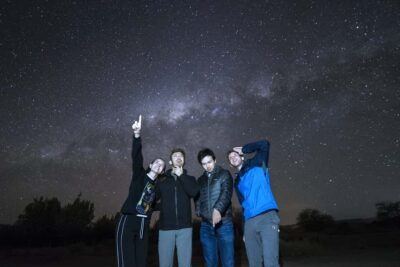
The second talk puts the equipment aside. You look at the sky with your own eyes and identify the constellations visible that night. This is a welcome change of pace. A telescope can reveal details, but unaided viewing helps you understand the full arrangement of the stars.
The Southern Cross is one of the memorable sights associated with the southern sky, and it was specifically appreciated during this experience. Depending on the date and conditions, you can also see other constellations, stars, and planets. The exact lineup is not fixed, so the guide’s explanation will respond to what is visible.
The cultural section adds another layer. You learn how Greek traditions interpreted the constellations, then compare that with Andean cosmology and ideas about life after death. I find this especially valuable because it connects the stars to people, beliefs, and place. The sky is not only a set of objects measured in degrees and temperatures. It has also shaped stories and ideas about existence.
This second session may be the more memorable half for anyone who enjoys cultural interpretation. It also works well for people who do not usually spend time with astronomy. You do not need to know the constellations in advance. The guide provides the framework.
What the guides do well, and where the format has limits
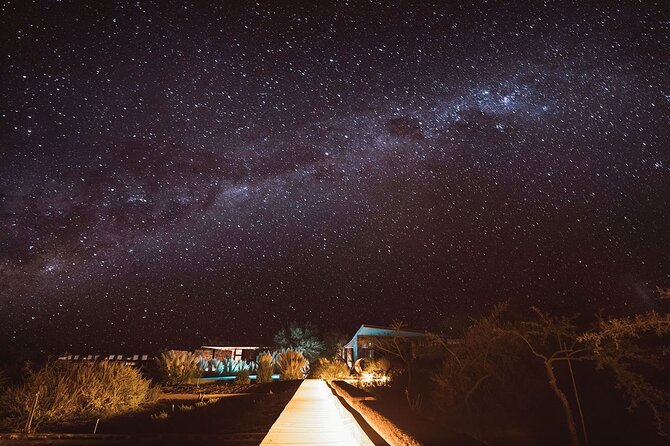
The strongest praise for this activity centers on the guide’s enthusiasm and the quality of the English explanation. One account described the instruction as excellent and said the guide made a full-moon evening worthwhile by adjusting the focus to education.
That flexibility is important. A good astronomy guide does more than point out bright objects. When moonlight reduces visibility, the guide can explain why, focus on what remains visible, and make the science more interesting. The program seems suited to that approach.
At the same time, the activity depends heavily on the person leading it. The supplied information does not name the individual guides, so you cannot choose a particular presenter. The quality of the evening will partly depend on how clearly the guide speaks, how well the two groups are managed, and how much time you get with the equipment.
The program lasts about three hours, including the transfer and break. That is long enough to feel like a real activity, but not so long that you are out all night. You should still expect a late finish because the start is at 9 p.m.
Is $104.07 a fair price?
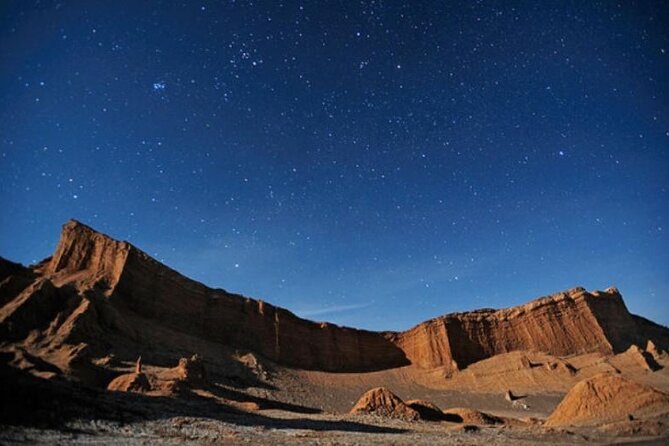
At $104.07 per person, this is not a budget evening walk. The price makes more sense when you consider the transfer to Coyo, the professional equipment, the guide, the two structured talks, and the small group limit.
I would compare it with the cost of arranging your own transport and trying to identify stars without guidance. That cheaper approach may give you a pleasant view, but it will not provide the equipment session, explanations of stellar temperatures and distances, or the Greek and Andean perspectives.
The value is strongest for you if astronomy is a priority and you want both scientific and cultural content. It is weaker if you mainly want photographs or a romantic hour under the stars. Photos were praised as part of one enjoyable evening, but photography is not clearly listed among the formal inclusions, so I would not book this expecting a guaranteed professional photo package.
The coffee and snack are a pleasant touch, but they should not be the reason you pay the price. The real value lies in the setting, the equipment, and the guide’s interpretation.
Who will enjoy this Atacama night most?
I would recommend the tour for:
- First-time visitors who want a structured introduction to the southern sky
- Couples or friends looking for an evening activity beyond restaurants and town streets
- People interested in both astronomy and Indigenous cultural ideas
- English speakers who are comfortable following a guided talk
- Anyone who prefers a small group to a large bus outing
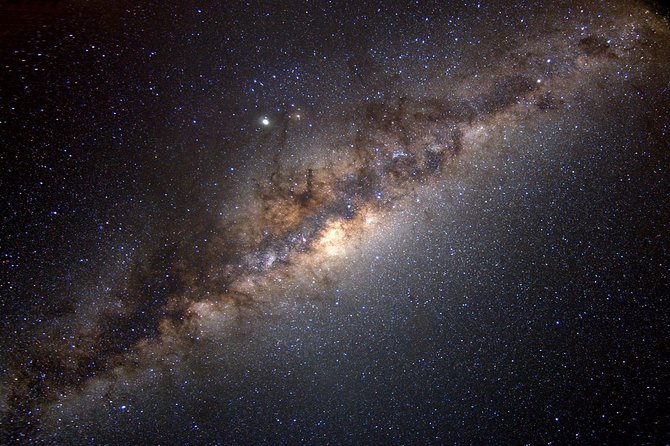
I would be more cautious if you need a highly flexible schedule, have difficulty with late nights, or want a guaranteed view of faint deep-sky objects. A full moon can reduce the drama of the Milky Way, and the final viewing depends on the conditions that night.
The activity is listed as suitable for most people, with a maximum of 15 participants. No special restriction is provided, but you should still judge the late timing and outdoor setting against your own needs.
Booking, cancellation, and practical planning
Confirmation is provided at booking, and the activity is often reserved around three weeks ahead. That suggests you should not leave it until the final day if astronomy is a major part of your visit.
Free cancellation is available if you cancel at least 24 hours before the 9 p.m. start time. Cancellations or changes inside that window are not accepted for a refund. The cut-off follows local time in San Pedro de Atacama.
Before the evening, save the meeting address and emergency number from your confirmation. Check your phone for any operator messages, and make sure you know that the return is to the original meeting point. These are small steps, but they matter more when an activity begins after dark.
Should you book the astronomy tour?
I would book this tour if you want a guided night under the Atacama sky rather than a simple unsupervised viewing. The mix of professional equipment, unaided constellation watching, and Greek and Andean interpretations gives the three hours a clear purpose. The enthusiastic English guidance and small group cap add to its appeal.
I would first check the moon phase and confirm the pickup details. If your only goal is the darkest possible Milky Way view, choose a night with less moonlight when possible. If your schedule allows only one evening, this is a worthwhile choice when you value explanation as much as the view.
FAQ
Where does the astronomy tour begin?
The tour begins at Caracoles 195, 1410000 San Pedro de Atacama, Antofagasta, Chile.
What time does the tour start?
The scheduled start time is 9 p.m.
Where does the main stargazing take place?
The group travels to a special sector in Ayllú de Coyo, outside San Pedro de Atacama.
How long does the experience last?
The activity lasts approximately three hours, including the two talks, the break, transportation, and return to the meeting point.
Is the tour offered in English?
Yes. The tour is offered in English.
What is included in the price?
The price includes an air-conditioned vehicle, transfer to Ayllú de Coyo, and a professional guide.
Can I cancel for a full refund?
Yes. You can cancel at least 24 hours before the experience start time for a full refund. Cancellations or changes made less than 24 hours before the start are not accepted for a refund.
Just added in San Pedro de Atacama
- Atacama Desert and Magic Bus Visit★ 4.8 · 15 reviews
- Vallecito★ 4.7 · 13 reviews
- San Pedro de Atacama: Valle de la luna★ 3.0 · 3 reviews
- Valle de la Luna: A Moon-Like Escape in Atacama★ 5.0 · 3 reviews
- Triple Tour: Piedras Rojas + Altiplanic Lagoons + Chaxa Lagoon★ 5.0 · 1 review
- Red Stones + Altiplánica Lagoons★ 5.0 · 1 review
- Atacama Stargazing Tour Under One of the World’s Clearest Skies★ 4.0 · 3 reviews
- Tour to Laguna Cejar and Tibenquinche★ 4.5 · 7 reviews
San Pedro de Atacama Tours, compared.
Piedras Rojas, Altiplanics Lagoons & Salar Full-Day Tour
Read our review →
The Roofless Experience San Pedro de Atacama Stargazing Tour
Read our review →
Full Day Tour to Piedras Rojas, Altiplanic Lagoons and Chaxa
Read our review →Browse the lists this tour appears in