
REVIEW · HISTORICAL TOURS
6 Hour Tour of Culture, History and Flavors from Santiago
Santiago makes more sense when you connect the dots. This six-hour outing links the city’s modern parks, political center, colonial square, food markets, hilltop views, and recent history in one well-paced day. I like the small maximum of eight people, and I like that the tour allows real time at Mercado Central instead of treating it as a quick photo stop. The main consideration is that lunch, food tastings, and entry to Pablo Neruda’s house are not included, so the advertised $75 price is not the final cost of every possible activity.
The route also gives you a useful range of Santiago experiences. You see polished Vitacura, crowded central markets, artistic Bellavista, and the serious Museum of Memory and Human Rights. Guides such as Hightower and Daniel have been praised for adjusting the day to the group, including one case where a solo booking became a private tour and another where the guide reshaped the plan around Monday closures.
In This Review
- Key points to know before booking
- Why six hours works well in Santiago
- Parque Bicentenario and Santiago’s polished eastern side
- La Moneda and the political story of Chile
- Plaza de Armas, colonial roots, and a changing city center
- Mercado Central and Tirso de Molina, where lunch becomes your choice
- Bellavista, street art, and La Chascona
- Cerro San Cristóbal and a classic Chilean refreshment
- The Museum of Memory and Human Rights
- Guide quality, group size, and the $75 value
- Who should book this Santiago tour?
- Should you book it?
- FAQ
- What time does the tour start?
- How long does the tour last?
- Is hotel pickup available?
- What languages are available?
- What is included in the price?
- Is lunch included?
- Is admission to Pablo Neruda’s house included?
- How many people can join the tour?
- Can I cancel for a full refund?
Key points to know before booking
- A six-hour route with real breathing room: The longer format allows time at the markets, viewpoints, and museums instead of rushing from one landmark to the next.
- A useful introduction to Chilean politics: La Moneda and the Museum of Memory and Human Rights give you context for the coup, Pinochet’s rule, and Chile’s modern political story.
- Market food is part of the appeal: Mercado Central and Mercado Tirso de Molina offer seafood, produce, and local dishes, but lunch is paid separately.
- The funicular ride is included: Your ticket up Cerro San Cristóbal comes with the tour, along with the traditional mote con huesillos drink.
- Small groups matter here: With no more than eight participants, the guide can answer questions and adjust the day more easily.
- Pablo Neruda’s house costs extra: La Chascona is visited in Bellavista, but admission is not part of the tour price.
Why six hours works well in Santiago
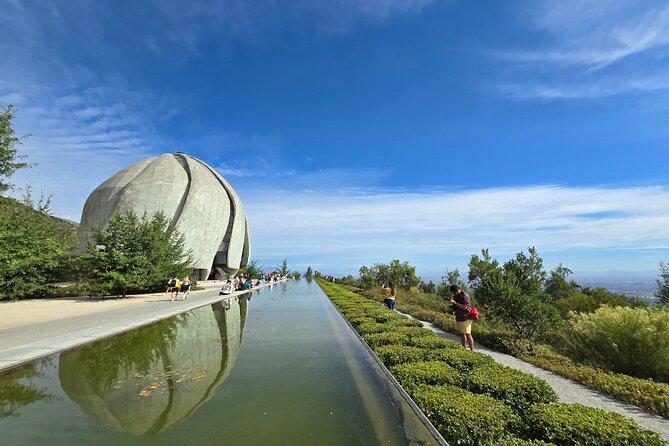
Santiago is too spread out for a useful first look in only a few hours. Its central streets, eastern neighborhoods, markets, and hills each tell a different story. A short city drive can show you the names, but it rarely gives you enough time to understand how the pieces fit.
This route takes about six hours and begins at 9:00 a.m. Pickup is offered, which makes the morning easier if you are staying at a hotel covered by the service. The tour combines vehicle transfers with walks through the city, so you are not on foot for the entire day.
The small group limit is one of the strongest features. A group of eight is still social, but it leaves room for questions about Chilean politics, immigration, food, and daily life. Guides can also respond to practical problems. On a Monday, when some Santiago attractions were closed, the guide created a worthwhile day by focusing on places that could still be enjoyed and explaining Chile’s story from its early past to the present.
More history tours in Santiago:
- Santiago: Guided Walking Tour of the Historical Old Town
★ 4.8 · 459 reviews - Tour Viña Santa Rita: History, Wine and Picnic Outdoors
★ 4.5 · 141 reviews - Viña Del Mar and Valparaiso world heritage site.
★ 4.5 · 89 reviews
Parque Bicentenario and Santiago’s polished eastern side
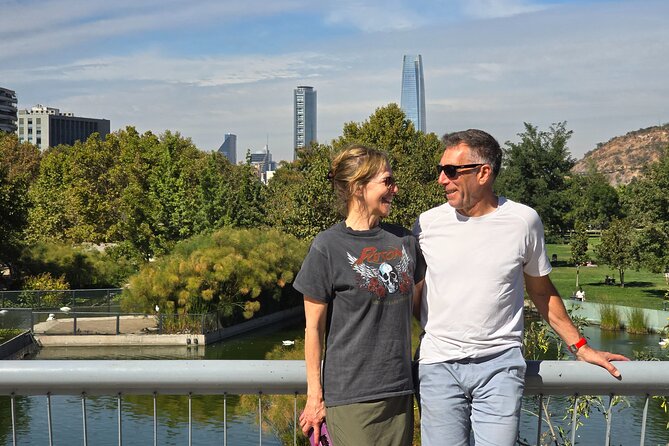
The first stop is Parque Bicentenario in Vitacura, one of Santiago’s more modern and affluent districts. The park offers a sharp contrast with the older city center that comes later.
You have about 30 minutes to walk its paths, see sculptures, and look across the lake toward the Andes. The setting shows how Santiago has invested in open public areas as the city has grown. It is also a good early photo stop, especially if the mountain views are clear.
This is not the place for a long historical lecture or a packed list of monuments. Its value is visual and urban. You see a cleaner, more planned side of Santiago, with contemporary architecture and landscaped public space. I would treat it as an introduction to present-day city life rather than a major destination by itself.
The Andes backdrop can be impressive, but mountain visibility depends on conditions. If haze covers the peaks, the park still offers a pleasant walk, though the photographs will not have the same impact.
La Moneda and the political story of Chile
The tour then shifts to downtown and begins a walk around La Moneda, Chile’s government palace, along with the nearby cultural center. You have roughly 45 minutes here.
This is one of the most useful stops for understanding the country. The guide explains Chile’s political situation, including the 1973 coup led by Augusto Pinochet, and places current economic questions in a wider national context. La Moneda is not merely a handsome government building. It is a place where Chile’s recent past remains closely tied to public life.
You should expect discussion rather than a long indoor palace visit. The supplied details identify the palace and cultural center as the focus, with admission listed as free. The value comes from having a guide explain the events connected to the site and answer questions in plain language.
That historical framing helps later at the Museum of Memory and Human Rights. Without it, the final museum could feel like a separate stop. With it, the day develops a clear line from government and political conflict to remembrance and public education.
Plaza de Armas, colonial roots, and a changing city center
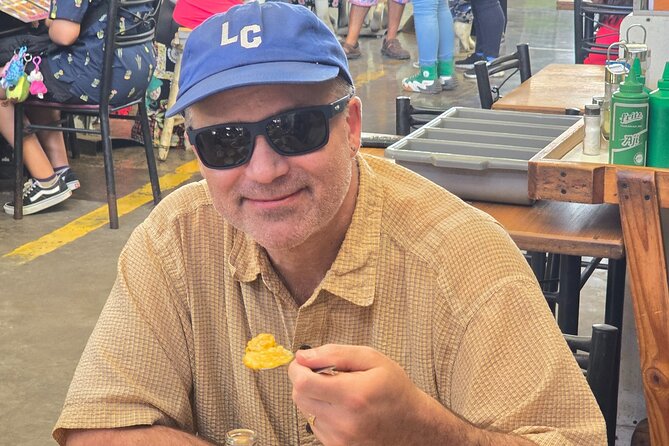
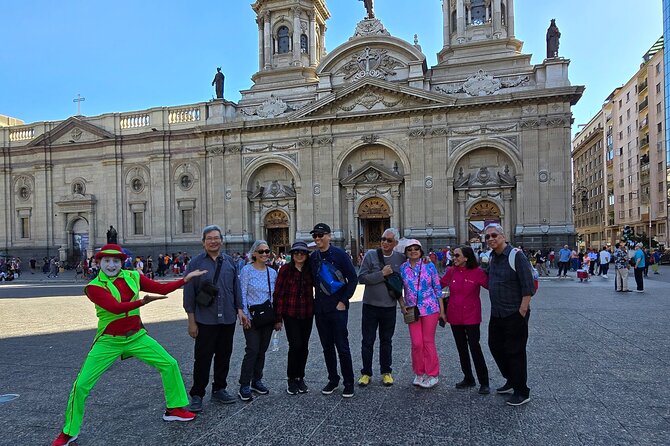
Plaza de Armas is the traditional heart of Santiago. The square brings together Chile’s Spanish colonial past and the present-day city, including large immigrant communities from Central and South America.
The guide discusses the Spanish conquest and the Mapuche people, whose resistance prevented the Spanish from taking full control of the territory for centuries. This is an important correction to a simple conquest story. Chilean history includes colonial power, Indigenous resistance, and later waves of migration, all visible in and around this central square.
You have about 45 minutes here, including free time to visit the cathedral. That independent time is welcome. You can look inside at your own pace, take a break from the guide’s commentary, or simply watch city life unfold around the square.
The center can feel crowded and intense compared with Parque Bicentenario. That contrast is part of the point. You are not seeing a polished display of Santiago. You are seeing a working public center shaped by many communities and layers of history.
If you prefer a slow cathedral visit, keep your expectations modest. The free time is useful, but it is not a dedicated church tour. Ask the guide what can be seen during the stop if religious art or architecture matters to you.
More things to do in Santiago:
- Valparaiso Port and Viña del Mar with Casablanca Wine Tasting
★ 5.0 · 6,110 reviews - Santiago: Cajon del Maipo/Embalse del Yeso Tour with Picnic
★ 4.3 · 3,789 reviews - Santiago: Vina Del Mar, Valparaiso, Casablanca & Reñaca Tour
★ 4.2 · 2,838 reviews - Cable Car, Funicular and Sightseeing Bus in Santiago one day
★ 5.0 · 2,325 reviews
Mercado Central and Tirso de Molina, where lunch becomes your choice
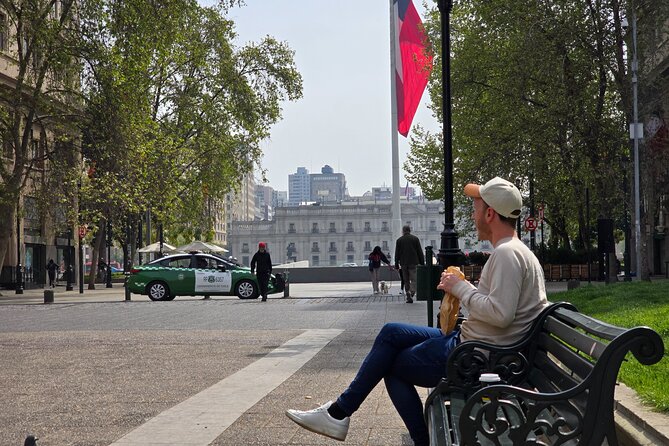
The food portion of the tour takes place around Mercado Central and Mercado Tirso de Molina. You have about 45 minutes, and this is where the six-hour format earns its keep.
Mercado Central is known for fish and shellfish. You can look at the stalls, learn about Chile’s coastal food traditions, and try dishes such as ceviche and caldillo de congrio. The latter is a Chilean conger eel soup made famous in part by Pablo Neruda’s poem about it. The market gives you a direct connection to the country’s long coastline and seafood culture.
Nearby Mercado Tirso de Molina adds fruit, vegetables, and other everyday produce. It is a useful counterpoint to the seafood hall. Instead of seeing Chile only through famous restaurants, you get a look at the ingredients that feed the city.
Lunch is not included, and this is both a drawback and a benefit. You pay for what you choose, but you are not locked into one restaurant or a fixed meal. You can select a full lunch, order a small portion, or concentrate on tasting rather than eating a large midday meal.
I would ask the guide how much time is available before ordering. Market service can take time, and the schedule continues to Bellavista. Also remember that the $75 price includes the guiding and listed admissions, not your food purchases.
Bellavista, street art, and La Chascona
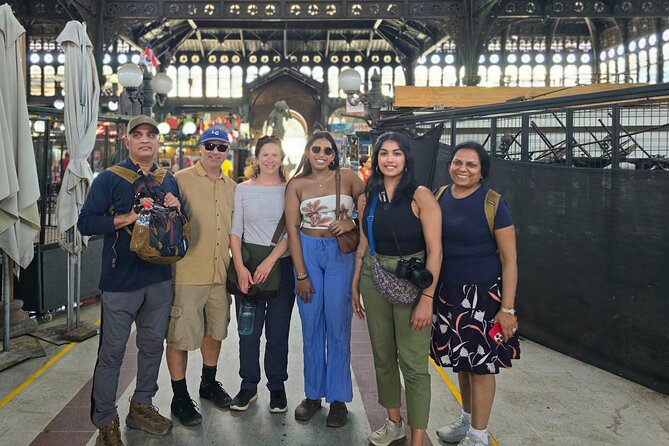
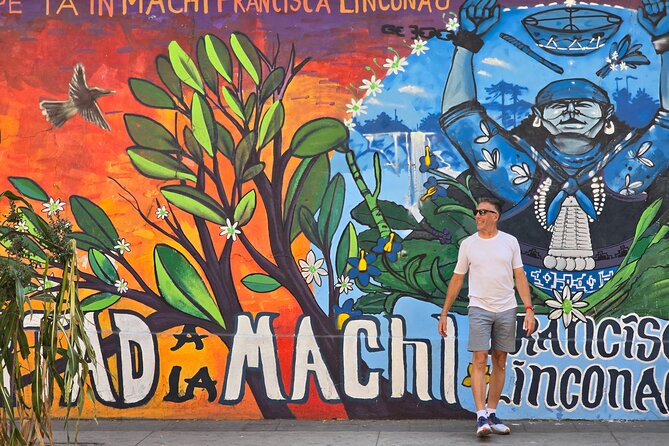
Bellavista brings a different mood. This bohemian district is known for restaurants, bars, shops, murals, and a strong connection to Santiago’s art scene.
The walk begins around Patio Bellavista, a restaurant and shopping area. It is an easy place to get a sense of the neighborhood’s social side, though the commercial setting may feel less traditional than the markets. The tour then moves into the street art, where walls and installations reflect Chilean culture and current life.
The stop includes a visit to La Chascona, Pablo Neruda’s Santiago house. The house is known for its unusual design and personal connection to the poet. It offers another way into Chilean culture, this time through literature, collecting, and Neruda’s private world.
Admission to La Chascona is not included. That matters because the stop is listed at about 30 minutes, and you may need to decide if paying an extra entrance fee fits your plans. The supplied details do not state the exact admission price, so check before the day begins if you want to enter.
If you skip the house, you still have the neighborhood walk and street art. If Neruda is a main reason for booking, confirm how the visit will work and whether the available time is enough for the interior tour. The guide can provide context, but this is not the same as buying a full museum visit separately.
Cerro San Cristóbal and a classic Chilean refreshment

The funicular carries you up Cerro San Cristóbal for one of the best city views on the route. The ride is included, which adds real value because it avoids treating the hill as a distant photo opportunity.
From the summit, Santiago spreads out between the Andes and the Coastal mountains. This viewpoint helps you understand the city’s size and position better than a street-level drive can. It is also the place where air quality and weather matter most. On a clear day, the mountain setting gives the stop its full effect. On a hazy day, you still see the city, but the distant peaks may be faint.
The tour includes mote con huesillos, a traditional Chilean drink made with wheat and dried peaches. For people from Santiago, having it on San Cristóbal is a familiar local custom, not just a random snack added for tourists. The drink is sweet and filling, so it may function as a small treat after lunch rather than a replacement for the meal.
You have around 45 minutes at the hill. That gives you time for the funicular, the view, photographs, and the drink without making the stop feel like a rushed transfer.
The Museum of Memory and Human Rights
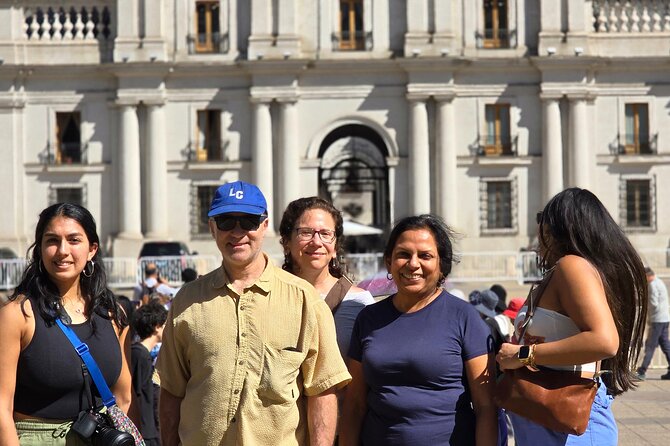
The final stop is the Museum of Memory and Human Rights, with about 30 minutes inside. Admission is included.
This museum examines Chile’s recent history and human rights abuses under the Pinochet dictatorship. Its purpose is educational and reflective. The displays are designed to help you understand what happened, how people were affected, and why memory remains part of Chile’s public life.
Thirty minutes is enough for an introduction, but it is not enough to see every display closely. If this subject is especially important to you, you may want to return independently with more time. As the final stop, it also changes the tone of the day. After parks, food, art, and mountain views, you end with a serious look at the country’s political past.
That structure is one of the tour’s strengths. Santiago is not reduced to architecture and restaurants. You get space for pleasure, but also for difficult history. The guide’s earlier explanation at La Moneda helps you approach the museum with a basic framework.
Guide quality, group size, and the $75 value
The tour costs $75 per person and includes an English, Spanish, or Portuguese licensed guide, the funicular, and entry to the Museum of Memory and Human Rights. Pickup is offered, and the group can have no more than eight people.
For a large city with spread-out stops, that is a reasonable price if you want interpretation and transportation handled in one day. You are paying for the guide’s ability to connect the sites, not simply for admission tickets. The included funicular is useful, while most of the other stops are free.
The price is less attractive if you plan to spend heavily on lunch, enter La Chascona, or return to the museum later. Those costs sit outside the tour fee. Still, the freedom to choose your own market meal is better than being sent to one fixed restaurant.
The strongest personal touch comes from the guides’ flexibility. Hightower picked up a solo participant, adjusted the route around that person’s interests, and provided what became a private city tour. Daniel received praise for offering a personalized, well-informed day and adding small tastes of Santiago along the way. Those examples suggest the guide can shape the experience rather than recite a fixed script, though your exact guide and group size will vary.
Who should book this Santiago tour?
I would choose this tour if you are visiting Santiago for the first time and want a broad introduction in one day. It suits you especially well if you enjoy political history, local food, city views, and guided walking without having to arrange several separate bookings.
It also works for people with limited time. The route covers districts that are difficult to combine efficiently on your own, and the pickup option reduces morning planning. Families and mixed-age groups may appreciate the changing pace, with parks, markets, a funicular, and museums instead of six straight hours of walking.
You may want another plan if you prefer long museum visits, extended meals, or a very slow exploration of one neighborhood. The schedule is generous for a city tour, but it still has seven stops. Anyone with a strong interest in La Chascona should budget extra and confirm the house visit details.
Free cancellation is available up to 24 hours before the 9:00 a.m. start time. Changes or cancellations within 24 hours are not refunded. Service animals are allowed, public transportation is nearby, and the activity states that most participants can take part without restrictions.
Should you book it?
Book this tour if you want Santiago explained as a living city rather than a collection of postcard stops. The best parts are the small group, the market time, the political context, the included funicular, and the thoughtful finish at the Museum of Memory and Human Rights.
Skip it if you want to choose every stop yourself or spend half a day inside one museum. Otherwise, $75 is fair for a six-hour introduction that combines transport, guiding, food choices, viewpoints, and difficult but necessary history. Bring some extra money for lunch and possible La Chascona admission, then let the guide help you connect the city’s many sides.
FAQ
What time does the tour start?
The tour starts at 9:00 a.m.
How long does the tour last?
The experience lasts approximately six hours.
Is hotel pickup available?
Pickup is offered. The provided information does not specify which hotels or areas are covered.
What languages are available?
The tour includes a licensed guide in English, Spanish, or Portuguese.
What is included in the price?
The price includes the funicular, admission to the Museum of Memory and Human Rights, and the licensed guide.
Is lunch included?
No. Lunch is not included, and you choose what and where to eat around the market area.
Is admission to Pablo Neruda’s house included?
No. Admission to La Chascona is not included.
How many people can join the tour?
The tour has a maximum of eight participants.
Can I cancel for a full refund?
Yes, if you cancel at least 24 hours before the experience start time. Cancellations within 24 hours are not refunded.
Just added in Santiago
- Walking City Tour with Funicular, Cable Car and Tasting★ 4.3 · 6 reviews
- VIÑA DEL MAR AND VALPARAISO TOUR★ 4.8 · 20 reviews
- Tour VIÑA CONCHA Y TORO + CASA MARQUES – Chile, from Santiago.★ 5.0 · 2 reviews
- Undurraga + Isla Negra + San Afonso del Mar —– Full day★ 4.1 · 8 reviews
- Undurraga Wine tour★ 4.2 · 15 reviews
- Southcoast – Private Full-Day tour★ 5.0 · 6 reviews
- Santiago Private walking tour with Lunch★ 5.0 · 5 reviews
- Zapallar : nature, sea and local flavours★ 5.0 · 6 reviews
Historical Tours, compared.
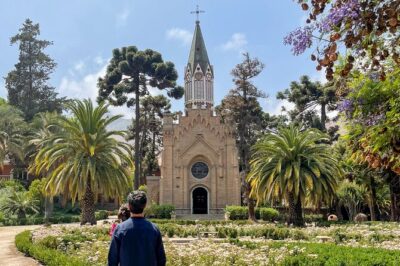
Tour Viña Santa Rita: History, Wine and Picnic Outdoors
Read our review →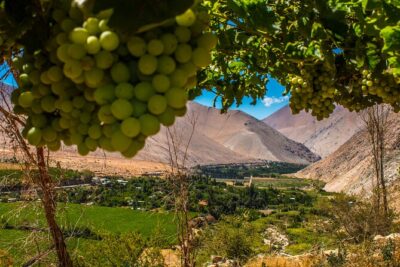
Elqui Valley Tour: History and Flavors (NOT FOR CRUISES)
Read our review →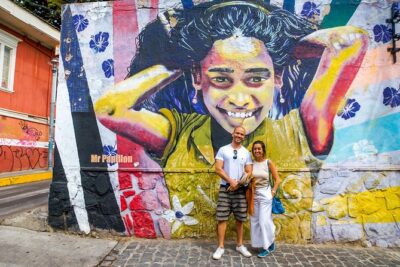
Viña Del Mar and Valparaiso world heritage site.
Read our review →
Walking Tour Valparaiso, History & Art – Private Optional
Read our review →
Essence of Santiago : History, Flavors and Panoramic Views
Read our review →
2 Day Private Tour: Easter Island’s Cultural Heritage
Read our review →
Browse the lists this tour appears in