
REVIEW · CHILEAN WINE TOURS
Santiago: The Essentials City Tour & Optional Concha y Toro
Santiago rewards a good first look. This guided city tour pairs colonial landmarks with modern districts, making it a useful introduction to Chile’s capital in one outing. I like the easy hotel pickup and drop-off, and I like the contrast between Santa Lucia Hill, the old center, and Santiago’s glass towers. The main drawback is timing: shared pickups can delay the start, and the winery option operates as a separate afternoon excursion.
If you choose the Concha y Toro add-on, plan for a long day with a midday return to your hotel or meeting area before a new vehicle and guide take you to the winery. The experience has earned mixed feedback overall, but guide Christopher received especially strong praise for clear planning and good communication.
In This Review
- Key points to know before booking
- A useful first day in Santiago
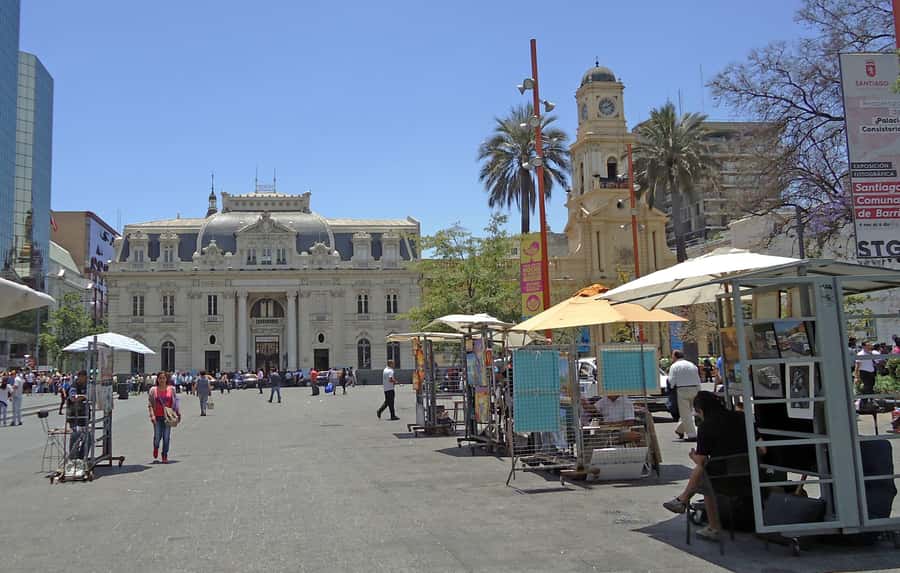
- Plaza de Armas and Santiago’s colonial core
- Moneda Palace and the story of Chilean government
- Santa Lucia Hill, or Huelén, above the city
- Santiago’s modern east side and financial district
- What the hotel pickup adds, and what it can cost
- Adding Concha y Toro for a full day
- Guide quality and language details
- Timing, group size, and the real value of $42
- Who should book this Santiago tour?
- FAQ
- What does the Santiago city tour include?
- Is Concha y Toro included in the $42 price?
- Are museum entrance fees included?
- Which languages are available?
- Can children under 17 take part in the wine tasting?
- Is the tour suitable for wheelchair users?
- Should you book it?
Key points to know before booking
- Santa Lucia Hill gives you Santiago from above: The hill, called Huelén by the Indigenous people, offers an urban green space and broad city views.
- The morning covers old and new Santiago: You visit Plaza de Armas, the Metropolitan Cathedral, Moneda Palace, traditional central neighborhoods, and the eastern financial district.
- Concha y Toro is an optional second tour: The winery visit includes an entrance, a production tour, garden time, and three wine tastings.
- Hotel pickup is limited to four districts: Pickup is included from hotels, apartments, and accommodations in Providencia, Las Condes, Vitacura, and Santiago Centro.
- The schedule can stretch: Hotel pickups may add time, and the combined option can run from morning into late afternoon.
- Expect some walking and uneven access: The tour is not suitable for wheelchair users or people with mobility impairments.
A useful first day in Santiago
At $42 per person for the city tour, this is priced as a practical orientation rather than a full museum program. You are paying for transport, a live guide, hotel service in selected districts, and a broad route through Santiago. Museum admissions, meals, and drinks are extra.
I see the strongest value here if you have only a short stay or want someone else to handle the city’s basic geography. Santiago spreads across several distinct areas, and the tour moves from the colonial core to Santa Lucia Hill and then east toward the modern financial center. That range helps you understand the city’s shape quickly.
The route is also useful at the beginning of a trip. After a guided morning, you can decide which areas deserve a longer return visit. If you already know Santiago well, though, the short stops may feel too quick, especially since the focus is on seeing major places rather than entering every one.
The experience is offered in Spanish, English, or Portuguese. Small-group availability is a plus, but the actual feel of the outing can depend on pickup patterns and the number of people joining that day.
More City Tours in Santiago
- Private Santiago City Half Day Tour
★ 4.0 · 414 reviews - Santiago: Full day tour to Valparaiso and Viña del Mar city
★ 4.0 · 188 reviews - City tour by Santiago of Chile -A beautiful experience – Half day
★ 4.5 · 176 reviews
Plaza de Armas and Santiago’s colonial core
The city tour begins in central Santiago, where the older part of the city gives the clearest sense of its Spanish colonial roots. Plaza de Armas is the natural starting point. It is one of the city’s key public squares and a good place to hear the basic story of Santiago while looking at some of its most important buildings.
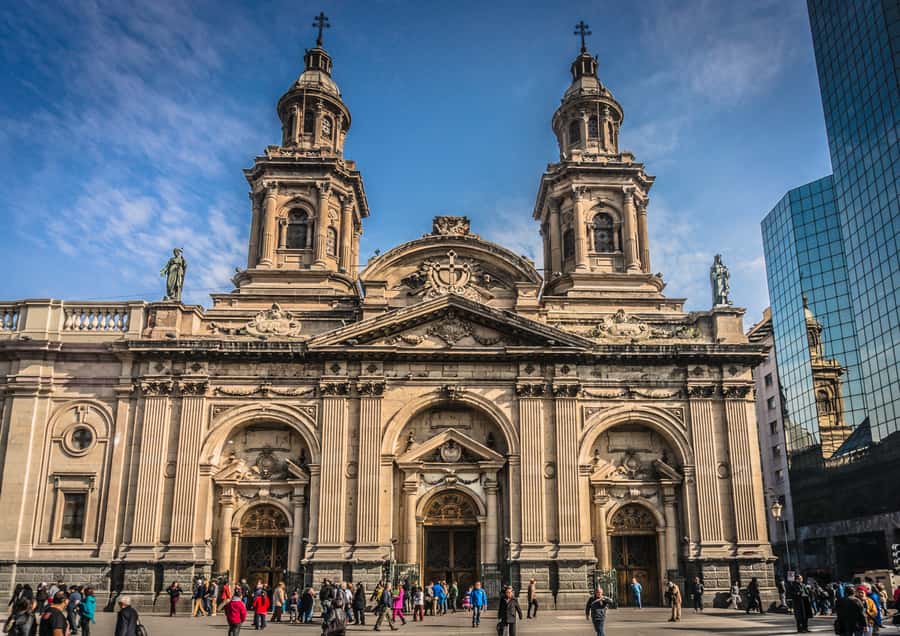
The Metropolitan Cathedral is included as one of the major sights. Its presence helps explain the role of religion in the city’s development, while the surrounding civic buildings show how government and public life grew around the square.
The National Historical Museum is also part of the route. The tour does not include museum entrance fees, so you should treat this stop as an exterior visit unless you decide to pay separately and have enough free time. That distinction matters. The tour gives you a quick introduction, not a museum-focused morning.
I like this part of the experience because a guide can connect the buildings to Chile’s past instead of leaving you to identify them from a map. You will hear about Santiago’s development as you move through the center, which gives the architecture more meaning.
Still, shared city tours rarely allow long, quiet visits at each location. Bring a camera, listen closely, and note the places you may want to revisit on your own.
Moneda Palace and the story of Chilean government
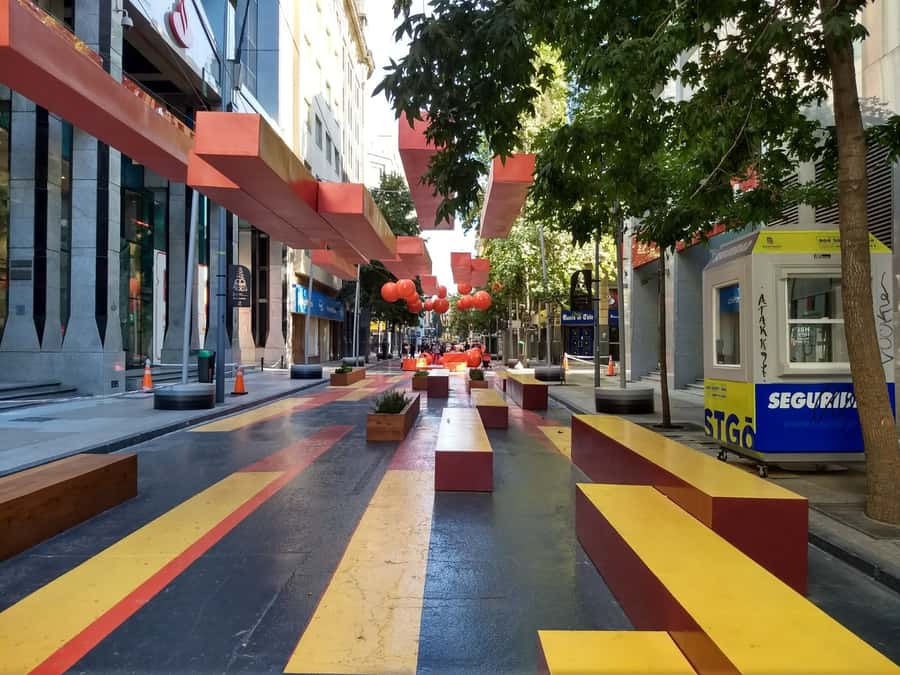
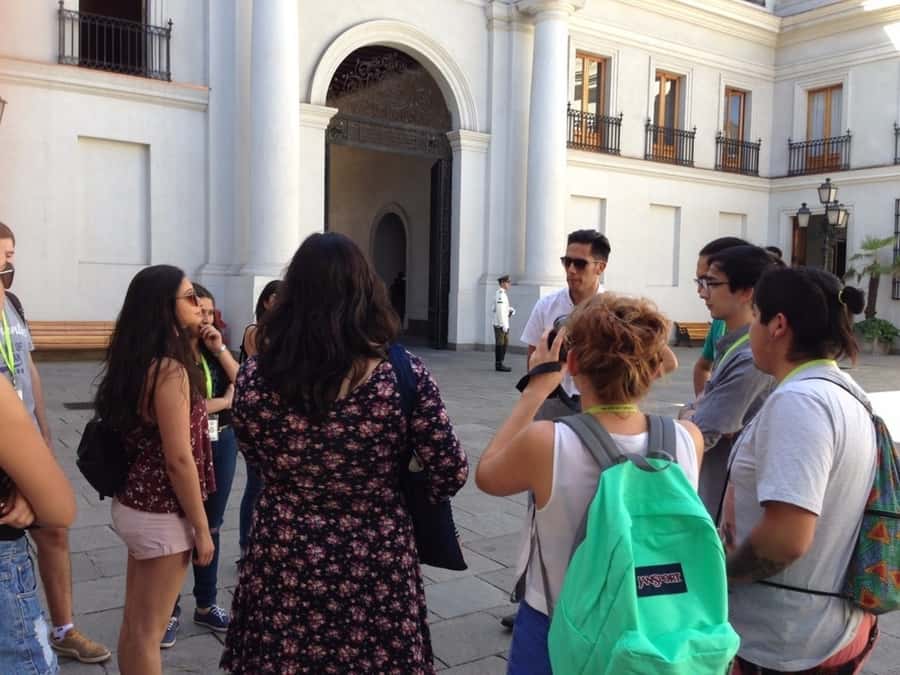
Moneda Palace is another major stop. This is the seat of Chile’s government, and its formal architecture gives the tour a clear political center. Seeing it alongside the cathedral, museum, and central square creates a useful picture of how Santiago’s religious, civic, and political institutions sit close together.
The guide is especially important here. A building like Moneda Palace can be little more than a grand facade if you do not know why it matters. The tour promises historical explanation as you explore, so this is one of the places where the live commentary adds real value.
You should not expect an extended government tour or a long indoor visit. The supplied details identify Moneda Palace as a sight on the route, not as an interior admission. Think of it as a guided city view with context.
Traditional neighborhoods in the central area round out this section. These streets provide a change from formal monuments and help you see Santiago as a living city rather than a string of official buildings.
Santa Lucia Hill, or Huelén, above the city
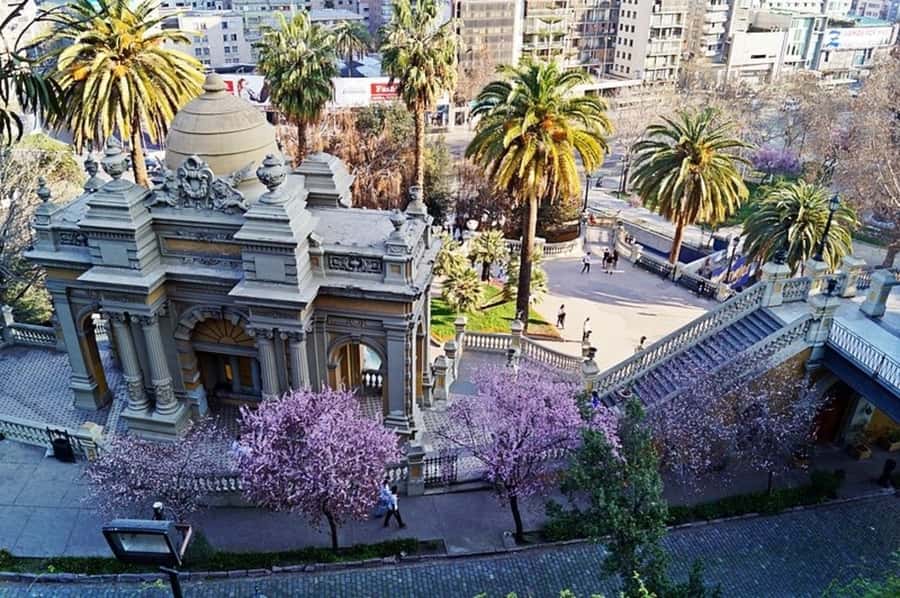
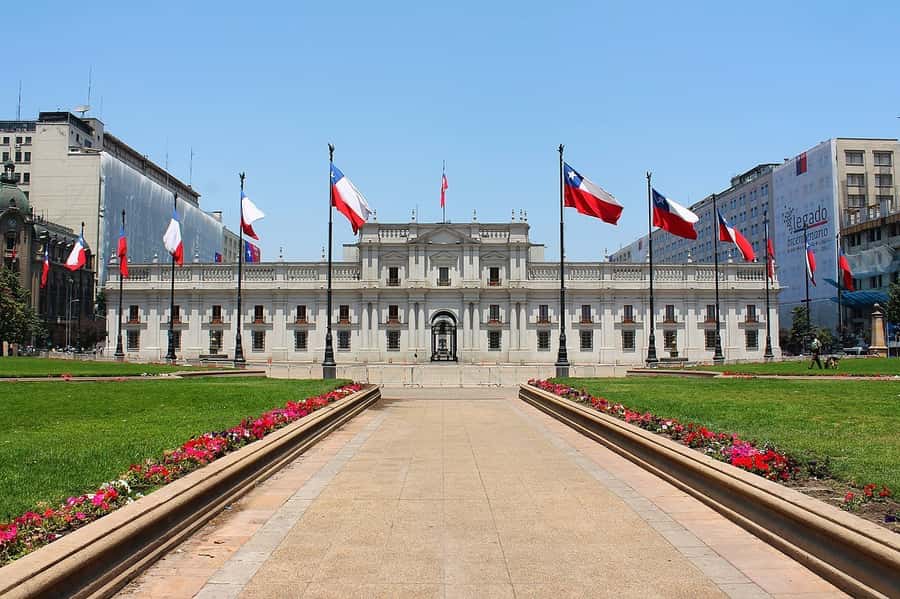
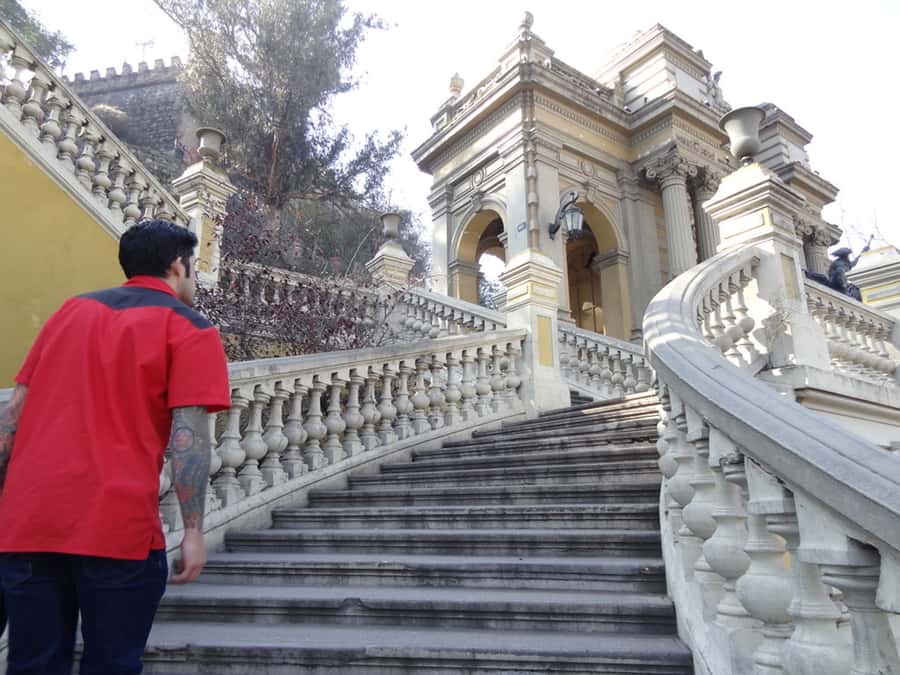
Santa Lucia Hill is the most rewarding stop for many first-time visitors. In the middle of the city, it offers an urban green space and a break from traffic and stone streets. The hill’s Indigenous name, Huelén, adds a local layer to the stop and gives the guide a chance to discuss Chile before and after the colonial period.
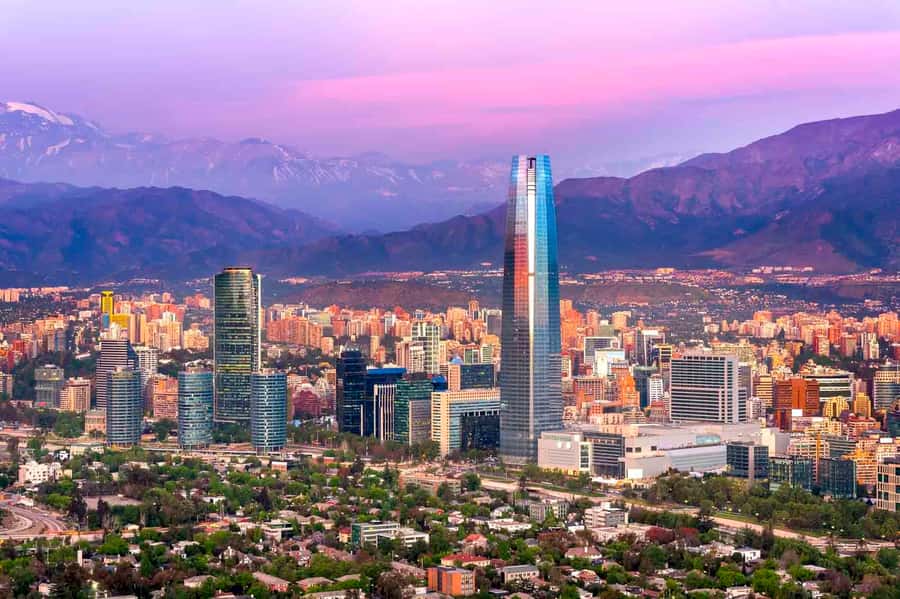
The observation deck provides broad views across Santiago. This is where the tour’s different parts begin to make sense. From above, you can better appreciate the scale of the central districts and the contrast between older buildings and newer towers.
Bring sunglasses, a sun hat, water, and comfortable shoes. Those items are not decorative advice. The visit includes walking, and the hill is not suitable for people with mobility impairments. Wheelchair users should not book this experience.
I would also keep your expectations realistic. The available information promises panoramic views, not a mountain excursion or a long nature walk. Santa Lucia Hill is valuable because it places an open, elevated viewpoint right in the city center.
More Wine Tours in Santiago:
- Valparaiso Port and Viña del Mar with Casablanca Wine Tasting
★ 5.0 · 6,110 reviews - Santiago: Vina Del Mar, Valparaiso, Casablanca & Reñaca Tour
★ 4.2 · 2,838 reviews - Tour to Valparaíso, Viña del Mar, Pablo Neruda Museum and Vineyard
★ 5.0 · 2,273 reviews - Maipo Valley Wine Tour with 4 vineyards from Santiago.
★ 5.0 · 1,983 reviews
Santiago’s modern east side and financial district
The second city section moves east, toward the financial heart of Santiago. Here the mood changes. Instead of colonial facades and traditional central streets, you see modern buildings, tall glass towers, and large sculptures connected to prominent Chilean architects.
This contrast is one of the tour’s best features. Santiago is not only a colonial capital preserved around a central square. It is also a modern business center with a very different visual character. Seeing both sides in one morning helps you avoid a narrow picture of the city.
The eastern district is likely to appeal to you if you enjoy architecture and city development. The guide can explain how Santiago combines older traditions with a modern outlook, while the vehicle makes it easier to cover the distance between the center and the east.
The tradeoff is that modern districts can be less atmospheric than the old center. You may find the glass towers impressive, but they are not the sort of place where you linger for hours. This portion works best as a contrast and orientation stop.
What the hotel pickup adds, and what it can cost
Pickup and return service is included for accommodations in Providencia, Las Condes, Vitacura, and Santiago Centro. That makes the tour much easier if you do not want to find a meeting point or navigate Santiago’s transport system early in the day.
If you stay outside those areas, the operator will contact you with the closest meeting point. Check this before booking, since the phrase hotel pickup does not mean door-to-door service everywhere in the wider metropolitan region.
Shared pickup is also the main timing concern. One guest reported that a tour advertised as three hours took five because of repeated hotel stops. Another described a morning from about 7:30 a.m. to 12:30 p.m., followed by a separate afternoon excursion from 2 p.m. to 6 p.m.
That does not make the transport useless, but it does mean you should avoid scheduling a tight connection or important appointment afterward. A pickup tour saves effort, yet it can lose time while collecting other people. Santiago traffic and the number of stops will affect the day.
Adding Concha y Toro for a full day
The winery option changes the shape of the experience. It is not simply an extra stop tacked onto the city route. The city tour finishes around midday, you have roughly an hour and a half of break time, and then a different vehicle and guide may take you to Concha y Toro for the afternoon.
This setup is important to understand before paying for the combined option. If you expect one continuous tour with the same guide, you may be disappointed. The two-part schedule can work well, but it requires patience and a long day.
At Concha y Toro, the program includes entrance, an explanation of the wine production process, time in the gardens, and three tastings. For someone interested in Chilean wine, this gives the outing a clear purpose. You are not only stopping for a drink. You get a look at how the winery presents its production and grounds.
The wine tastings are for adults. People under 17 cannot consume alcoholic beverages, so families with younger travelers should keep that rule in mind. Food is not included, and neither are other drinks beyond the specified tastings.
The winery add-on is most useful if you have enough time in Santiago and want a city-and-wine day without arranging separate transport yourself. If you prefer a slower city visit, skip it and use the afternoon for a museum, neighborhood walk, or meal of your choice.
Guide quality and language details
A live guide is included, with Spanish, English, and Portuguese available. The guide can make a major difference because the route contains many sights that need explanation, especially Moneda Palace, the cathedral, the museum district, and the shift from the old center to the financial east.
Christopher was singled out for excellent guiding, planning, and communication. That is useful evidence of what the experience can be like when the guide and logistics work well.
Language handling deserves attention, particularly for the winery portion. One booking was concerned after finding that the winery guidance was delivered in Spanish and Portuguese despite requesting Spanish. If language is important to you, confirm the language for both parts of the day rather than assuming the same arrangement applies from morning to afternoon.
The activity supports Spanish, English, and Portuguese, but a combined tour may use different staff. That is another reason to ask for clear confirmation before the day begins.
Timing, group size, and the real value of $42
The city portion is described as lasting about four hours, though actual time can be longer because of pickups and drop-offs. The combined city and winery day can run from four to eight hours, depending on the selected option and schedule.
At $42 per person, the city tour offers fair value if you place a high price on convenience. You receive a guide, an air-conditioned bus or van, transport between spread-out districts, and hotel service in the main accommodation zones. The price is less attractive if you mainly want a self-guided stroll through the center, since many central sights can be viewed without a vehicle.
The small-group option may improve the experience by making it easier to hear the guide and ask questions. Do not assume every departure will feel intimate, though. Pickup tours can combine people from several hotels, and the final group size may vary.
I would also treat free cancellation up to 24 hours before departure and reserve-now, pay-later booking as useful safeguards. They help if your Santiago plans are still moving around, but they do not solve last-minute cancellations by the operator. One person received cancellation notice the night before and felt there was too little time to arrange another plan. If this tour is essential to your day, keep a backup idea in mind.
Who should book this Santiago tour?
I would choose this experience if you want a broad first look at Santiago, prefer guided transport, and are staying in one of the covered districts. It suits solo visitors, couples, and first-time city visitors who want the major sights explained without building a route from scratch.
The Concha y Toro option suits wine fans and people with a full day available. It is less suitable if you want a relaxed pace, dislike changing vehicles, or need a precise return time.
You should think twice if you use a wheelchair or have mobility limitations. Some stops are not accessible, and the experience is specifically not suitable for wheelchair users. You should also leave large bags and luggage behind, since they are not allowed.
FAQ
What does the Santiago city tour include?
It includes hotel pickup and return within Providencia, Las Condes, Vitacura, and Santiago Centro, transport in an air-conditioned bus or van, and a local guide. The route includes Plaza de Armas, the Metropolitan Cathedral, the National Historical Museum, Moneda Palace, central neighborhoods, Santa Lucia Hill, and Santiago’s modern eastern district.
Is Concha y Toro included in the $42 price?
Concha y Toro is an optional upgrade, so you need to select that option when booking. The winery package includes entrance and three wine tastings.
Are museum entrance fees included?
No. Entrances to museums are not included, and food and drinks are also excluded.
Which languages are available?
Guides are available in Spanish, English, and Portuguese. For the winery portion, confirm your preferred language because the city and winery tours may use different guides.
Can children under 17 take part in the wine tasting?
People under 17 cannot consume alcoholic beverages. The tour information does not state a separate child price or an alternative tasting arrangement.
Is the tour suitable for wheelchair users?
No. The experience is not suitable for wheelchair users or people with mobility impairments, and some stops are not enabled for people with mobility limitations.
Should you book it?
Book the city portion if you want an efficient introduction to Santiago, especially if hotel pickup and a guide matter more to you than a slow, detailed visit at each landmark. Santa Lucia Hill, the colonial center, and the modern eastern district make a good three-part picture of the capital.
Add Concha y Toro only if you are comfortable with a split day, a second vehicle and guide, and a schedule that can run into the late afternoon. For the best chance of a smooth experience, confirm pickup time, guide language, and the winery schedule in advance. If your plans are tight, or you want to explore Santiago at your own pace, book the city tour alone and keep the afternoon free.
Just added in Santiago
- Walking City Tour with Funicular, Cable Car and Tasting★ 4.3 · 6 reviews
- VIÑA DEL MAR AND VALPARAISO TOUR★ 4.8 · 20 reviews
- Tour VIÑA CONCHA Y TORO + CASA MARQUES – Chile, from Santiago.★ 5.0 · 2 reviews
- Undurraga + Isla Negra + San Afonso del Mar —– Full day★ 4.1 · 8 reviews
- Undurraga Wine tour★ 4.2 · 15 reviews
- Southcoast – Private Full-Day tour★ 5.0 · 6 reviews
- Zapallar : nature, sea and local flavours★ 5.0 · 6 reviews
- Private Casa Blanca Valley Wine Experience from Santiago★ 4.5 · 8 reviews
Chilean Wine Tours, compared.
Valparaiso Port and Viña del Mar with Casablanca Wine Tasting
Read our review →
Vina Del Mar, Valparaiso, Casablanca & Reñaca Tour
Read our review →
Tour to Valparaíso, Viña del Mar, Pablo Neruda Museum and Vineyard
Read our review →
Maipo Valley Wine Tour with 4 vineyards from Santiago.
Read our review →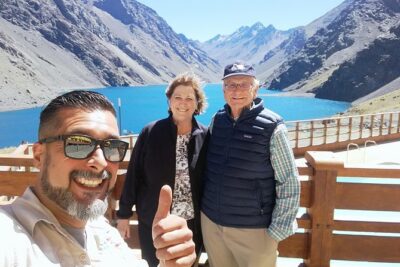
Inca Lagoon in Andes Mountain Range – Visit Local Vineyard with Tasting included
Read our review →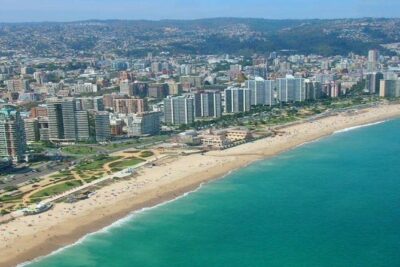
Valparaiso -Casablanca -Reñaca-Oceanic Rock-Concon
Read our review →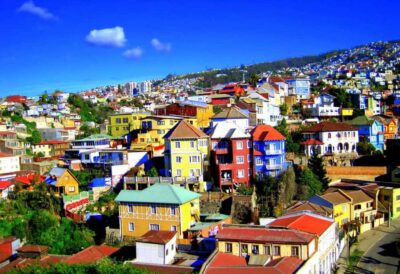
Valparaiso, Viña del Mar, & Casablanca Valley Tour
Read our review →
Marquis de Casa Concha: Wine tasting in Concha y Toro
Read our review →Browse the lists this tour appears in