
REVIEW · CITY TOURS
Santiago Half Day City Tour Private with Vehicle
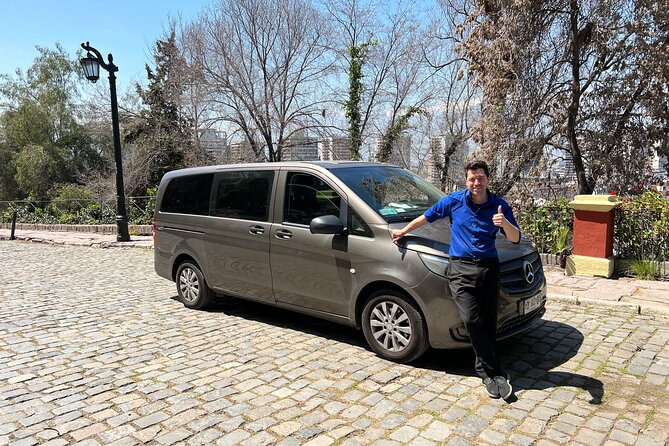
Santiago reveals itself in layers. This private, vehicle-assisted tour links the city’s best-known civic squares with Cerro Santa Lucía, giving you history, current affairs, and useful orientation in about four hours. I especially like the private format, which lets your group ask questions and adjust the pace, and the chance to discuss Chile’s political past without reducing it to a list of dates. The clean vehicle and careful driving also matter when you want to cover central Santiago without tiring out your feet.
The main consideration is the walking. Cerro Santa Lucía has uneven stone paths and a climb to the upper tower, so you need moderate fitness. The tour also begins in Las Condes and returns there, which is convenient for some visitors but less handy if you are staying far from the meeting point. At $150 per person, the price is easiest to justify for a small private group that values personal attention.
In This Review
- Five things to know before booking
- What this half-day tour is really designed to do
- Cerro Santa Lucía: greenery, stone paths, and a choice of effort
- La Moneda and Constitution Square: Chile’s political center
- Plaza Montt Varas: courts, Congress, and public disagreement
- Plaza de Armas: where Santiago began and keeps changing
- The Metropolitan Cathedral: a layered religious landmark
- The vehicle, meeting point, and pace
- Is $150 per person a fair price?
- Who will enjoy this Santiago tour most?
- Should you book it?
- FAQ
- How long does the Santiago private city tour take?
- Where does the tour start and finish?
- Is transportation included?
- Is this a private activity?
- Is lunch included?
- Do I need to be physically fit?
- Who might lead the tour?
Five things to know before booking
- Cerro Santa Lucía includes a real climb: You can stop at the main terrace or continue toward the tower, but the trails are uneven.
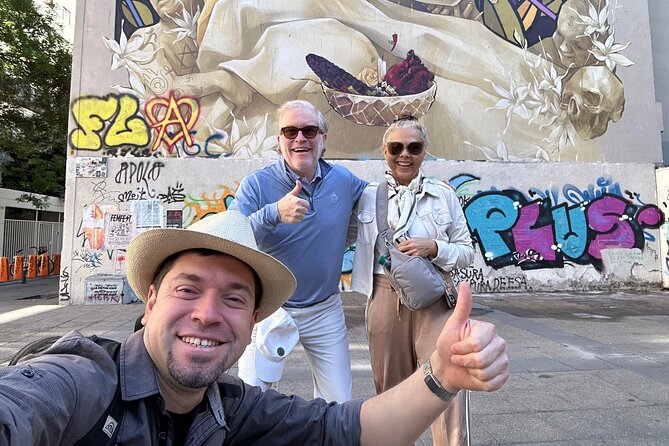
- Juan Pablo may lead the tour: He is praised for humor, careful answers, and strong knowledge of Santiago and current events, although another guide may be assigned.
- The route covers Santiago’s civic core: La Moneda, Constitution Square, Plaza Montt Varas, Plaza de Armas, and the Metropolitan Cathedral all appear in one compact outing.
- The political context is serious and useful: The 1973 coup, human rights, the three branches of government, and present-day public affairs are part of the conversation.
- A private vehicle saves time: You travel only with your own group, with pickup and return at Bici Las Condes in Las Condes.
- Lunch is not included: The tour price covers the guide and all listed fees, but you need to arrange food separately.
What this half-day tour is really designed to do
This is not a museum-heavy outing. It is a broad introduction to Santiago, built around outdoor public places, landmark buildings, and conversation with a local guide. You get a feel for how the city was founded, how Chile’s government works, and how old colonial spaces function today.
The route lasts about 3 hours 30 minutes to 4 hours. That is long enough to see the central sights without turning the day into a march. Families may appreciate this balance, since the schedule gives children several changes of scene instead of asking them to focus on one long historical visit.
You also have the benefit of a private activity. Only your group takes part, so you can ask for clarification, linger over a point, or keep moving if the children are losing interest. The guide may be Juan Pablo or another guide, depending on availability. Juan Pablo receives especially warm praise for mixing humor with careful, thoughtful explanations, including answers about current events in Chile.
The tone is conversational rather than preachy. That matters at places tied to the 1973 coup and Chile’s political divisions. The guide’s stated approach is to share information and let you form your own view, which is the right way to handle sensitive subjects on a city tour.
More City Tours in Santiago
- Private Santiago City Half Day Tour
★ 4.0 · 414 reviews - Santiago: Full day tour to Valparaiso and Viña del Mar city
★ 4.0 · 188 reviews - City tour by Santiago of Chile -A beautiful experience – Half day
★ 4.5 · 176 reviews
Cerro Santa Lucía: greenery, stone paths, and a choice of effort
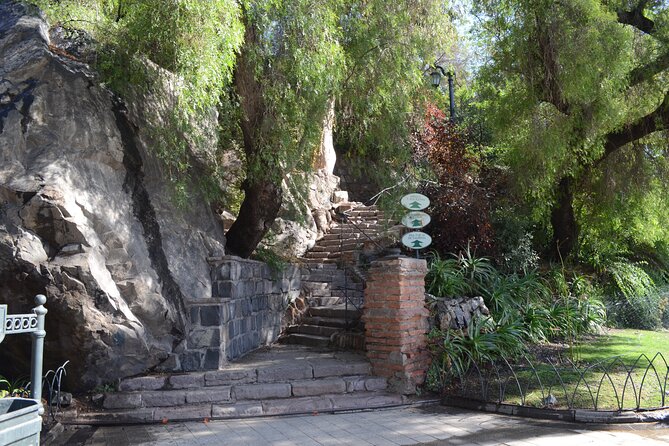
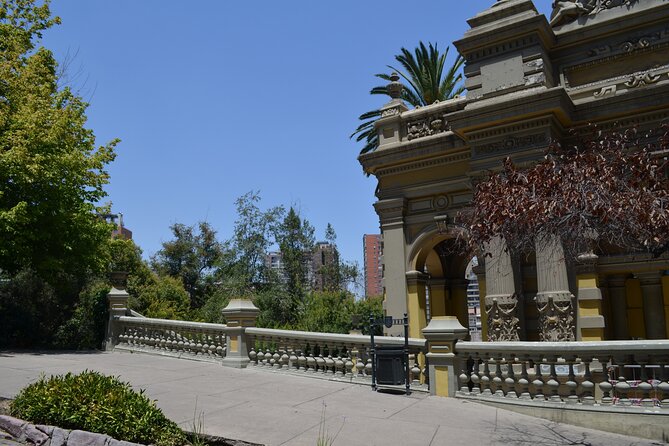
Cerro Santa Lucía is a small hill in the middle of downtown. Its trees and garden paths create a sharp change from the city streets, and the noise drops away as you climb. I like this first stop because it gives you both a physical break from traffic and an early sense of Santiago’s layout.
Do not expect a single, sweeping view of the whole city from here. The value is in the smaller lookout points and the chance to find your own angle through the trees, stonework, and terraces. You can stop at the main terrace, or keep going toward the top of the tower if you have the energy.
The terrain deserves attention. You are walking over uneven trails on a rocky hill, not a flat city sidewalk. Wear shoes with a firm sole, take your time, and tell the guide if you would rather keep the climb modest. The tour specifically calls for a moderate level of physical fitness.
Plan on about an hour here. That is a generous portion of a half-day tour, but it makes sense if you want photographs, time at the lookouts, and a proper conversation about the city. If you have knee trouble, balance concerns, or limited stamina, this is the stop to assess honestly before booking.
La Moneda and Constitution Square: Chile’s political center
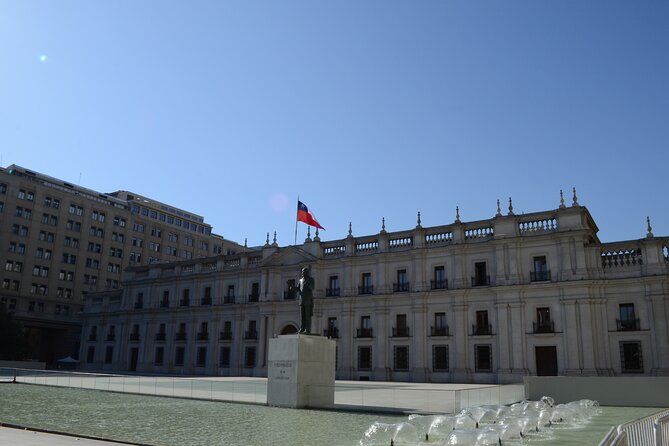
The tour then turns to Palacio de La Moneda, the government palace. It was built as a mint and opened in 1804, using a mix of building techniques under the direction of Roman architect Joaquín Toesca. Toesca arrived in colonial Santiago in 1780 and did not live to see the work finished.
That origin gives the building a useful story beyond its role as the president’s workplace. It began as a practical colonial project, then became a symbol of the Chilean state. Statues of former presidents around the square add another layer, connecting the building to the country’s political development.
The 1973 coup took place here, so the stop also opens discussion of human rights, civic duty, and Chile’s hopes for the future. This is one of the strongest parts of the tour for anyone who wants more than architectural photographs. The setting helps you connect a major national event to a real place in the city.
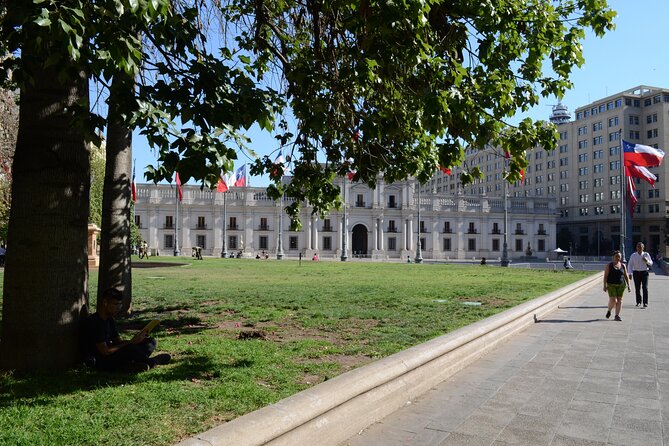
Allow about an hour for La Moneda and Constitution Square together. Constitution Square sits north of the government district, surrounded by ministries and executive offices. It is not only a formal political space. Dogs and families use its green areas, and the square can feel surprisingly ordinary beside the machinery of government.
A guard change with instrumental music takes place every 48 hours. The description does not promise that your tour will coincide with it, so treat it as a possible bonus rather than a scheduled feature. If you do see it, the ceremony adds movement and local color to an otherwise quiet civic square.
The square also displays images of former presidents. Your guide can use them to explain how different public figures helped shape modern Chile. This is a good place to sit for a moment, catch your breath, and ask about the economy, public opinion, or current issues.
Plaza Montt Varas: courts, Congress, and public disagreement
Plaza Montt Varas takes about 30 minutes. It is an open space with low, flat fountains and statues of President Manuel Montt and Antonio Varas. The Supreme Court of Justice gives the square its formal weight, while the former National Congress faces it across the plaza.
This is a compact stop, but the subject matter is substantial. Your guide explains the three branches of the republic and how the country’s institutions fit together. The gates of the Supreme Court may draw demonstrators, a reminder that legal decisions can feel fair to one side and deeply unfair to another.
The former Congress building is also tied to the 1973 coup. Important meetings still take place there, but public access is not guaranteed. You should expect to view the building from outside unless the guide tells you otherwise.
I appreciate this stop because it moves the tour beyond statues and facades. You are looking at working institutions, public protest, and the tension between official power and ordinary people. The guide’s role is to give you useful background, not force a political conclusion.
More things to do in Santiago:
- Valparaiso Port and Viña del Mar with Casablanca Wine Tasting
★ 5.0 · 6,110 reviews - Santiago: Cajon del Maipo/Embalse del Yeso Tour with Picnic
★ 4.3 · 3,789 reviews - Santiago: Vina Del Mar, Valparaiso, Casablanca & Reñaca Tour
★ 4.2 · 2,838 reviews - Cable Car, Funicular and Sightseeing Bus in Santiago one day
★ 5.0 · 2,325 reviews
Plaza de Armas: where Santiago began and keeps changing
Plaza de Armas is the historic heart of Santiago. The square was established on February 12, 1541, when Pedro de Valdivia founded the city and placed the governor’s house on its northwest side, at least according to the commonly accepted version of the story.
The square began as an open, regular space useful for horses, weapons, carts, and the practical work of establishing a Spanish colony. Over time, churches, government offices, a jail, a gallows, a council building, religious ceremonies, and public events gathered around it.
That long list explains why the square matters. It was not built simply to look attractive. It was the center of civic and colonial life, then an early focal point for the new republic in the nineteenth century. Today it is used for commerce, entertainment, and everyday city life.
The stop lasts about 30 minutes. You will have time to take in the square, hear how its role changed, and move on before the visit becomes too slow. Since something is usually happening here, the experience may feel less polished than a quiet monument. That is part of its appeal. Plaza de Armas is a working public place, not a preserved stage set.
The Metropolitan Cathedral: a layered religious landmark
The Metropolitan Cathedral sits beside Plaza de Armas and gives the tour a more reflective pause. Construction of the current building stretched from the mid-eighteenth into the nineteenth century, after earlier churches had occupied the site.
The building continued to change after its consecration, with modifications lasting until before the First World War. That long construction story helps explain why the cathedral carries several periods of design rather than one perfectly unified style.
You can take photographs inside unless a particular area says otherwise. Keep your voice low, turn off your flash, and do not bring food or drink into the church. Services take place during the week and on weekends, with noon a likely time for worship, so your visit may need to remain quiet and respectful.
Look for the symbols placed throughout the religious complex. The cathedral presents ideas connected with kindness, martyrdom, patriotism, and faith. The Capilla del Santísimo Sacramento and the Parroquia El Sagrario are important parts of the complex, and both call for extra care while you look around.
This is a 30-minute stop, so do not expect an exhaustive examination of every chapel or architectural detail. Instead, you get a focused visit that rounds out the city story. Santiago is presented not only through government and history, but also through the religious institutions that shaped daily life.
The vehicle, meeting point, and pace
The tour starts and ends at Bici Las Condes, at Reyes Lavalle 3310 in Las Condes. It is near public transportation, and the private vehicle takes your group between the downtown stops. That arrangement is useful because the route covers several districts and lets you save energy for Cerro Santa Lucía and the squares.
The vehicle has received praise for being clean and comfortable, while the driver is described as gentle and careful. Those details can make a big difference on a short city tour. You are not spending the whole outing in the car, but you do want the transfers to be calm and well organized.
The schedule is fairly full. Cerro Santa Lucía takes about an hour, La Moneda and Constitution Square together take about an hour, and the final three stops take around 30 minutes each. Add short drives and the tour reaches the advertised 3 hours 30 minutes to 4 hours.
Since only your group participates, you can ask about adding a point of interest if time permits. Do not assume every request can fit, though. The named stops already fill the available time, and the hill climb can take more energy than expected.
Is $150 per person a fair price?
At $150 per person, this is not a bargain-priced orientation walk. You are paying for a private experience with a vehicle, a guide, all listed fees, and a route that links several central sights in one morning or afternoon.
The value improves if you are a small group, have limited time, or want direct access to a guide for questions about Chilean politics and history. A family may also find the private format worth the cost because the guide can keep the pace flexible and avoid the delays of a large group.
The price is harder to defend if you mainly want a quick drive-by tour or plan to spend most of your time inside museums. Lunch is not included, and the tour does not promise a meal stop. You should also remember that the price does not include insurance for theft, assault, traffic accidents, or other road incidents, according to the supplied booking information.
Free cancellation is available if you cancel at least 24 hours before the start time. Changes or cancellations inside that window are not accepted for a refund.
Who will enjoy this Santiago tour most?
I would choose this tour if you want a first look at Santiago with enough context to understand what you are seeing. It suits couples, families, and small private groups who value conversation over a fixed script.
It is also a good match for anyone interested in Chile’s modern political story. La Moneda, Constitution Square, Plaza Montt Varas, and the former Congress create a strong sequence for discussing government, protest, justice, and the 1973 coup.
Families can benefit from the changing rhythm. Children get a hill, gardens, statues, fountains, a square, and a cathedral instead of four straight hours of formal history. The guide’s humor can help keep the discussion moving, though the political material may be more suited to older children.
I would hesitate if you need a fully step-free outing or dislike uneven ground. Cerro Santa Lucía is the one stop you cannot treat casually. You can limit the climb, but the tour still includes walking on rocky, uneven paths.
Should you book it?
Book it if you want a private introduction to Santiago with a comfortable vehicle, a thoughtful guide, and serious context about Chile’s civic life. The strongest feature is not simply the number of sights. It is the way the route connects colonial origins, government buildings, public squares, religion, and present-day debate.
The main questions are practical: Can you manage the hill, and does the Las Condes meeting point work for you? If yes, the $150 price can make sense, especially for a family or small group that wants personal attention. If you prefer a low-cost walk or need an easy, flat route, choose something simpler.
FAQ
How long does the Santiago private city tour take?
The tour lasts approximately 3 hours 30 minutes to 4 hours.
Where does the tour start and finish?
It starts and ends at Bici Las Condes, Reyes Lavalle 3310, Las Condes, Santiago.
Is transportation included?
Yes. The experience includes a vehicle for the private group, and the tour returns to the meeting point.
Is this a private activity?
Yes. Only your group participates in the activity.
Is lunch included?
No. Lunch is not included in the tour price.
Do I need to be physically fit?
You should have a moderate level of physical fitness. Cerro Santa Lucía has uneven trails and an optional climb toward the top of the tower.
Who might lead the tour?
The guide may be Juan Pablo or another guide, depending on availability.
Just added in Santiago
- Walking City Tour with Funicular, Cable Car and Tasting★ 4.3 · 6 reviews
- VIÑA DEL MAR AND VALPARAISO TOUR★ 4.8 · 20 reviews
- Tour VIÑA CONCHA Y TORO + CASA MARQUES – Chile, from Santiago.★ 5.0 · 2 reviews
- Undurraga + Isla Negra + San Afonso del Mar —– Full day★ 4.1 · 8 reviews
- Undurraga Wine tour★ 4.2 · 15 reviews
- Southcoast – Private Full-Day tour★ 5.0 · 6 reviews
- Santiago Private walking tour with Lunch★ 5.0 · 5 reviews
- Zapallar : nature, sea and local flavours★ 5.0 · 6 reviews
City Tours, compared.
Full day tour to Valparaiso and Viña del Mar city
Read our review →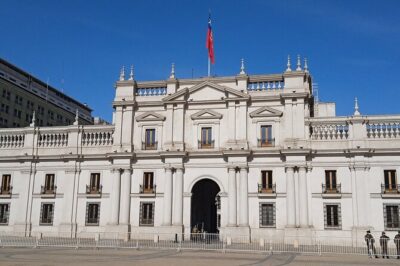
City tour by Santiago of Chile -A beautiful experience – Half day
Read our review →
Half-Day Sightseeing City Tour with Chauffeur and Guide
Read our review →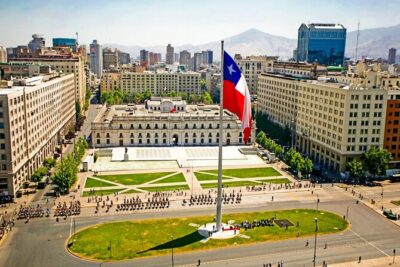
Valparaiso 4-Hour City Tour by Van and Funicular
Read our review →Browse the lists this tour appears in