
REVIEW · ALTIPLANIC LAGOON TOURS
Caracoles: Red Stones of Atacama and Chaxa Guided Day Trip
The Andes put on a spectacular show. This 10-hour outing combines the Atacama Saltflat, flamingo-filled Chaxa Lagoon, volcanic Red Stones, high-altitude lagoons, small villages, and wide views beneath some of northern Chile’s finest volcanoes. I especially like the varied route, which keeps the day from feeling like one long photo stop, and the fact that breakfast and lunch are included in remote settings.
The main catch is altitude. The route reaches the high altiplano, and the walking portion through the Red Stones lasts about 1 hour and 30 minutes. That makes this a poor match for anyone with altitude sickness, high blood pressure, limited mobility, or very young children.
Guides make a real difference here. Brandon has been praised for clear explanations of the region, while Valentin is noted for being attentive and helping a multilingual group feel at ease. Driver Alvaro also receives warm praise, especially for the careful road work and pleasant meal stops.
In This Review
- Key points to know before booking
- Why this Atacama day trip is worth considering
- Starting with the Atacama Saltflat
- Flamingos at Chaxa Lagoon
- Walking across the Red Stones
- Aguas Calientes and the high-altitude lagoons
- Toconao, Socaire, and the Tropic of Capricorn
- Wildlife beyond the flamingos
- Breakfast and lunch in the open air
- The guide and vehicle make the difference
- Who should book this tour?
- Practical details and total cost
- Should you book the Red Stones and Chaxa trip?
- FAQ
- How long does the tour last?
- What places are included?
- Are breakfast and lunch included?
- Is hotel pickup included?
- What languages are available?
- How much are the entrance fees?
- How long is the Red Stones walk?
- What should I bring?
Key points to know before booking
- A full altiplano route in 10 hours: You see salt flats, lagoons, villages, volcanoes, and the Tropic of Capricorn in one long day.
- The Red Stones walk takes 90 minutes: Wear sturdy, comfortable shoes and bring water.
- Flamingos and vicuñas are part of the day: Chaxa Lagoon is the main wildlife stop, but suris, foxes, and viscachas may also appear.
- Meals are included: Breakfast and lunch are served in scenic outdoor settings.
- The entry fees are extra: Pay 28,700 Chilean pesos total to the guide, including the Red Stones, altiplanic lagoons, and Chaxa Lagoon.
- Pickup is limited to the city center: Wait in your hotel lobby 10 minutes early, since the vehicle waits only five minutes after the scheduled time.
Why this Atacama day trip is worth considering
San Pedro de Atacama has no shortage of day tours, but this one packs several different sides of the region into one route. You get the stark salt crust of the Atacama Saltflat, the wildlife of Chaxa Lagoon, the rust-colored volcanic formations called the Red Stones, and the cooler, higher country around Miscanti and Meñiques.
That variety matters. If you visit only one salt lagoon or one viewpoint, you get a memorable picture but a narrow sense of the region. Here, the changing scenery helps you understand how the desert shifts as the road climbs toward the Andes.
I also like the human scale of the itinerary. Toconao and Socaire add a glimpse of settled life between the natural stops. Crossing the Tropic of Capricorn gives the day a playful geographical marker, while your guide adds context about the area’s history and geology.
The price is $85 per person, before the 28,700 Chilean peso entry charge. That is a fair package for a 10-hour day if you value convenience. Transport, an English- or Spanish-speaking guide, breakfast, and lunch are included, and the route covers several major sights that would be difficult to connect independently in one day.
Still, this is not a cheap sightseeing loop once the entry fees are added. You are paying for the long transfer, the guide, the meals, and the ease of having someone organize a demanding high-altitude route. If you want a slow morning or long, quiet stays at each site, the schedule may feel busy.
More Day Trips in San Pedro de Atacama
- San Pedro de Atacama: Red Rocks & Altiplano Lagoons Day Trip
★ 4.9 · 108 reviews - 1-Day Tour Altiplanic Lagoons and Piedras Rojas and Laguna Chaxa
★ 4.0 · 24 reviews - San Pedro de Atacama: Atacama Desert and Salt Flats Day Trip
★ 4.4 · 17 reviews
Starting with the Atacama Saltflat
The day begins with pickup from a hotel in San Pedro de Atacama’s city center. You should wait in the lobby 10 minutes before the scheduled time. The guide is expected to make phone contact beforehand, but the vehicle will wait no longer than five minutes after pickup time, so this is not the morning to wander out for coffee.
The Atacama Saltflat sets the tone with its enormous open space and hard, mineral-covered ground. The saltflat is one of the region’s defining sights, and it gives you an immediate sense of how dry and exposed northern Chile can be.
Your guide is important here. The scenery can look simple at first glance, but explanations about volcanic material, salt formation, and the forces that shaped the area make the stop more than a quick photograph. Brandon, one of the guides connected with this experience, has been praised for making the facts clear and interesting rather than turning the morning into a lecture.
Bring water and sun protection, although the supplied information specifically stresses outdoor clothing, cash, water, and comfortable shoes. Conditions can change quickly at altitude, so layers are sensible.
Flamingos at Chaxa Lagoon
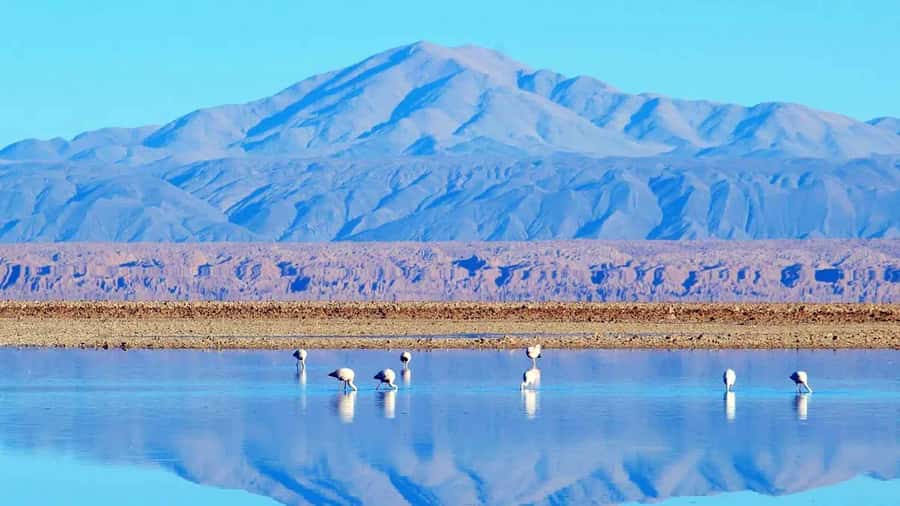
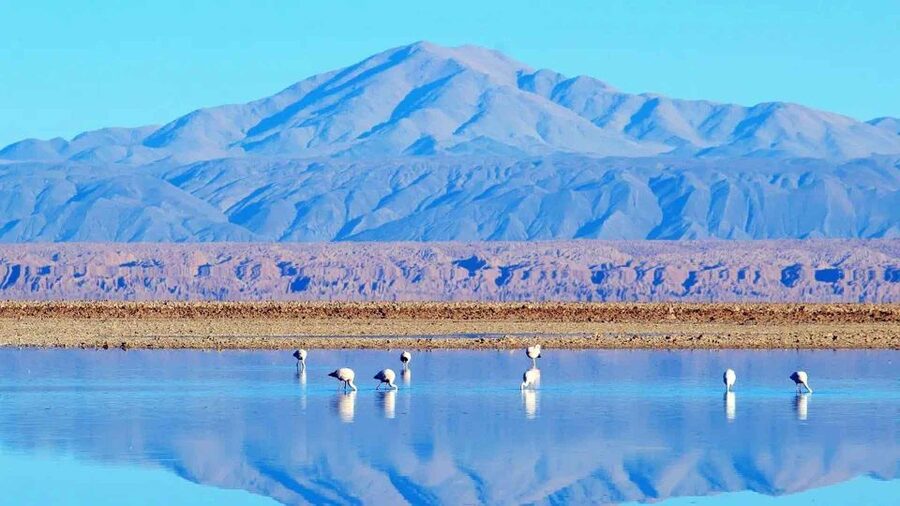
Chaxa Lagoon is one of the day’s strongest wildlife stops. The shallow water and mineral-rich surroundings provide a striking setting for flamingos, which you may see feeding or standing in the lagoon.
The appeal is not only the birds. Chaxa places wildlife against a broad, quiet setting where the mountains and salt crust seem to stretch without end. It is a good reminder that the Atacama is not empty. Life has adapted to conditions that look almost impossible to us.
Keep your distance and never feed the animals. Drones are also not allowed. The best approach is patience: let your guide point out movement and give you time to watch instead of treating the lagoon as a quick checklist stop.
The Chaxa entry fee is 13,700 Chilean pesos and is not included in the advertised tour price. This amount is paid to the guide, along with the other entry charges. You should carry cash, as the tour information specifically asks you to do so.
Flamingo sightings are a major reason to choose this route, but nature does not follow a script. You may see many birds, or fewer than expected. The experience remains worthwhile because Chaxa is also a beautiful and unusual saltwater setting.
Walking across the Red Stones
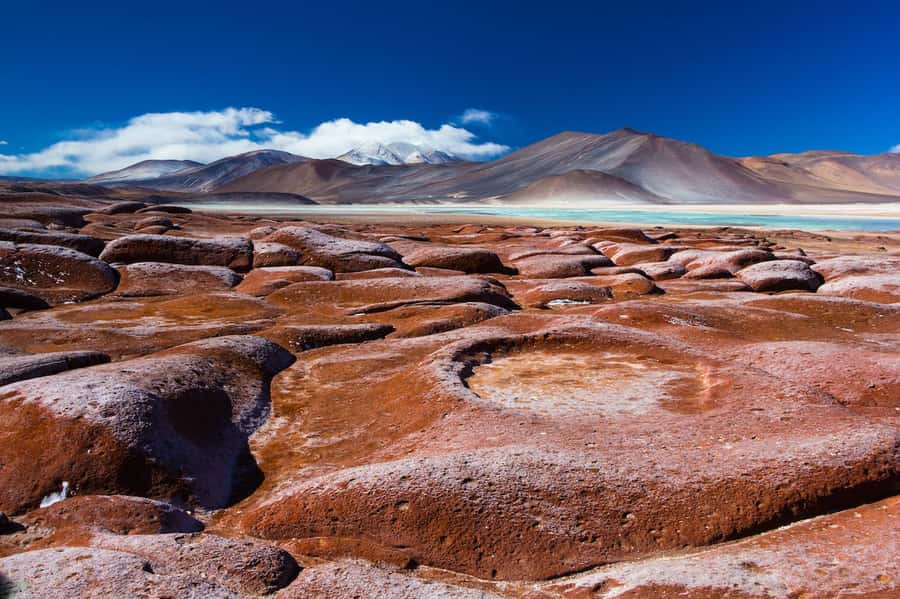
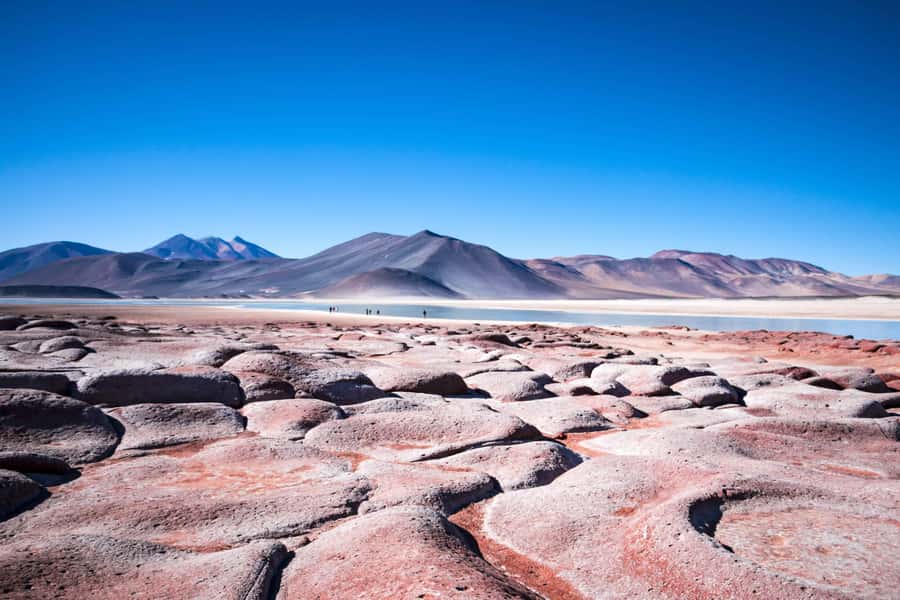
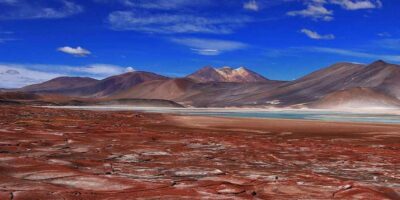
The Red Stones are the most distinctive geological stop. Their color comes from volcanic material, and the formations create a rough, rust-colored setting that contrasts sharply with the white salt and blue sky elsewhere in the day.
This is not just a roadside viewpoint. The itinerary includes a trek lasting about 1 hour and 30 minutes, continuing until you reach the Aguas Calientes saltflat. That walking time gives you a better sense of the ground beneath your feet, but it also makes footwear and pacing important.
I would not treat this as a casual stroll in sandals. Wear comfortable shoes with enough support for uneven ground, and bring water. Outdoor clothing is essential, since the high altiplano can feel exposed and conditions may be cool even when San Pedro is warm.
The walk is a highlight for people who want more than vehicle-based sightseeing. You get time to notice the color, texture, and volcanic character of the area. The drawback is equally clear: anyone who struggles with altitude or extended walking may find this portion tiring.
The Red Stones and altiplanic lagoon entry fee is 15,000 Chilean pesos. Together with the Chaxa fee, the required entrance payment is 28,700 Chilean pesos per person.
More lagoon trips in San Pedro De Atacama:
- Tour to the Hidden Lagoons of Baltinache
★ 5.0 · 694 reviews - Piedras Rojas, Altiplanics Lagoons & Salar Full-Day Tour
★ 4.7 · 592 reviews - Full Day Tour to Piedras Rojas, Altiplanic Lagoons and Chaxa
★ 5.0 · 437 reviews - San Pedro Atacama: Baltinache Lagoons
★ 4.6 · 359 reviews
Aguas Calientes and the high-altitude lagoons
After the Red Stones walk, the route reaches the Aguas Calientes saltflat. The name suggests warm water, but the key attraction here is the sense of stillness and the unusual contrast between salt, volcanic earth, and mountain air.
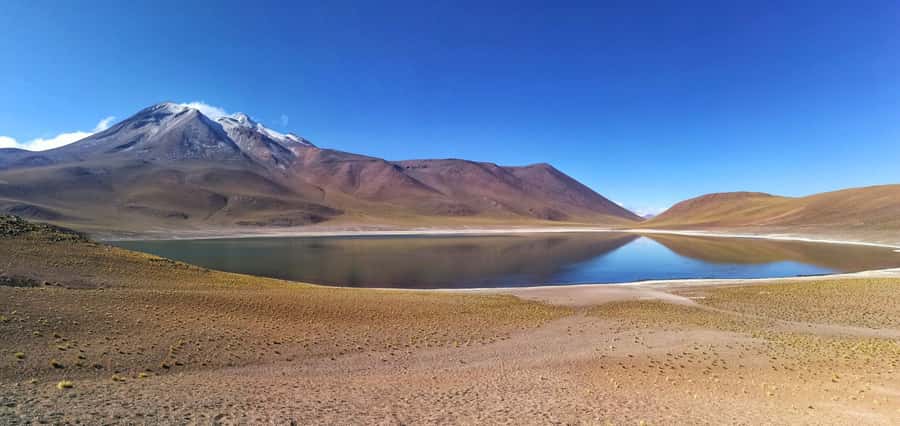
The day then continues to the altiplanic lagoons of Meñiques and Miscanti. These lagoons sit beneath tall volcanoes, giving you the classic high-Andes view: intensely colored water, broad open ground, and volcanic peaks rising behind it.
The lagoons are valuable because they show the Atacama at a different altitude and mood. Chaxa is tied to flamingos and saltwater. Meñiques and Miscanti feel more remote and mountain-bound. You should expect photo opportunities at each stop, but the real pleasure is comparing the changing colors and terrain as the route moves higher.
Altitude is the serious practical issue. The tour is not suitable for people with altitude sickness or high blood pressure, and the supplied restrictions also exclude children under four, babies under one, wheelchair users, and people over 95. Those limits are worth taking seriously rather than treating them as routine fine print.
If you are unsure how your body will handle the altitude, speak with a medical professional before booking. The tour includes a long day, a high-altitude walk, and several stops in exposed country.
Toconao, Socaire, and the Tropic of Capricorn
The villages of Toconao and Socaire provide a welcome change from open desert. They help connect the dramatic scenery with the people and settlements of the region.
Toconao is included as part of the route, as is Socaire, though the supplied information does not specify how much free time you receive in either place. Think of these as guided stops within a packed day rather than extended village visits.
Your guide explains the area’s history as you go. That is especially useful in a route where the scenery can seem almost too vast to interpret on your own. The best guides tie the geology, settlement patterns, volcanoes, and local history together so each stop feels connected.
Crossing the Tropic of Capricorn adds a small but memorable geographical moment. It is not the main reason to book the tour, but it gives the day a clear sense of place. You are not simply visiting a collection of scenic viewpoints. You are moving through a distinct part of the planet, with the route itself becoming part of the experience.
Wildlife beyond the flamingos
Chaxa Lagoon is the best-known wildlife stop, but the high altiplano may offer more. The tour highlights chances to see vicuñas, suris, and foxes, and a particularly lucky day may include a viscacha.
Vicuñas are especially well suited to this setting, with their slim bodies and alert movements making them easy to spot against the open ground. Suris, the local name used for the large Andean birds, may also appear. Foxes and viscachas are less predictable, so treat them as a bonus rather than a promise.
The guides’ attention matters here. Valentin has been praised for watching out for people in the group and creating a friendly mood, even when the group includes several languages. That kind of care is useful on a long day, especially when people are tired and trying to keep track of wildlife at the same time.
Please do not feed animals. Keep your camera ready, but also give yourself time to simply watch. The best wildlife moments are often brief.
Breakfast and lunch in the open air
Meals are included, which adds real value on a 10-hour trip. Breakfast and lunch are served in scenic settings, allowing you to stop, eat, and take in the altiplano rather than spending the entire day focused on transport.
The food itself has been described as good, and the outdoor meal stops have been especially well received. Alvaro, the driver, has been praised alongside the guides for helping make these breaks pleasant.
Do not expect a restaurant-based food tour. The appeal is practical and atmospheric: you are fed during a remote day, and the surroundings become part of the meal. You should still bring water, and carrying cash remains important for the entry fees.
Because the day is long, these breaks also help with stamina. The Red Stones walk and high-altitude stops are easier to enjoy when you have eaten and had time to pause.
The guide and vehicle make the difference
A route this long can become exhausting if the information is thin or the driving feels rushed. The strongest feedback for this experience centers on the people running it.
Brandon is praised for explaining the places clearly and sharing interesting facts throughout the day. Valentin is described as attentive, welcoming, and good at helping a multilingual group connect. Alvaro receives praise as a capable driver who also helped create attractive breakfast and lunch stops.
You should remember that guides can vary by departure date. The tour operates in Spanish and English, and you can expect live commentary in one of those languages. If you receive one of the guides named above, their reported strengths suggest a warm, informative day rather than a simple transfer between viewpoints.
The itinerary also includes small personal touches, such as group photographs. One group particularly enjoyed a jumping picture arranged by the guide. That is a minor detail, but it shows how the staff can add some fun to a demanding schedule.
Who should book this tour?
I would recommend it to you if you want to see many of the Atacama region’s major natural sights in one organized day. It suits active adults who are comfortable with a long schedule, high altitude, outdoor conditions, and a 90-minute walk over volcanic ground.
It is also a good fit if you value explanation. The geology, wildlife, village stops, and geography make more sense with a guide, particularly if this is your first visit to northern Chile.
You may want a different plan if you prefer slow travel, dislike early starts and long road days, or want to spend substantial time in each village. The route covers a lot of ground, and ten hours is a serious commitment.
The tour is not suitable for wheelchair users, children under four, babies under one, people with altitude sickness, people with high blood pressure, or people over 95. Those restrictions are clear and should guide your decision.
Practical details and total cost
The advertised price is $85 per person. Add 28,700 Chilean pesos for the required entrance fees, paid to the guide. Since breakfast, lunch, city-center pickup and drop-off, and a live guide are included, the cost is reasonable for a full-day route with several major stops.
Pickup and drop-off are in the city center. You should wait in your hotel lobby 10 minutes before the scheduled pickup and keep your phone available for contact from the guide.
The tour lasts 10 hours, but the exact starting time depends on availability. Wear outdoor clothing and comfortable shoes, carry water and cash, and do not bring a drone. The company allows cancellation up to 24 hours before departure for a full refund, and you can reserve now while paying later.
Should you book the Red Stones and Chaxa trip?
Book it if you want one big, well-organized day covering flamingos, salt flats, red volcanic rock, high lagoons, villages, and volcanoes. The strongest reasons are the varied scenery, included meals, and guides such as Brandon and Valentin, who are praised for making the day informative and friendly.
Skip it if altitude or a 90-minute walk could be a problem, or if you would rather explore at a slower pace. For the right person, this is a strong-value introduction to the Atacama altiplano, with enough variety to make the long day feel worthwhile.
FAQ
How long does the tour last?
The tour lasts 10 hours.
What places are included?
The route includes the Atacama Saltflat, Chaxa Lagoon, the Red Stones, Aguas Calientes saltflat, Meñiques Lagoon, Miscanti Lagoon, Toconao, Socaire, and the Tropic of Capricorn.
Are breakfast and lunch included?
Yes. Breakfast and lunch are included and are served in scenic outdoor settings.
Is hotel pickup included?
Yes. Pickup and drop-off are included for hotels in the city center.
What languages are available?
The tour is offered with a live guide in English or Spanish.
How much are the entrance fees?
The entrance fees total 28,700 Chilean pesos per person. This includes 15,000 Chilean pesos for the Red Stones and altiplanic lagoons and 13,700 Chilean pesos for Chaxa Lagoon.
How long is the Red Stones walk?
The trek through the Red Stones takes about 1 hour and 30 minutes and continues to the Aguas Calientes saltflat.
What should I bring?
Bring outdoor clothing, cash, water, and comfortable shoes. Drones are not allowed, and you must not feed the animals.
Just added in San Pedro De Atacama
- Vallecito★ 4.7 · 13 reviews
- Atacama Desert and Magic Bus Visit★ 4.8 · 15 reviews
- San Pedro de Atacama: Valle de la luna★ 3.0 · 3 reviews
- Valle de la Luna: A Moon-Like Escape in Atacama★ 5.0 · 3 reviews
- Triple Tour: Piedras Rojas + Altiplanic Lagoons + Chaxa Lagoon★ 5.0 · 1 review
- Red Stones + Altiplánica Lagoons★ 5.0 · 1 review
- Atacama Stargazing Tour Under One of the World’s Clearest Skies★ 4.0 · 3 reviews
- Tour to Laguna Cejar and Tibenquinche★ 4.5 · 7 reviews
Altiplanic Lagoon Tours, compared.
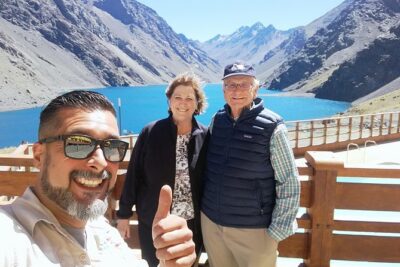
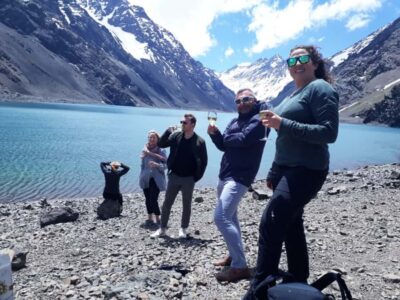
Inca Lagoon in Andes Mountain Range – Visit Local Vineyard with Tasting included
Read our review →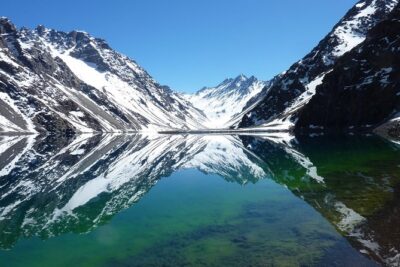
Andes Range Tour at Inca Lagoon & InSitu Winery Snack Included
Read our review →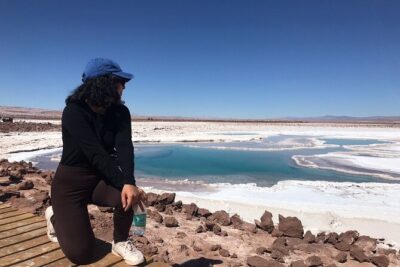
Piedras Rojas, Altiplanics Lagoons & Salar Full-Day Tour
Read our review →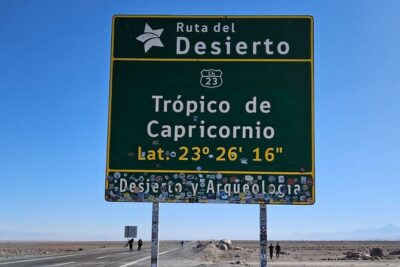
Full Day Tour to Piedras Rojas, Altiplanic Lagoons and Chaxa
Read our review →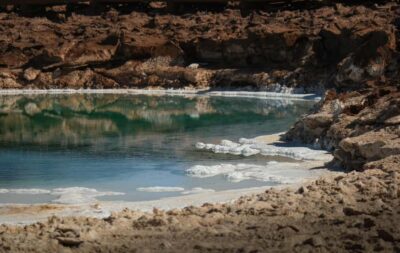
Inca Lagoon and Vineyard Visit with Wine Tasting
Read our review →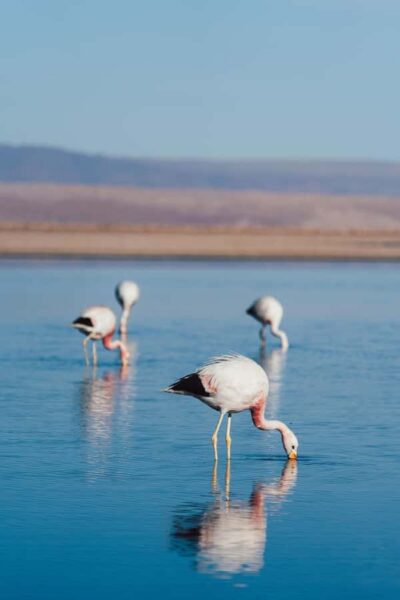
Triple tour: Red stones, highland lagoons and Chaxa Lagoon
Read our review →Browse the lists this tour appears in