
REVIEW · WORKSHOPS
Bahá’í Temple Tour with Exclusive Lapislázuli Workshop
Quiet beauty reaches Santiago’s edge. This tour pairs the Bahá’í Temple with a short lapislázuli workshop, giving you both a calm cultural visit and a close look at Chilean craft. I like the temple’s unusual glass-and-marble design, and I like that the guide provides cultural context during the drive, not only at the stops.
The main drawback is the time spent in the vehicle. The visit lasts about three to four hours, but roughly 1.5 to 2 hours can go to driving, depending on pickup and traffic. The workshop is also brief, so this suits you if you want an introduction to lapislázuli rather than a long craft class.
In This Review
- Key points at a glance
- Why this Santiago tour is worth considering
- At the Bahá’í Temple, architecture does the talking
- What makes the temple different from a regular city attraction
- Inside the lapislázuli workshop
- The drive is part of the experience
- Choosing your end point at night
- Who will enjoy this experience most
- Timing, booking, and cancellation details
- Should you book the Bahá’í Temple and lapislázuli tour?
- FAQ
- How much does the Bahá’í Temple and lapislázuli tour cost?
- How long does the tour last?
- Is hotel pickup included?
- What time is morning pickup?
- What time is afternoon pickup?
- Is the tour offered in English?
- How many people can join the tour?
- Can children under nine join?
- Is the tour suitable for people with difficulty walking?
- Where can I go after the tour?
- Is cancellation free?
- What happens if bad weather cancels the tour?
Key points at a glance
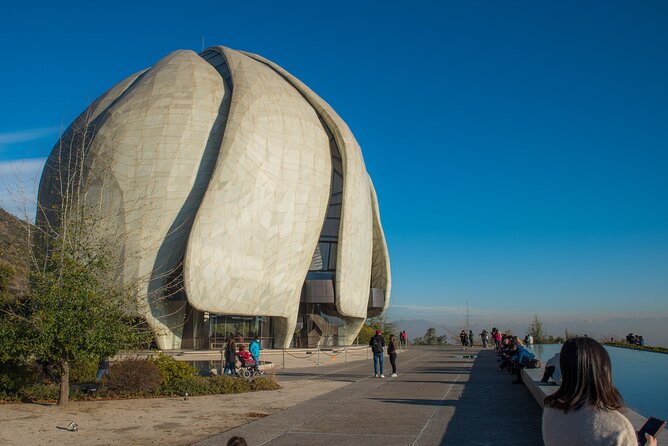
- Nine translucent wings at the Bahá’í Temple: The building changes with the light and offers wide views toward Santiago and the Andes foothills.
- A quiet alternative to a standard city tour: The temple focuses on reflection, architecture, and the Bahá’í principles of equality and human unity.
- Lapislázuli and Chilean copper in one workshop: You can watch artisans cut, polish, and set the blue stone, then browse locally made objects.
- A small group of no more than 15 people: This is a more personal format than a large coach excursion.
- Two useful drop-off choices: Return to your hotel or continue your evening at Patio Bellavista.
- A guide who adds local context: Daniel has been praised for explaining both the temple and everyday life in Santiago.
Why this Santiago tour is worth considering

Santiago has plenty of classic sights, but this half-day outing takes you somewhere less routine. The Bahá’í Temple sits outside the central city, where its unusual form and quiet setting make a sharp break from busy streets and packed sightseeing schedules.
I see the appeal in the pairing. The temple gives you architecture and a pause from city noise. The lapislázuli workshop gives you a tangible link to Chilean materials and handmade design. Neither stop tries to fill your day with a long list of attractions. Instead, you get two focused visits and a guide-led drive between them.
At $75 per person, the price makes the most sense if you value pickup, air-conditioned transport, a guide, and a small group. Admission to both stops is free, so you are paying mainly for transport, planning, interpretation, and convenience. If you are comfortable arranging your own ride to the temple and workshop, you may find the price less appealing. If you want a straightforward outing without sorting out distant transport yourself, it is easier to justify.
The tour is offered in English, with morning and afternoon departures. A group discount is also available, though the exact saving is not specified. The vehicle has WiFi and air conditioning, useful features when the road time takes up a large part of the experience.
More things to do in Santiago:
- Valparaiso Port and Viña del Mar with Casablanca Wine Tasting
★ 5.0 · 6,110 reviews - Santiago: Cajon del Maipo/Embalse del Yeso Tour with Picnic
★ 4.3 · 3,789 reviews - Santiago: Vina Del Mar, Valparaiso, Casablanca & Reñaca Tour
★ 4.2 · 2,838 reviews
At the Bahá’í Temple, architecture does the talking
The first stop lasts about 1 hour and 30 minutes. Admission is free, and the focus is the temple itself, its design, its setting, and the ideas behind the Bahá’í faith.
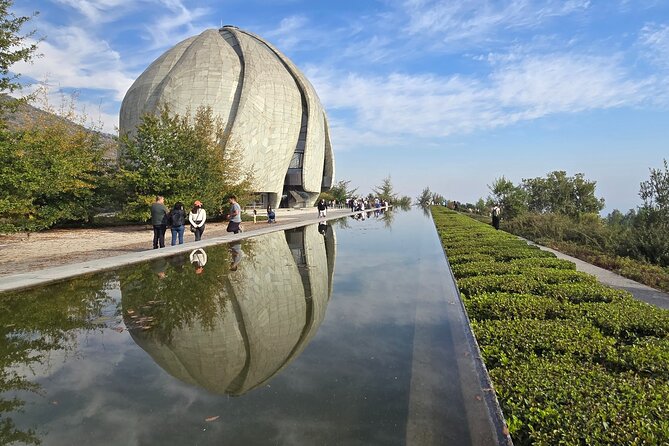
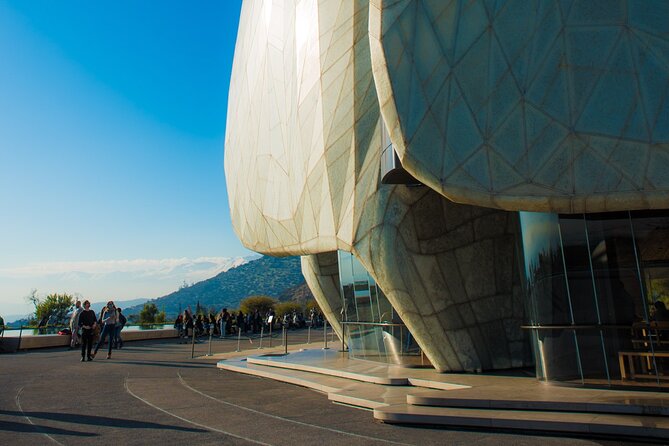
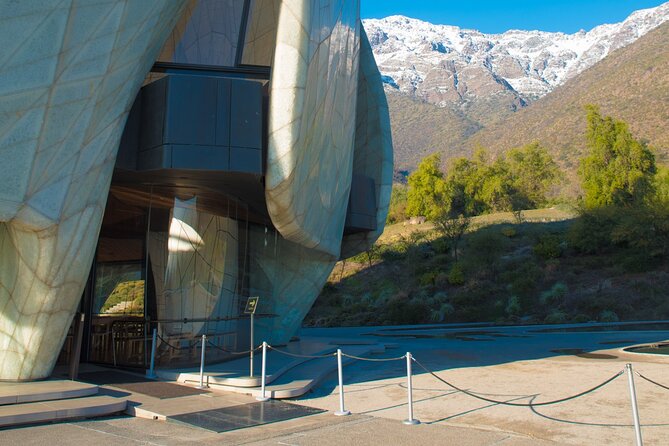
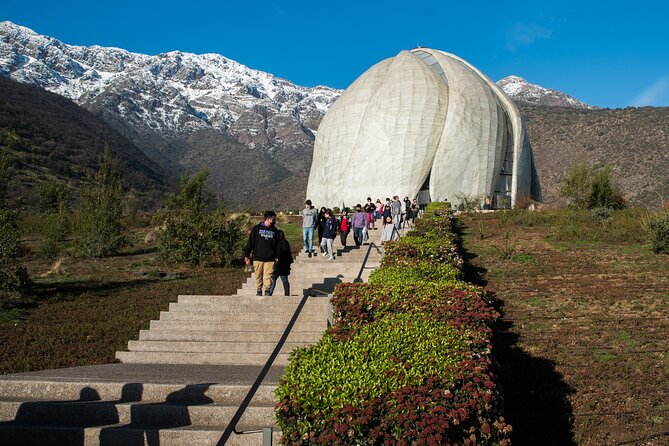
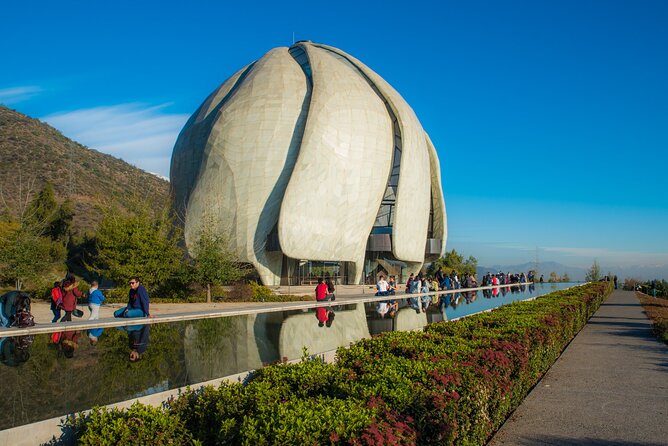
Completed in 2016 by architect Siamak Hariri, the temple was created as a place open to people of all beliefs. Its nine wings are made from translucent cast glass and marble. The structure does not look fixed in quite the same way under changing light, so your view can shift as you walk around it.
That design is the main reason to take the trip. This is not a conventional church interior packed with objects, paintings, or historical displays. The building relies on light, form, and space. You will want time to look carefully rather than rush through with a quick photograph.
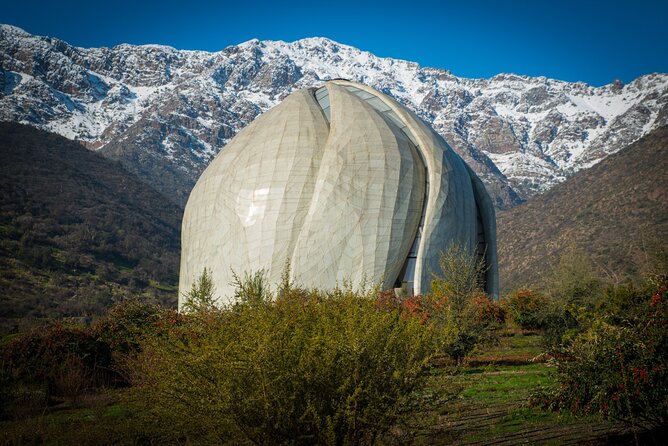
The setting adds to the visit. The temple is at the foothills of the Andes, with broad views over Santiago and a natural setting suited to quiet reflection. The combination of open views and unusual architecture makes this a strong choice if you want a slower stop during a city stay.
Your guide can also explain the basic principles of the Bahá’í faith, including equality, harmony, and the shared dignity of humanity. That context matters because the building is meant to express those values, not simply provide an attractive photo opportunity.
You should allow enough time to walk and pause. The tour is not recommended for people who have difficulty walking, and the description does not give a detailed accessibility plan. If mobility is a concern, ask the provider before booking rather than assuming the visit will be easy.
What makes the temple different from a regular city attraction
The Bahá’í Temple is not presented as a quick lookout or a standard religious monument. It is a place designed for openness and stillness, and the visit gives you room to think about how architecture can shape your mood.
I especially like that the stop is not bundled with a winery visit. Some Santiago outings combine the temple with several other attractions, which can make the day feel crowded. This tour keeps the temple as the main event and adds only one short craft stop afterward.
That narrower plan is useful if you have already visited wineries or prefer not to spend your time on food and drink stops. It also gives the guide more room to answer questions about Chilean culture during the drive. Daniel, one of the guides associated with the experience, has been praised for discussing both the temple and life in Santiago.
Still, keep your expectations in check. The temple is a peaceful architectural visit, not a long guided museum tour. If you need many formal exhibits, extensive religious history, or a full architectural lecture, this may feel light. Its strength is the atmosphere and the building itself.
Inside the lapislázuli workshop
The second stop lasts about 30 minutes at Mussio Design. Admission is free, and the visit introduces you to lapislázuli, a deep-blue semi-precious stone found in Chile and Afghanistan.
The stone is easy to recognize by its blue color and small golden flecks of pyrite. It has been linked over time with wisdom, protection, and inner clarity. Here, the cultural value comes not only from the finished jewelry but also from seeing how the material is handled.
Artisans cut and polish the stone, then set it into jewelry and decorative pieces. They are happy to explain the process, so you can ask about the work behind a finished item rather than simply looking at a display case.
The workshop also features Chilean copper. Copper is one of the country’s best-known minerals, and the pieces range from simple jewelry to decorative objects. The combination gives you two different materials associated with Chile: the blue stone with its ancient appeal and the metal tied closely to the country’s economic and cultural identity.
This is a good place to buy a souvenir with a clear sense of origin. A small lapislázuli piece or copper object can be more meaningful than a generic airport purchase, especially if you remember how it was cut, polished, and made ready for use.
The limitation is the short visit. Thirty minutes is enough to watch the work, hear an explanation, and consider a purchase. It is not enough for a hands-on workshop or a detailed study of Andean craft traditions. The word exclusive in the tour title should not lead you to expect a private masterclass. Think of it as a personal workshop visit within a guided outing.
A completely different kind of day out:
- Cable Car, Funicular and Sightseeing Bus in Santiago one day
★ 5.0 · 2,325 reviews - Small-Group Cajón del Maipo Full-Day Tour and Picnic
★ 4.5 · 2,277 reviews - Tour to Valparaíso, Viña del Mar, Pablo Neruda Museum and Vineyard
★ 5.0 · 2,273 reviews - Maipo Valley Wine Tour with 4 vineyards from Santiago.
★ 5.0 · 1,983 reviews
The drive is part of the experience
The total driving time is estimated at 1.5 to 2 hours. That is a significant share of a three to four-hour tour, so you should judge the outing partly by how much you value door-to-door transport.
Pickup is offered from your location. For the morning departure, pickup is scheduled between 9:00 and 9:30. For the afternoon departure, it is between 2:00 and 2:30. The exact time is sent the night before, based on where you are staying.
That window is practical, but it means you should not schedule another tight appointment immediately afterward. Santiago traffic can affect timing, and the tour does not promise a fixed return hour. The air-conditioned vehicle and onboard WiFi make the road time more comfortable, while the guide can use the journey to answer questions about Santiago and Chilean culture.
The vehicle holds a maximum of 15 people. That is large enough to keep the cost manageable but small enough to avoid a full-size coach feel. If you prefer very quiet, private sightseeing, this is not a private tour. If you like the chance to ask questions without being one person in a large crowd, the group limit is a useful middle ground.
Choosing your end point at night
At the end, you can return to your hotel or be dropped at Patio Bellavista. That second option can turn the tour into the first part of an evening out.
Patio Bellavista is an indoor court with restaurants, bars, live music, and other attractions. The dining choices include Chilean, Peruvian, Colombian, Mexican, European, and Asian food. It stays open until 1:00 AM on weekdays and 3:00 AM on weekends.
This choice is especially handy if you want dinner after the temple and workshop rather than returning to your hotel first. The area has security, and the tour information suggests using an Uber for the trip back when you are ready. You should still make your own judgment about late-night transport and keep your personal belongings secure.
The hotel return is the simpler choice if you are tired or have an early start the next morning. Patio Bellavista is the better option if you want the tour to flow into dinner, drinks, or live music.
Who will enjoy this experience most
I would recommend this tour to you if you want a cultural outing that feels different from central Santiago sightseeing. It suits visitors interested in architecture, religious ideas, local materials, and handmade objects.
It is also a good fit if you have already done a winery tour. The plan avoids adding vineyards, tastings, or unrelated stops, so the temple gets proper attention.
You may like it if you prefer a guide who talks during the journey. The guide is not only there to point out the stops. Questions about Santiago and Chilean life can become part of the road time, which adds value to the long transfer.
The tour is less suitable for children under nine, who cannot be transported. It is also not recommended if you have difficulty walking. People who want a full day of activities may find the three to four-hour format too limited, while those with only a few days in Santiago may appreciate the compact schedule.
Timing, booking, and cancellation details
The experience is often booked about 11 days ahead, so I would not leave it until the last minute if the temple is important to your plans. Confirmation arrives at booking, and the service is conducted in English.
Free cancellation is available if you cancel at least 24 hours before the start time. Changes or cancellations made within 24 hours are not accepted for a refund. The tour requires good weather, so if poor conditions force a cancellation, you can choose another date or receive a full refund.
That weather rule matters because the temple’s setting and city views are a major part of the visit. A gray day will not erase the architecture, but clear conditions should make the outdoor setting more rewarding.
Should you book the Bahá’í Temple and lapislázuli tour?
Book it if you want an easy, small-group visit to one of Santiago’s most unusual buildings, with local craft and cultural conversation added in. The best reasons are the temple’s changing light, its quiet setting, and the chance to learn about Chilean lapislázuli and copper without spending a full day on shopping.
Skip it if you dislike long vehicle transfers, need a fully accessible outing, or want an extended workshop. The lapislázuli stop is only 30 minutes, and the temple visit is centered on quiet observation rather than a packed program.
For many visitors, the strongest plan is the afternoon tour followed by drop-off at Patio Bellavista. You get the temple, the workshop, and an easy start to dinner. If you prefer a calmer return, choose the hotel drop-off and treat the experience as a thoughtful half-day break from Santiago’s faster pace.
FAQ
How much does the Bahá’í Temple and lapislázuli tour cost?
The tour costs $75 per person. Group discounts are offered, but the exact discount is not specified.
How long does the tour last?
The total experience lasts approximately three to four hours. About 1.5 hours is spent at the Bahá’í Temple, 30 minutes at the lapislázuli workshop, and 1.5 to 2 hours driving.
Is hotel pickup included?
Yes. Pickup is offered, and the exact time is provided the night before according to your location.
What time is morning pickup?
Morning pickup takes place between 9:00 and 9:30.
What time is afternoon pickup?
Afternoon pickup takes place between 2:00 and 2:30.
Is the tour offered in English?
Yes. The tour is offered in English.
How many people can join the tour?
The maximum group size is 15 people.
Can children under nine join?
No. The provider cannot transport children under nine years old.
Is the tour suitable for people with difficulty walking?
No. The experience is not recommended for people who have difficulty walking.
Where can I go after the tour?
You can be driven back to your hotel or dropped at Patio Bellavista, which has restaurants, bars, live music, and other attractions.
Is cancellation free?
Yes, if you cancel at least 24 hours before the experience starts. Cancellations made less than 24 hours before the start time are not refunded.
What happens if bad weather cancels the tour?
If poor weather causes a cancellation, you will be offered another date or a full refund.
Just added in Santiago
- Walking City Tour with Funicular, Cable Car and Tasting★ 4.3 · 6 reviews
- VIÑA DEL MAR AND VALPARAISO TOUR★ 4.8 · 20 reviews
- Tour VIÑA CONCHA Y TORO + CASA MARQUES – Chile, from Santiago.★ 5.0 · 2 reviews
- Undurraga + Isla Negra + San Afonso del Mar —– Full day★ 4.1 · 8 reviews
- Undurraga Wine tour★ 4.2 · 15 reviews
- Southcoast – Private Full-Day tour★ 5.0 · 6 reviews
- Santiago Private walking tour with Lunch★ 5.0 · 5 reviews
- Zapallar : nature, sea and local flavours★ 5.0 · 6 reviews
Workshops, compared.

Ski Experience in Valle Nevado, Lessons, Transportation, and More
Read our review →
New Concha y Toro Tour Marques with class, extra tasting y food
Read our review →
Casablanca world class wines, 4 vineyards & Tanino lunch stop
Read our review →
World-class Wines, Visit to 4 Vineyards and Tanino
Read our review →
Skiing in Farellones Park: Ski Tickets, Lessons, Transportation and More
Read our review →
4h Cooking Class in Santiago with 8 Recipes & Bottomless Drinks
Read our review →
Traditional Chilean Cooking Class with a Local in Her Santiago Countryside Home
Read our review →
Browse the lists this tour appears in