
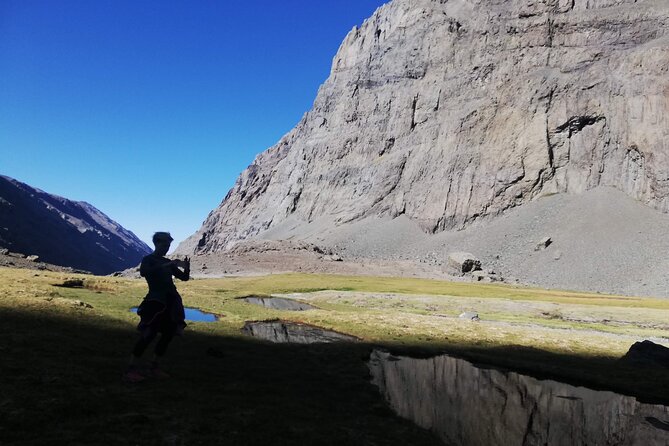
REVIEW · GLACIER AND FJORD TOURS
2-Day Private Hiking Tour to La Paloma Glacier
The Andes begin just outside Santiago. This private two-day trek takes you from the city into Yerba Loca Nature Sanctuary, along a glacial valley, and up to views of La Paloma Glacier. I like the quiet, small-group format and the fact that pack animals carry the camp gear, leaving you free to focus on the trail. I also like that the guide supplies tents, sleeping bags, pads, trekking poles, cookware, meals, and private transport. The main drawback is the effort required: the route covers about 21 miles, includes high-altitude walking, and calls for moderate fitness.
This is a strong choice if you want a real Andes outing without arranging every piece yourself. The setting grows more rugged by the hour, from riverbanks and small creeks to bare rock, high peaks, and a glacier viewed from its base. The $560 per-person price is not cheap, but it includes a private vehicle, guide, support from a muleteer, camping equipment, and food. Confirm the dinner arrangement before booking, since dinner is described in the daily plan but is not clearly listed among the included items.
In This Review
- Key Points Before You Book
- From Santiago to Yerba Loca at 7:30 a.m.
- Day One: Six and a Half Miles Up the Glacial Valley
- Camp Near the Winter Icefall
- Day Two: Crossing Yerba Loca and Entering Mars Fields
- Lunch at the Foot of La Paloma Glacier
- What the $560 Price Covers
- Who Will Enjoy This Andes Trek
- Practical Packing and Planning Advice
- Should You Book the La Paloma Glacier Tour?
- FAQ
- How long is the La Paloma Glacier hiking tour?
- Where does pickup take place?
- Where does the tour return?
- What equipment is provided?
- Are meals included?
- Is the tour private?
- What is the minimum age and fitness requirement?
- What happens if bad weather cancels the tour?
Key Points Before You Book
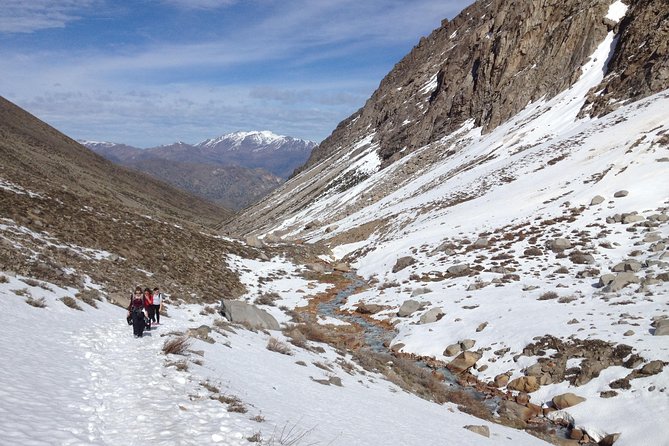
- 21-mile Andes route: The full hike reaches La Paloma Glacier and returns to the sanctuary entrance over two days.
- Private guiding: Your group hikes with its own guide, with one guide assigned for every four people.
- Camp below a frozen waterfall: The overnight site sits near a waterfall that freezes during winter.
- Mule support matters: A muleteer carries the camping equipment, making the long second day more manageable.
- Hotel-to-hotel service: Pickup begins at your Santiago hotel at about 7:30 a.m. and return is planned for roughly 8 p.m. on day two.
- All camping gear provided: You still need personal clothing and accident insurance, but the main technical equipment is supplied.
From Santiago to Yerba Loca at 7:30 a.m.
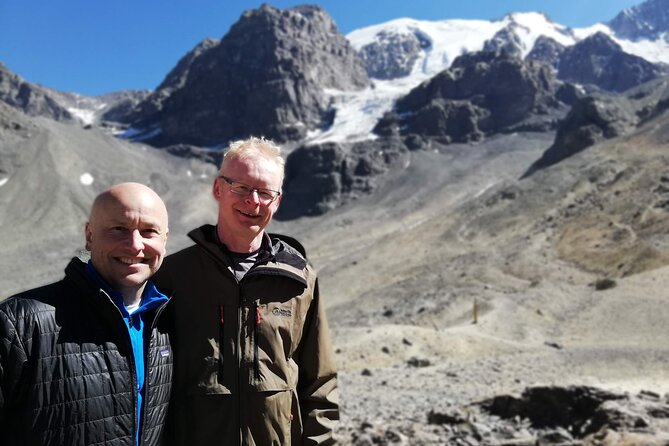
Your day starts with hotel pickup in Santiago. Private transport takes you east toward the Andes, ending at Yerba Loca Nature Sanctuary. This is a useful setup for a two-day hike because you do not need to find the trailhead, arrange a separate transfer, or leave a rental car at the sanctuary.
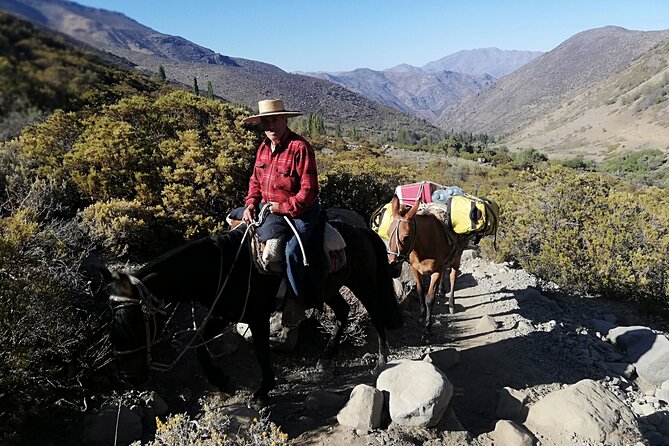
At the parking area, a muleteer loads the equipment before you set off. That small detail changes the feel of the trip. You still carry your personal items, but the tents, sleeping bags, pads, cookware, and other camp supplies do not all ride on your back.
The tour is private, so the pace and conversation belong to your group. That is especially helpful on a route that gains height gradually. You can ask questions, take breaks, and keep the day focused on the people you came with instead of adjusting to a large group.
One guide is provided for every four people. The minimum booking is two people, so a pair gets a particularly personal outing. Guide Nicolás has been praised for being well prepared, experienced, and a gracious host, qualities that matter on a route where weather and terrain can affect the day.
More Hiking Tours in Santiago
- From Santiago: Cajón del Maipo and Volcán San José Hike 8K
★ 4.9 · 418 reviews - Glacier Hike at El Morado Glacier, from Santiago
★ 5.0 · 51 reviews - Private Half-Day Andes Hiking Experience from Santiago
★ 5.0 · 24 reviews
Day One: Six and a Half Miles Up the Glacial Valley
The first hiking section covers about 6.5 miles, or 10.5 kilometers, and takes roughly five hours. The trail follows the eastern bank of the river, climbing at a fairly gentle grade as the valley reaches farther into the mountains.
That gradual start is welcome. You are not thrown straight onto a steep climb, but this is still a long walk at altitude. The combination of distance, ascent, and changing ground means you should arrive ready to hike, not treat this as a casual nature walk.
Small creeks appear along the route. Their clear water is useful for hydration, but I would still ask your guide how water should be treated before drinking. The supplied information describes these as good sources for hydration, though it does not specify a filtration or purification system.
The scenery changes as you continue. Early vegetation gives way to bare rock, and the valley begins to narrow. The walls on both sides grow taller and more imposing, making the route feel increasingly remote even though you started near Santiago.
This change is one of the best parts of the tour. You get a visible lesson in Andean terrain as plants disappear and stone takes over. There is no need to rush. The trail itself provides the story, and the private format gives your guide room to point out features along the way.
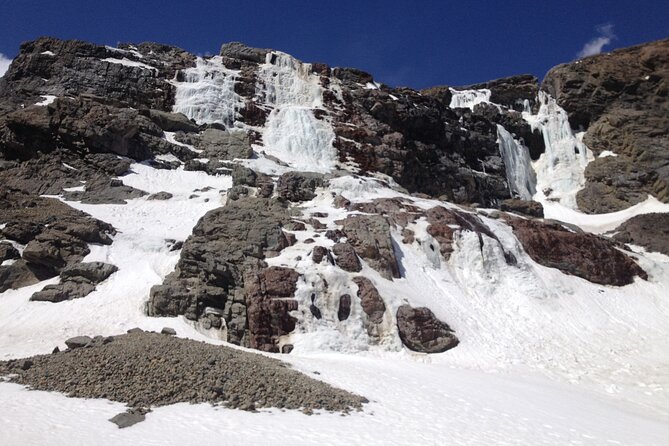
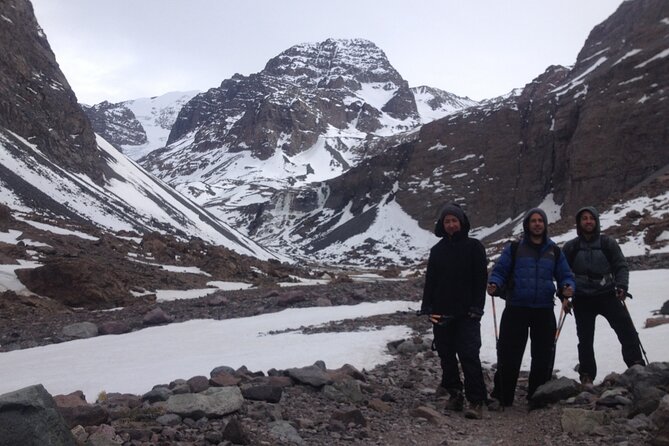
After about five hours, you reach camp near the foot of a distinctive waterfall. In winter, the waterfall freezes. The camp location gives the overnight stay a clear purpose: you are not simply sleeping outdoors for its own sake, but spending the night inside the glacial valley you have walked into.
The plan includes breakfast and two lunches, and the daily description also mentions dinner at camp. Because the formal inclusions do not clearly list dinner, confirm exactly what is supplied before departure. Cookware is included, so the guide or outfitter has the basic means to prepare food, but the written details leave room for a practical question.
Expect an Andean night rather than a comfortable lodge stay. The tour supplies a four-season tent, sleeping bag, and sleeping pad, which covers the main camping needs. You provide your own personal clothing, so warm layers and suitable hiking wear are your responsibility.
Camp Near the Winter Icefall
The overnight stop is more than a place to put down your sleeping bag. A campsite near a waterfall that freezes in winter gives you one of the route’s most memorable details without requiring a separate side trip.
The plan includes time for dinner and conversation at camp. That matters on a private hike. You are not pushed through a fixed schedule of sightseeing stops, and the evening can become part of the experience rather than a simple pause between walking days.
The available information does not state the camp’s exact altitude, bathroom arrangements, or shower facilities. Plan for basic wilderness camping and ask Coigue Expeditions about those points if they affect your decision.
The cold is also worth taking seriously. A four-season tent and sleeping bag are supplied, but equipment does not replace proper clothing. Pack layers suited to changing mountain conditions, along with whatever personal items you need for a night outdoors.
Day Two: Crossing Yerba Loca and Entering Mars Fields
After breakfast, you help take down camp. The muleteer then takes the equipment back toward the sanctuary entrance, so the return load is handled while you continue toward the glacier.
The first task is crossing the Yerba Loca estuary. The route then zigzags upward, opening new views across the valley and toward the surrounding peaks. This section should feel more demanding than day one, not because every step is steep, but because you have already spent hours on the trail and are now gaining more height.
The route passes through a broad area known as Campos de Marte, or Mars fields. The name fits the description of the place: bare, rocky ground with little vegetation and a stark mountain character.
You also pass Piedra Carvajal, an old stone refuge used by muleteers. It may have been built by the Incas, though the supplied information presents that as a possibility rather than a confirmed fact. Either way, it gives the route a human touch. This is not only a walk through rock and ice. People have used these mountain corridors for a long time.
After about two hours of walking and further ascent, La Paloma Glacier begins to appear. The view grows as you continue, with Altar Mountain reaching 5,180 meters, or 16,984 feet, and La Paloma Mountain reaching 4,910 meters, or 16,098 feet.
Those heights explain why fitness matters even if the trail is not described as technical climbing. You are walking beneath very high peaks, gaining altitude, and covering serious distance. The tour is for people comfortable with a moderate physical challenge, not for anyone seeking a gentle sightseeing day.
More glacier and fjord trips in Santiago:
- Private Hiking Trip to El Morado Hanging Glacier from Santiago, Carbon Neutral
★ 5.0 · 6 reviews - Santiago: Full day Trekking to El Morado glacier, include hot springs entrance.
★ 5.0 · 5 reviews - Glacier Hike 16K- El Morado Natural Monument, San Francisco Glacier Private Tour
★ 5.0 · 3 reviews - 2-Day Private Glacier Hike and Hot-springs from Santiago, Carbon Neutral
★ 5.0 · 1 review
Lunch at the Foot of La Paloma Glacier
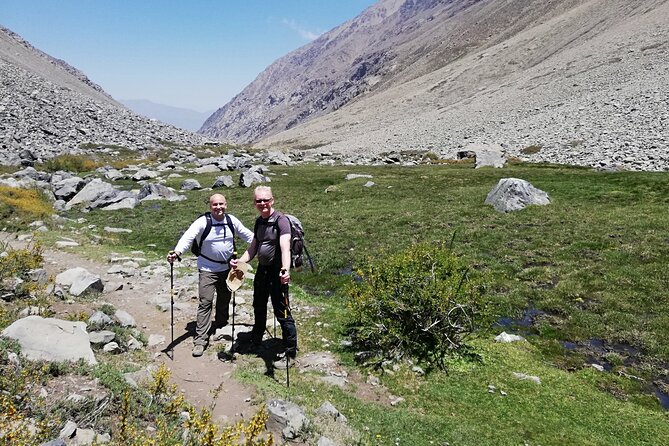
The goal is lunch at the foot of La Paloma Glacier. Two lunches are included, which suggests one is intended for each hiking day, though it is sensible to confirm the exact meal plan and portions when discussing dietary needs.
This is the visual payoff of the outing. Instead of viewing the glacier from a distant road, you reach the end of the valley on foot and eat beneath the surrounding high peaks. The route makes the glacier feel earned.
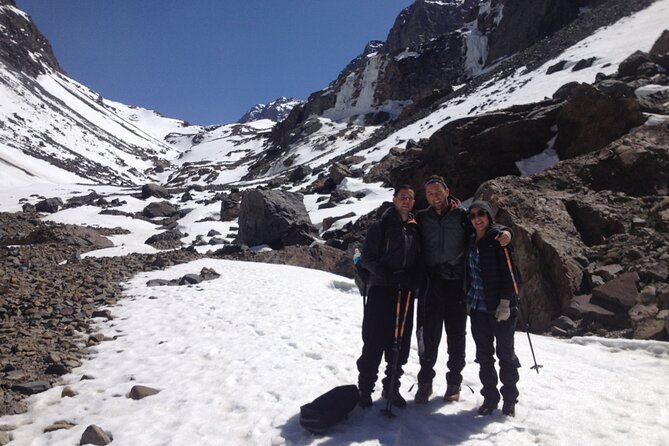
The glacier is described as a hanging glacier, and the approach is a lookout experience rather than a glacier-climbing excursion. There is no indication that crampons, ropes, or ice travel are included. You should understand this as a hike to a glacier viewpoint and its base, not a technical glacier expedition.
After lunch and time to take in the scene, you begin the walk back to the vehicle. The return leads toward the sanctuary entrance, where the private transport takes you back to your hotel in Santiago. The expected arrival is around 8 p.m., so keep your evening plans flexible.
That long return day is the largest practical concern. You have the advantage of mule support, but you still need to walk out after reaching the glacier. If you prefer slow mornings, short walks, or a soft bed each night, this may feel too intense.
What the $560 Price Covers
At $560 per person, this is a premium day-by-day hiking package rather than a simple guided walk. You are paying for private transport from Santiago, hotel pickup and drop-off, a private guide, mule support for the equipment, camping gear, trekking poles, cookware, first aid supplies, breakfast, and two lunches.
For two people, the minimum booking makes the base cost $1,120 before any personal expenses. That is a significant amount, but splitting the cost across only two participants gives you a more personal experience than a standard group outing.
The equipment package is another reason the price may make sense. You do not need to buy or rent a four-season tent, sleeping bag, sleeping pad, trekking poles, or cooking equipment for this trip. The guide also carries a first aid kit, which is basic but important support on a remote hike.
The package does not include accident insurance or personal clothing. Those are not minor details. You are responsible for dressing appropriately for a two-day mountain trip and arranging your own accident coverage.
Meals need a quick check before payment or departure. Breakfast and two lunches are specifically included, while the schedule describes a dinner at camp. Ask Coigue Expeditions to clarify whether dinner is included, supplied as ingredients, or an extra cost.
Who Will Enjoy This Andes Trek
I would recommend this experience to an active pair, family group with older teenagers, or a small circle of friends who want a serious mountain outing from Santiago. The minimum age is 14, but age alone does not determine suitability. Each participant needs moderate physical fitness and the ability to manage a two-day hike totaling about 21 miles.
The private format is especially useful if members of your group have different hiking speeds. Your guide can help manage the pace more directly than a large scheduled group can.
This is less suitable if you dislike camping, need guaranteed comfort, or want a short excursion with lots of free time in Santiago. The early start, overnight camp, second-day ascent, glacier approach, and late return make it a full commitment.
It is also not the right product for someone looking for a technical ice climb. The experience is a guided hike through the sanctuary to the glacier, with lunch at its foot. No glacier-climbing equipment or instruction is listed.
Practical Packing and Planning Advice
The operator provides the major camp equipment, but you should still ask for a complete personal packing list. The written details only say that personal clothing is not included, so you need to cover that side carefully.
Plan for:
- Warm personal layers for the overnight camp
- Suitable hiking clothing and footwear
- Personal accident insurance
- Any required food for special dietary needs, unless confirmed in advance
- Personal water and treatment preferences, after checking with the guide
- A small personal pack for items you want during the walk
Tell the operator about dietary requirements when booking. A vegetarian option is available, but it must be requested ahead of time.
Weather can cancel the outing. If poor conditions make the trip unsafe, you are offered another date or a full refund. For your own plans, avoid scheduling an important flight or fixed appointment immediately after the expected 8 p.m. return.
Cancellation is flexible only up to a point. You can receive a full refund if you cancel at least three full days before the local start time. Cancellations or changes inside that window are not accepted and are not refunded.
Should You Book the La Paloma Glacier Tour?
Book it if you want a private, well-supported Andes hike and you are comfortable trading hotel comfort for a night beside a frozen waterfall. The best reasons are the glacier approach, the changing valley scenery, the mule support, and the personal guiding. Nicolás, when assigned to the trip, has a particularly strong reputation for preparation and hospitality.
Think twice if 21 miles sounds like too much, if you have limited hiking experience, or if your main goal is simply to see snow and mountains from an easy viewpoint. The price is fair for private transport, guide service, camping equipment, and support, but it is still a major spend for two days.
My advice is to confirm three points before booking: the exact meal plan, the personal gear list, and the expected camping facilities. If those basics suit you, this is one of the more substantial ways to trade Santiago’s city streets for the high Andes without planning the whole expedition yourself.
FAQ
How long is the La Paloma Glacier hiking tour?
The tour lasts approximately two days. The full hiking route is about 21 miles, with roughly 6.5 miles covered on the first day and the remaining route completed on the second day.
Where does pickup take place?
Pickup is offered at your hotel in Santiago. The scheduled start time is about 7:30 a.m.
Where does the tour return?
Private transport returns you to your hotel in Santiago. The expected return time on the second day is approximately 8 p.m.
What equipment is provided?
The tour provides trekking poles, a four-season tent, sleeping bag, sleeping pad, cookware, and a first aid kit. A muleteer helps carry the equipment.
Are meals included?
Breakfast and two lunches are included. Dinner is described as part of the camp evening, but it is not clearly listed with the formal inclusions, so confirm the dinner arrangement before booking.
Is the tour private?
Yes. Only your group participates, and one guide is provided for every four people.
What is the minimum age and fitness requirement?
The minimum age is 14. Participants should have a moderate level of physical fitness.
What happens if bad weather cancels the tour?
Because the experience requires good weather, a weather cancellation results in an offer of a different date or a full refund.
Just added in Santiago
- Walking City Tour with Funicular, Cable Car and Tasting★ 4.3 · 6 reviews
- VIÑA DEL MAR AND VALPARAISO TOUR★ 4.8 · 20 reviews
- Tour VIÑA CONCHA Y TORO + CASA MARQUES – Chile, from Santiago.★ 5.0 · 2 reviews
- Undurraga + Isla Negra + San Afonso del Mar —– Full day★ 4.1 · 8 reviews
- Undurraga Wine tour★ 4.2 · 15 reviews
- Southcoast – Private Full-Day tour★ 5.0 · 6 reviews
- Santiago Private walking tour with Lunch★ 5.0 · 5 reviews
- Zapallar : nature, sea and local flavours★ 5.0 · 6 reviews
Glacier and Fjord Tours, compared.
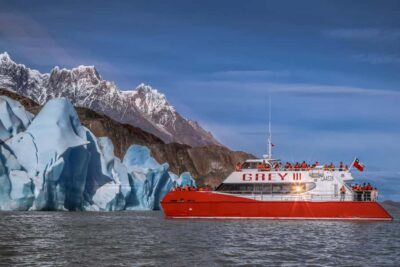
Torres del Paine: 3-Hour Scenic Boat Tour to Grey Glacier
Read our review →
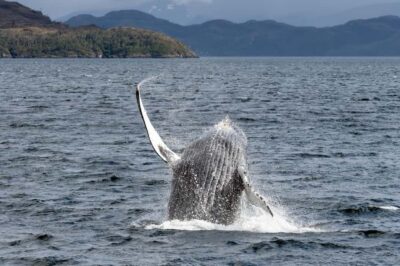
Whale and Glacier Watching from Punta Arenas Francisco Coloane Park
Read our review →
Puero Natales: Glacier Tour with Lunch & Whiskey Aperitif
Read our review →
Balmaceda & Serrano Glaciers Boat Tour and traditional lunch.
Read our review →
Glacier Hike at El Morado Glacier, from Santiago
Read our review →
Balmaceda and Serrano Glaciers Sightseeing Cruise from Puerto Natales
Read our review →
P. Natales: Balmaceda & Serrano Glaciers with Lunch & Whisky
Read our review →Browse the lists this tour appears in